Best Walkie Talkie for Warehouse Use? [Our #1 Pick]
Communication failures account for over sixty percent of operational delays in modern distribution centers. In an era of rapid fulfillment, relying on consumer-grade devices is a massive liability. Finding the best walkie talkie for warehouse use requires understanding the technical specifications necessary to penetrate dense metal shelving and overcome high-noise environments. You need heavy-duty two-way radios built specifically for industrial demands.
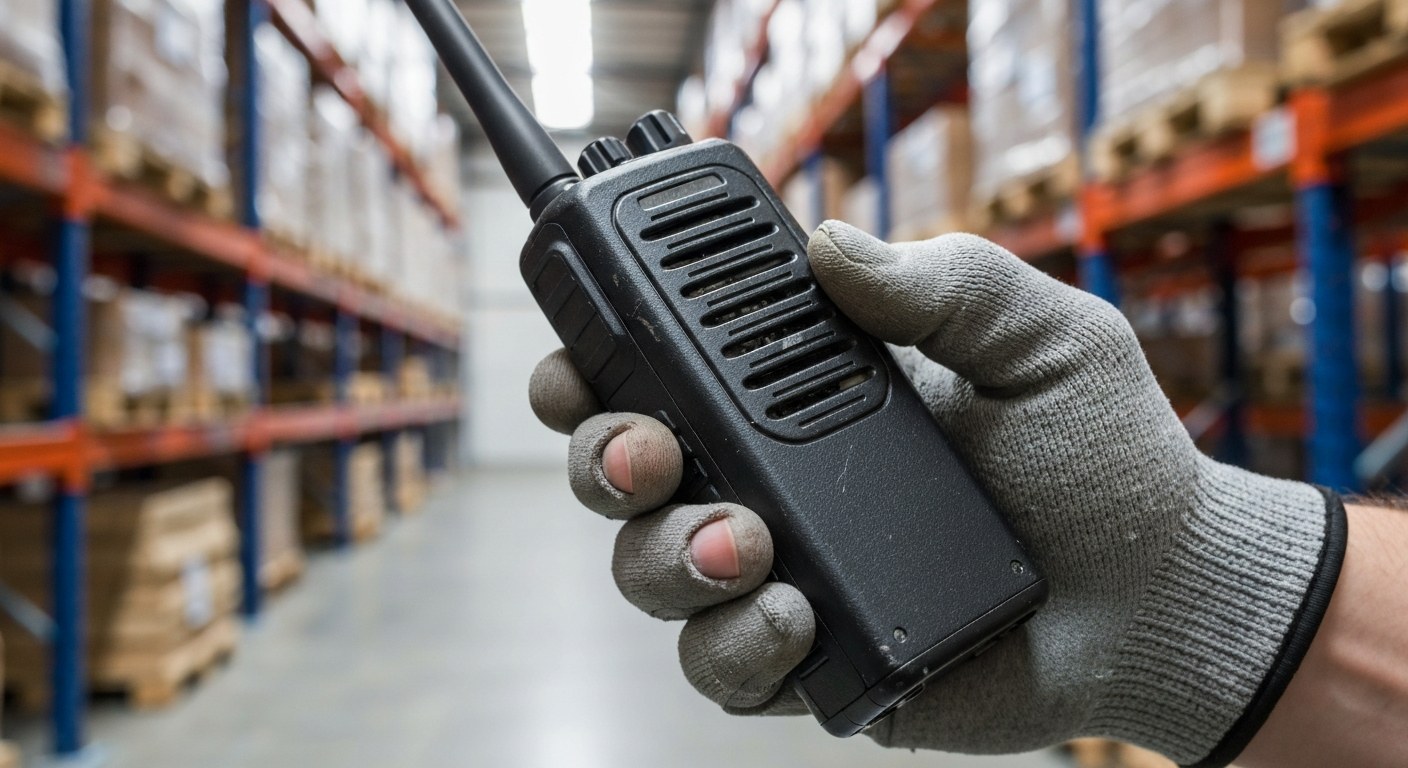
This guide details the critical features you must evaluate when selecting warehouse communication equipment. You will discover exactly how to identify industrial handheld radios that guarantee secure, seamless connectivity. This knowledge ensures your logistics teams remain perfectly coordinated and productive across all operational zones.
Best Warehouse Walkie Talkie & Two-Way Radio Systems (2026)
Coordinating forklift drivers, shipping docks, and floor supervisors across steel-reinforced facilities? Investing in an industrial-grade warehouse walkie talkie system ensures instant, clear communication without dropped signals or structural acoustic interference.
UHF vs. VHF Frequencies, Repeater Coverage & Noise-Canceling Headsets
Key technical specifications for commercial facility radio networks:
- UHF (Ultra High Frequency) Dominance: UHF radios (400–470 MHz) penetrate steel racking, concrete walls, and dense inventory pallets far more effectively than VHF bands.
- Heavy-Duty IP67 Waterproof & Drop Ratings: Radios must withstand concrete drops, conveyor dust, and washdown spray in tough industrial environments.
- Noise-Canceling Earpieces: Integrated acoustic-tube headsets and boom microphones filter out background conveyor rumbling and forklift backup alarms during critical radio transmissions.
What Makes the Best Walkie Talkie for Warehouse Use?
When outfitting your team, you will discover that consumer-grade mileage claims are completely useless indoors. Retail packaging boasts long ranges based on perfect line-of-sight conditions, but these signals vanish inside a modern facility. To find the best walkie talkie for warehouse use, you must evaluate true square-footage range metrics designed specifically for distribution centers.
Concrete walls and heavy steel beams degrade standard signals within your operational space. This interference makes investing in industrial-grade communication systems absolutely necessary. You need hardware engineered with specific technical specifications capable of penetrating structural barriers. Integrating these systems into your American Furniture Warehouse Delivery (Avoid Extra Fees) ensures blind spots never compromise workflow.
The industry is transitioning from basic tools to specialized business communication devices. Modern warehouse two-way radios act as digital lifelines connecting your floor. Upgrading to these professional standards, endorsed by supply chain authorities, guarantees uninterrupted coordination during demanding shifts.
To achieve this level of uninterrupted coordination, you must first select a radio frequency capable of defeating your facility’s physical barriers.
UHF vs. VHF: Navigating Metal Shelving and Concrete
When selecting the best walkie talkie for warehouse use, understanding how radio frequencies interact with your building’s infrastructure is critical.
Why UHF is Superior for Indoor Use
The primary difference between these bands involves how their wavelengths handle physical obstacles. Operating within the UHF frequency range utilizes shorter waves that easily ricochet around dense obstructions. This behavior dramatically enhances signal penetration through heavy metal shelving and thick concrete walls. Conversely, longer VHF waves are frequently blocked by indoor structural barriers. You can review the physics of these bands via regulatory frequency documentation.
| Capability | UHF (Ultra High Frequency) | VHF (Very High Frequency) |
|---|---|---|
| Indoor Navigation | Excellent around metal and concrete | Poor; easily blocked by physical barriers |
| Ideal Setting | Warehouses, multi-level distribution facilities | Open fields, maritime operations |
Digital vs. Analog Technologies
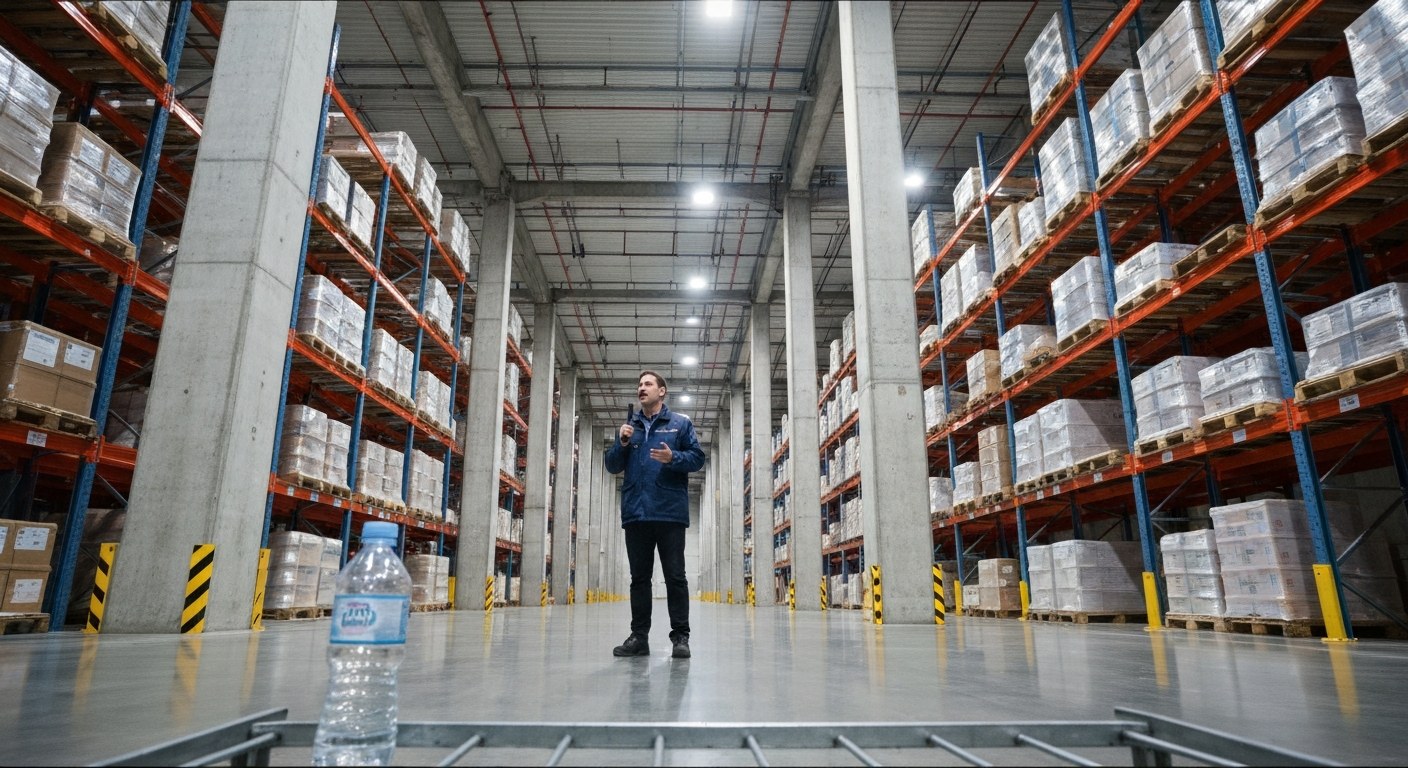
Transitioning to digital mobile radio (DMR) provides a massive operational upgrade over legacy analog devices. Digital signals eliminate background static, maintaining crystal-clear audio even at the extreme edges of your expansive logistics center. Crucially for 2026, utilizing dedicated industrial radios prevents signal interference with your facility’s advanced Wi-Fi 7 automation and robotics systems. You can explore how to safeguard your operational bandwidth in our network interference guide. To see how successful DMR deployments are configured to navigate complex high-density racking layouts, examine the setup below.
While a strong digital signal ensures clear communication, the physical radio itself must also be built to survive the harsh realities of your warehouse floor.
Rugged Construction, IP Ratings, and Critical Safety Features
In industrial environments, standard commercial plastics simply will not survive the daily impacts of a warehouse floor. You need devices engineered with uncompromising rugged construction to maintain reliable connectivity.
Military-Grade Durability Standards
Move beyond superficial durability claims and verify that your two-way radios meet rigorous MIL-STD-810G military specifications for drop and shock resistance. Devices passing these stress tests can endure repeated falls from forklifts onto concrete without failing. Furthermore, understanding ingress protection is critical. You must secure radios with strict IP ratings, such as an IP68 waterproof classification. This protection completely blocks out particulate dust in dry bulk storage areas and prevents moisture damage when your teams operate on exposed loading docks.
Protecting High-Rack Warehouse Operators
Communication devices are fundamentally safety lifelines. As you deploy personnel into isolated aisles, integrating life-saving high-rack safety protocols is non-negotiable. Modern radios feature an integrated emergency alert button alongside automated Man Down and Lone Worker fail-safes. These automated systems immediately notify management if an operator becomes incapacitated. For outdoor dock crews, receiving real-time NOAA weather alerts directly on their handsets ensures they can secure cargo before severe weather strikes. Consider linking these advanced communication features with your overall UPS Package Held in Warehouse? Do This Next [Quick Fix].
- Ensure MIL-STD-810G compliance for continuous drop survivability.
- Verify high IP ratings for environmental dust and water defense.
- Implement automated emergency alerts to protect isolated operators.
Even the most rugged and feature-rich device becomes a liability if its battery dies halfway through a demanding workday.
Power Management and Accessories for 12-Hour Shifts
For effective power management, look beyond raw capacity and consider the 5-5-90 standard duty cycle. This metric—5% transmitting, 5% receiving, and 90% standby—accurately measures true operational longevity during a grueling 12-hour shift. Utilizing a high-capacity rechargeable lithium-ion battery ensures your devices survive extended hours without disruptive mid-shift swapping. Incorporating Top Data Center Power Distribution Best Practices [2026] will further extend the lifespan of your fleet.
For forklift operators, seamless communication requires robust hands-free integration options. Implementing a reliable VOX hands-free mode paired with specialized earpieces allows material handlers to securely control their vehicles without interruption. The broader accessory ecosystem also heavily influences daily warehouse productivity. As illustrated below:

Your deployment strategy should include multi-unit charging banks to centralize end-of-shift equipment management. Furthermore, investing in a durable belt clip attachment keeps the radio accessible while preventing accidental drops on concrete floors. Optimizing the overall device weight alongside these accessories minimizes operator fatigue, keeping your team focused through their entire shift. UPS Package Handler Salary: 2026 Pay (Worth It?)
Once you have secured durable hardware and reliable power, optimizing how your teams communicate across your expansive facility is the next essential step.
2026 Audio Enhancements and Team Segregation Strategies
As your logistics footprint expands, relying solely on localized radio repeaters becomes a critical bottleneck. Introducing Push-to-Talk over Cellular (PoC) systems allows you to interconnect massive, multi-site warehouse facilities seamlessly across vast distances without extensive hardware investments. Prioritizing this wide-area connectivity ensures your diverse supply chain network remains continuously synchronized.
Conquering Conveyor Noise with AI
In any modern fulfillment center, the extreme noise of sorting machinery immediately threatens vital communication. To counter this, the latest 2026 noise suppression technology utilizes edge AI to actively filter out ultra-loud industrial conveyor environments in real-time. By isolating the human voice from relentless mechanical clatter, these advanced algorithms guarantee your commands are transmitted flawlessly. Whether you are coordinating a heavy forklift maneuver or managing a fast-paced picking sequence, these digital audio enhancements are an absolute necessity. You can explore further structural mitigations in our detailed guide to warehouse acoustic optimization.
Organizing Frequencies Across Departments
Beyond unmatched audio clarity, coordinating a massive workforce requires deliberate channel management strategies. You must safely segregate your Shipping, Security, and Inventory teams to prevent radio cross-talk and dangerous operational confusion. Deploying communication devices equipped with robust multi-channel support ensures that each specialized department operates efficiently on its own dedicated frequency. Furthermore, leveraging private call features allows your floor managers to securely communicate sensitive directives directly to specific supervisors without broadcasting to the entire facility. This structured approach to team segregation eliminates distracting chatter and drastically improves overall facility safety.
FAQ
What is the best walkie talkie for a large distribution center?
For expansive distribution centers, UHF radios like the Motorola XPR 7550e or Kenwood ProTalk series are top choices. UHF signals excel at penetrating concrete, steel shelving, and dense inventory compared to VHF. When selecting the best walkie talkie for warehouse use, prioritize durability, multi-shift battery life, and digital noise cancellation for optimal performance.
Do I need an FCC license to use business-grade walkie talkies?
Yes, operating most business-grade radios over 2 watts requires an FCC Industrial/Business Pool license. This license provides your warehouse with exclusive frequencies, significantly reducing interference from neighboring businesses. While FRS radios are license-free, they lack the power and privacy needed for commercial warehouse environments.
How many watts do I really need for indoor warehouse communication?
A 4-watt or 5-watt UHF digital two-way radio is generally the standard for indoor warehouse environments. This power level ensures your signal can punch through heavy steel racking, concrete walls, and multiple floors. Anything less than 2 watts will likely struggle with dead zones in facilities larger than 100,000 square feet.
Will modern walkie talkies interfere with our warehouse Wi-Fi 7 network?
No, standard two-way radios operate on VHF (136-174 MHz) or UHF (400-512 MHz) frequencies, which are completely separate from your wireless network. Wi-Fi 7 operates in the 2.4 GHz, 5 GHz, and 6 GHz bands. As confirmed by the Wi-Fi Alliance, your traditional walkie talkies will not cause interference with modern enterprise wireless infrastructure.
Can people outside the facility intercept or listen to our warehouse radio traffic?
If you are using analog radios on shared frequencies, anyone with a cheap scanner can easily listen in on your communications. To prevent this, you should upgrade to digital radios that offer Advanced Encryption Standard (AES). Digital encryption ensures that your operational data, security protocols, and employee conversations remain strictly confidential.
What is the difference between standard radios and Push-to-Talk over Cellular (PoC)?
Standard radios transmit directly over RF frequencies using local repeaters, making them ideal for localized warehouse campuses. Push-to-Talk over Cellular (PoC) leverages existing 4G/5G LTE and Wi-Fi networks to provide limitless, nationwide coverage. PoC is perfect for logistics companies that need seamless communication between the warehouse floor and delivery drivers out on the road.
How do we achieve clear audio over the sound of loud industrial machinery?
To overcome industrial noise, invest in digital radios equipped with intelligent audio processing and active background noise cancellation. You must also pair the radios with heavy-duty, noise-attenuating OSHA-compliant headsets or earpieces. This combination ensures your team can hear commands clearly, preventing safety incidents around forklifts and loud conveyors.
Transform Your Operations with Reliable Communication
Upgrading your facility’s communication infrastructure directly amplifies both operational safety and daily productivity. When navigating sprawling aisles and heavy machinery, selecting the right device ensures your team stays connected without interruption. Prioritize radios that offer strong UHF penetration to cut through concrete and steel. Invest in durable models capable of withstanding harsh drops. Finally, pair these devices with high-quality audio accessories to combat ambient noise.
Equipping your workforce with the best walkie talkie for warehouse use empowers them to tackle logistical challenges head-on. Assess your specific square footage and structural hurdles today. Deploy a business-grade two-way radio solution to experience an immediate difference in daily coordination.
Get our latest guides, news, and insights highlighted in your Google Search & AI Overviews.