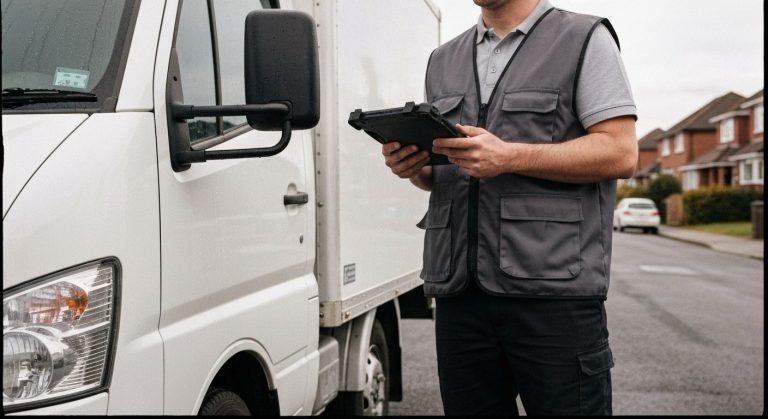
Amazon Warehouse Dress Code: Don’t Wear This [Banned]
Fulfillment center associates regularly walk an average of 10 to 15 miles per shift. Navigating this physically demanding environment makes workplace attire more than just a matter of comfort—it is the absolute foundation of operational safety. Understanding the precise Amazon warehouse dress code for 2026 is critical before you even step onto the active floor.
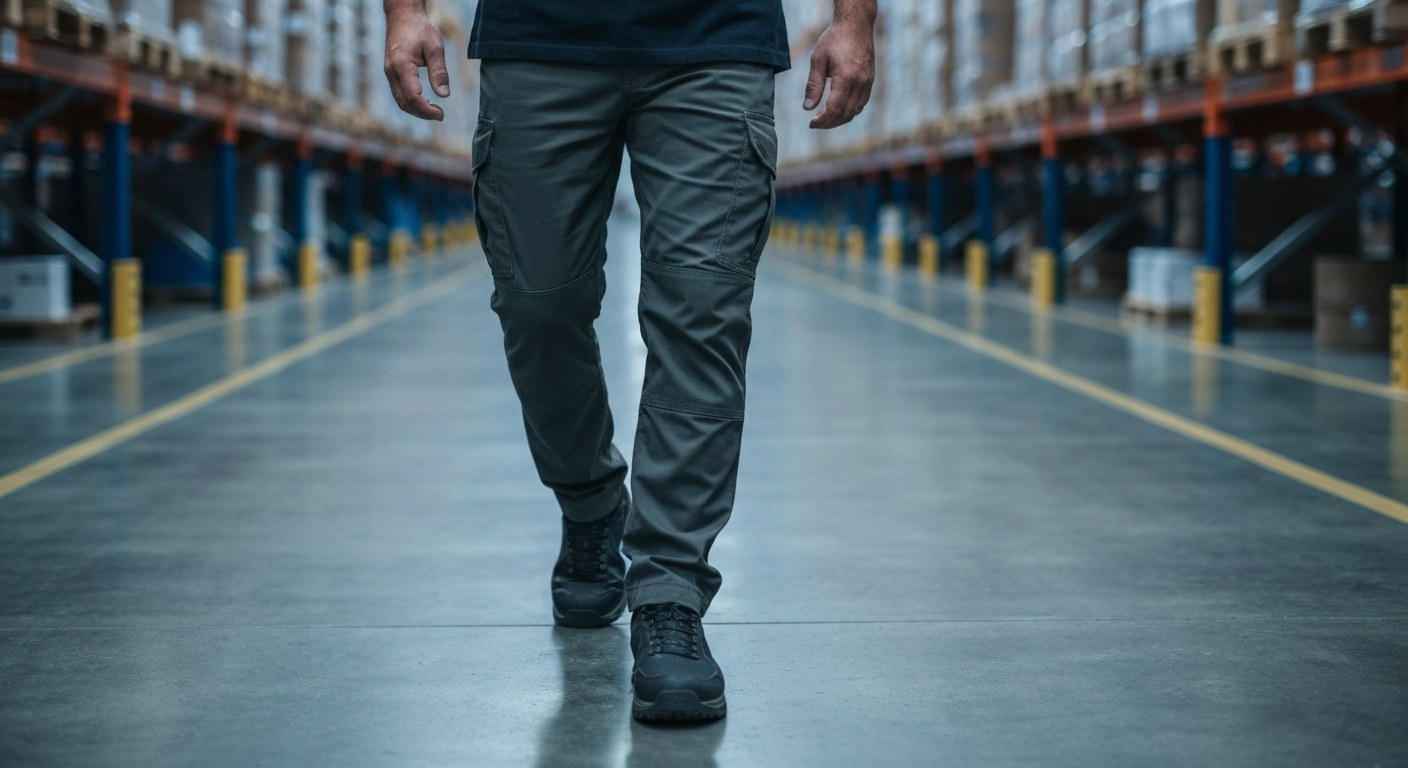
While you might naturally prioritize breathability for those long shifts, your choices must strictly align with stringent facility guidelines designed to prevent serious hazards. Read on to discover how to balance mobility with mandatory protective equipment, why sturdy footwear is non-negotiable, and which common items are permanently banned.
What Is the Standard Amazon Warehouse Dress Code?
When entering a fulfillment center, your workplace attire must meet specific baseline expectations tailored to the job’s rigorous physical demands. The primary focus of the standard Amazon warehouse dress code is maintaining your safety while maximizing mobility. Since you spend the entire shift on your feet—walking, bending, and lifting—your clothing must support continuous movement without introducing any operational hazards.
The foundation of this facility policy rests on balancing non-restrictive comfort with strict industrial safety protocols. You need work-appropriate clothing that is highly breathable and flexible, yet snug enough to prevent accidents. Loose or excessively baggy fabrics can easily catch on conveyor belts or robotics, which is why workplace safety guidelines strictly prohibit them. You must prioritize function over fashion, ensuring your outfit minimizes risk while allowing you to work efficiently. For further tips on adapting to various warehouse environments, explore our guide on Warehousing Costs: Stop Bleeding Cash [2026] before your first shift.
Beyond general clothing choices, protecting your feet is arguably the most heavily enforced aspect of your daily uniform.
The Mandatory Zappos Safety Shoe Program
Because robust foot protection is mandatory, navigating the modern fulfillment environment requires prioritizing proactive injury prevention. When you step onto the active floor, equipping yourself with appropriate foot protection is not a suggestion; it is a strict operational mandate. You cannot access the main operational areas without participating in the specialized footwear program designed to mitigate workplace hazards.
How to Claim Your Zappos Shoe Credit
To ensure associates have access to compliant, sturdy footwear without financial strain, the company partners directly with Zappos at Work. Follow these standard procedures to secure your gear:
- Create your account on the Zappos at Work portal using your official login credentials.
- Verify your employment status to automatically apply your annual shoe subsidy. Both new hires and tenured employees receive this credit to maintain rigorous safety standards.
- Select your styles from the pre-approved catalog, ensuring your choice aligns with site-specific OSHA Warehousing Safety 2026 [Fast 5-Min Guide]. Your voucher completely covers the required cost at checkout.
Approved Safety Shoe Specifications
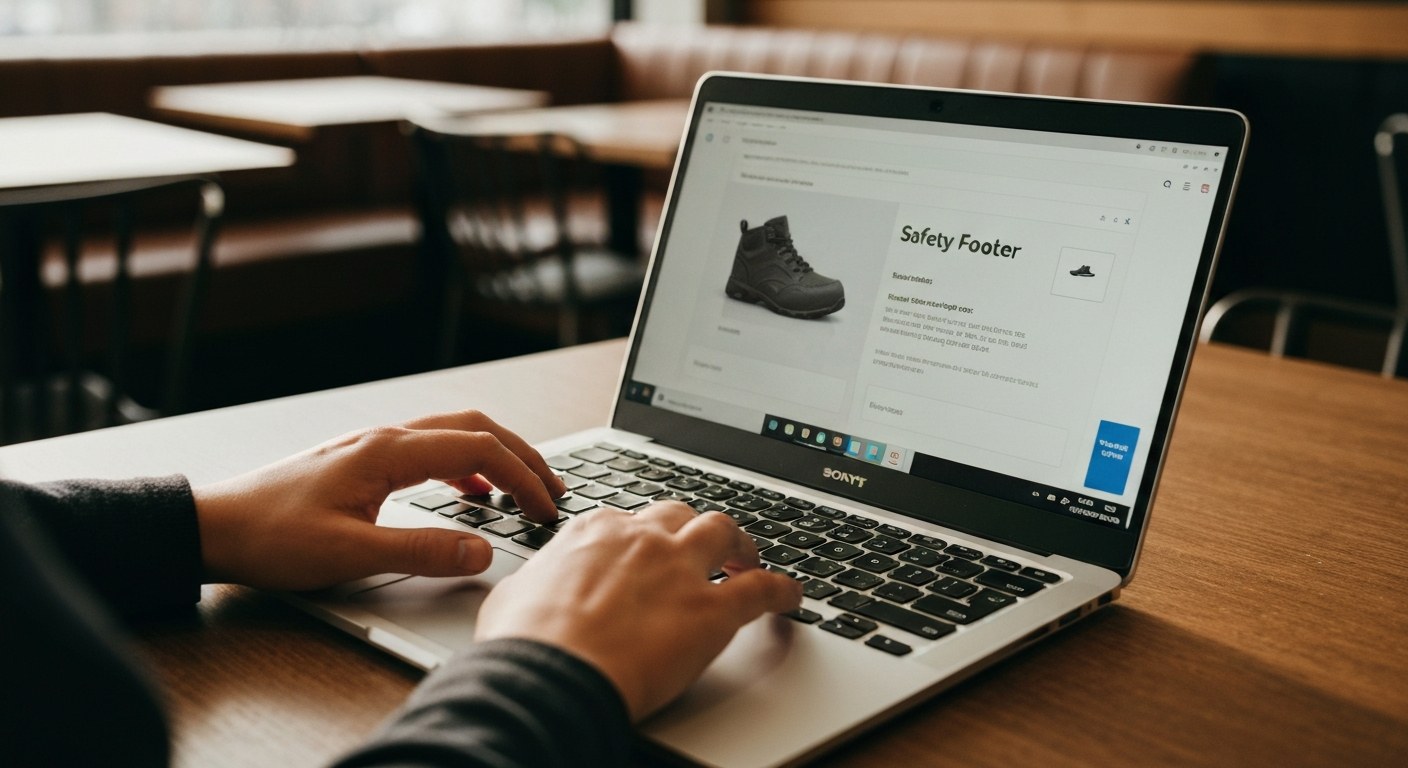
Your chosen footwear must adhere to explicit structural requirements to shield against impacts and compression. The program exclusively authorizes composite or steel-toed boots that meet current ASTM safety ratings. Furthermore, your footwear must function as slip-resistant shoes to prevent dangerous falls on slick concrete. If you are uncertain what these certified safety designs entail, review the corporate visual guidelines. As illustrated below:
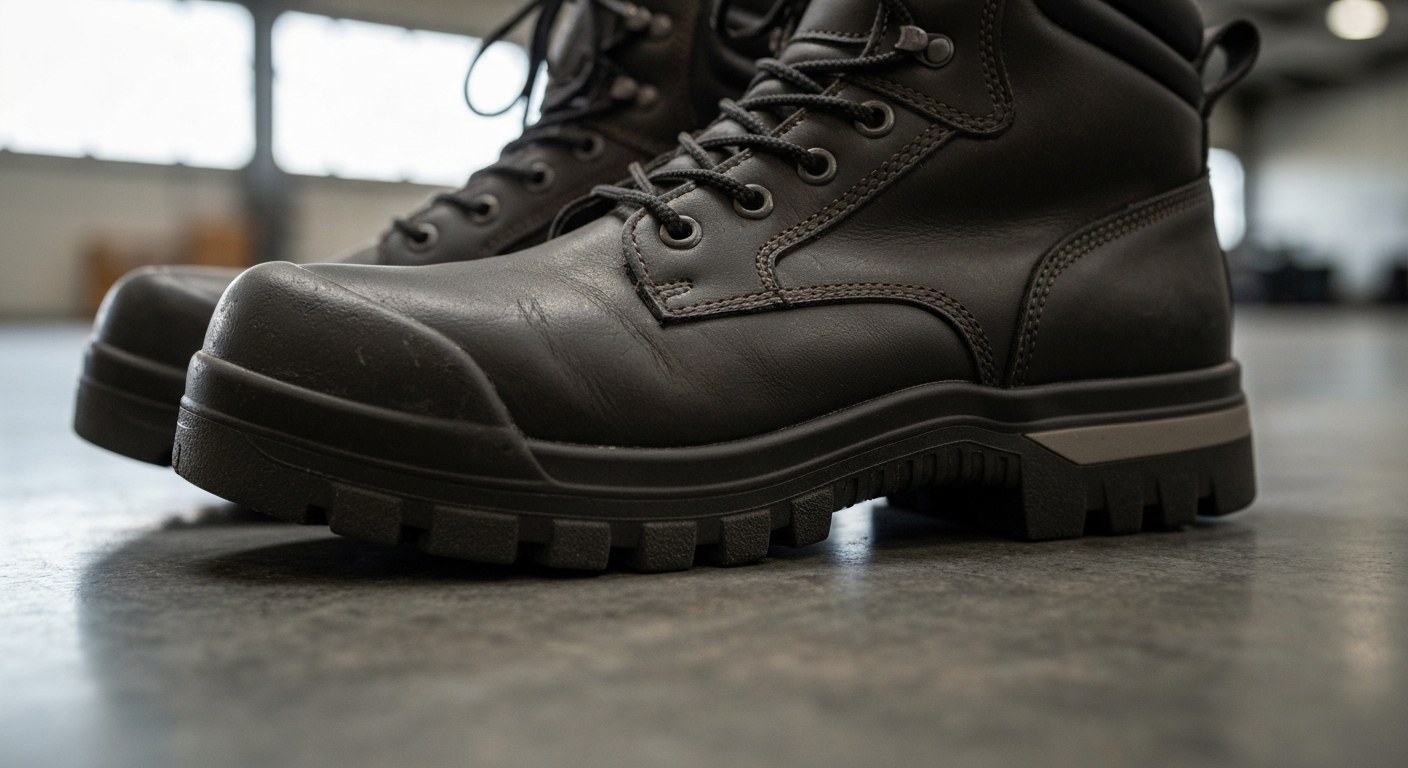
By conforming to this crucial element of the Amazon warehouse dress code, you actively contribute to a secure, resilient operational ecosystem.
With your footwear secured, you can focus on selecting the right tops and bottoms for your shift.
Approved Clothing: Pants, Shirts, and Seasonal Variations
When assembling your daily wardrobe for the floor, you must select items that balance comfort with safety. Acceptable lower-body wear includes well-fitting jeans, durable work pants, and approved leggings or athletic shorts that reach at least mid-thigh. If your assigned role requires you to operate in high-traffic zones, your site’s protective equipment policy will strictly mandate wearing a brightly colored high-visibility vest over your standard shirt.
Review acceptable clothing setups in the example below:
Fulfillment Centers vs. Sort Centers
Your specific facility type directly influences your daily clothing strategy. The operational environments differ significantly:
| Facility Type | Climate & Environment | Optimal Clothing Strategy |
|---|---|---|
| Fulfillment Centers (FCs) | Highly climate-controlled interiors with consistent ambient temperatures. | Lightweight, breathable shirts paired with standard flexible work pants. |
| Sort Centers (SCs) | Open dock doors cause temperatures to fluctuate rapidly with outside weather. | Versatile layering; mastering Tips for working in a freezer warehouse is absolutely essential. |
Summer vs. Winter Attire Policies
Seasonal shifts demand adaptable protective clothing. During summer, standard t-shirts and approved shorts will keep you cool, especially near loading areas where heat accumulates. Conversely, winter operations necessitate specialized thermal base layers. Because loose or baggy outerwear remains prohibited year-round, you must rely on fitted sweaters or tight-knit long sleeves. Preparing for these environmental fluctuations ensures you remain fully compliant with the Amazon warehouse dress code while maintaining peak physical comfort. Discover more targeted layering strategies in our How to Apply for Amazon Warehouse Jobs [In 5 Minutes] guide.
While flexibility and comfort are encouraged, certain popular clothing items present unacceptable risks.
Strict Prohibitions: Strings, Hoodies, and Headphones
To understand why those popular items present such risks, you must recognize that the active fulfillment floor is a highly automated setting. Navigating this space requires strict adherence to the Amazon warehouse dress code to ensure your well-being. Because you operate in a potentially hazardous environment, specific items are universally banned to mitigate severe risks.
- Hoodie strings and drawstrings: You must remove or securely tuck in all strings on hoodies, jackets, and sweatpants. Dangling strings present a major entanglement hazard around the facility’s complex mechanical systems.
- Headphones and earbuds: Complete situational awareness is non-negotiable. You are absolutely prohibited from wearing headphones or earbuds on the warehouse floor. Hearing oncoming forklifts or emergency alarms is critical for safety compliance, and blocking your hearing will result in disciplinary action.
- Hats and restricted colors: Depending on your facility, certain hats or clothing colors may be restricted. This aligns with workplace safety guidelines to maintain high-visibility protocols.
- Loose accessories: Scarves, ties, and excessively baggy clothing are banned, as they can easily catch on equipment or inventory bins.
Ignoring these strict rules will likely lead to immediate dress code violations issued by site leadership. Always review your Can you wear airpods at amazon warehouse before arriving for your shift.
Just like your clothing, your personal accessories must also meet stringent safety standards.
Jewelry, Piercings, and Accessories Guidelines
When working in a fulfillment center, adhering to facility guidelines regarding jewelry and accessories is non-negotiable for your protection. You must carefully distinguish between acceptable items and dangerous hazards. Simple, snug-fitting rings, such as silicone bands, are acceptable because they break away under pressure. Conversely, you must strictly avoid any dangling accessories, long necklaces, or hoop earrings. The safety rationale is uncompromising. Loose accessories present severe safety hazards near high-speed conveyor belts and automated machinery, where a momentary snag can lead to catastrophic injuries.
If you have facial piercings or ear gauges, you must ensure they meet strict clearance requirements. Plugs must be solid and flush, while facial jewelry must not protrude or dangle to avoid catching on equipment or packages. Strict adherence to these rules ensures maximum operational safety throughout your shift. For more details on navigating these policies, review our Candy Packaging Design: What Sells? (We Checked) before arriving on site.
Beyond standard apparel and accessories, your specific role may dictate additional safety equipment.
Site-Specific PPE and Safety Compliance
Depending on your assigned facility type and functional zone, your standard Swarovski Packaging Change: What’s New? [2026 Update] will outline site-specific personal protective requirements. Whether you operate in a high-tech robotics fulfillment center or a traditional sortation facility, donning the proper safety gear is never optional. Every piece of mandated equipment strictly complies with federal OSHA standards, ensuring that all operations maintain the highest baseline of industrial safety. You must review these localized requirements carefully, as they adapt directly to the distinct mechanical hazards present in your immediate workflow.
The core safety rationale behind these rigid mandates becomes clear when analyzing specialized operational environments. In automated picking zones, mandatory hairnets prevent loose hair from becoming caught in mechanical sorting systems. Similarly, if your role requires navigating active forklift lanes or bulk pallet-loading areas, hard hats and impact-resistant safety glasses become vital to protect against overhead strikes and airborne particulates. Ultimately, the Amazon warehouse dress code seamlessly integrates these targeted site-specific policies to guarantee your daily protection.
FAQ
What is the Amazon warehouse dress code?
The Amazon warehouse dress code prioritizes operational safety and functional comfort. You must wear breathable clothing that facilitates a full range of motion during demanding physical operations. However, excessively loose garments or dangling jewelry that present entanglement risks are strictly prohibited according to Amazon’s official workplace guidelines.
Can I wear leggings to work at an Amazon warehouse?
Approved athletic apparel, including leggings and yoga pants, is permitted within an Amazon warehouse. These garments provide the necessary flexibility for extended periods of physical activity. You must ensure they fit securely and do not drag on the floor, as loose material presents a severe hazard near mechanized equipment.
Are open-toed shoes allowed in Amazon warehouses?
Open-toed footwear is universally prohibited across all Amazon fulfillment centers. Operating alongside heavy inventory, pallet jacks, and automated machinery dictates that OSHA safety standards require robust foot protection. You must equip yourself with closed-toe, composite or steel-toed safety shoes before entering the active floor.
Does Amazon provide safety shoes for employees?
Amazon subsidizes safety footwear for all warehouse personnel. Through the Zappos at Work program, you receive an annual credit to procure approved composite-toe or steel-toe boots. Utilizing these mandated safety shoes is a strict requirement to prevent impact injuries from falling inventory or heavy equipment.
Are piercings allowed at Amazon warehouse jobs?
Facial and ear piercings are acceptable provided they do not introduce an entanglement hazard. Small studs or flush-fitting rings meet safety standards, whereas large hoop earrings or dangling facial jewelry are strictly forbidden. Management reserves the right to mandate the removal of any accessory that compromises operational safety near moving equipment.
Can I wear jeans at an Amazon fulfillment center?
Jeans are an approved clothing option for shifts within an Amazon fulfillment center. Denim provides superior durability against abrasion from inventory boxes and wooden pallets. You are advised to select jeans constructed with flexible fabric blends, as rigid materials may restrict mobility during extended shifts requiring constant bending, squatting, and walking.
Are hoodies and hats allowed inside Amazon warehouses?
Hoodies and headwear are permitted under strict operational parameters. Wearing your hood up on the active floor is prohibited because it severely impairs peripheral vision and hearing, which violates basic workplace safety principles. Beanies and standard baseball caps are acceptable provided they adhere to the facility’s professional conduct guidelines.
How strict is the Amazon warehouse dress code policy?
The Amazon warehouse dress code policy enforces absolute strictness regarding critical safety violations, including improper footwear or dangling apparel. Arriving without mandatory safety shoes or wearing non-compliant garments will result in denied entry to the operational floor. While aesthetic requirements remain flexible, the policy is uncompromising on protocols that ensure physical safety and operational efficiency.
With these comprehensive specifications established, you must focus on the core operational guidelines to remember as you prepare.
Key Takeaways for Your First Shift
Every rule within the Amazon warehouse dress code serves a singular purpose: keeping you safe in a high-speed, physically demanding environment. It is never about corporate fashion. By prioritizing breathable fabrics, investing in approved composite-toe safety shoes, and eliminating entanglement hazards like loose jewelry or dangling drawstrings, you actively prevent serious injuries on the floor.
Because facility requirements can occasionally vary based on the specific machinery or roles at your location, always review your site’s orientation materials before your first shift. Ensuring absolute compliance from day one guarantees a smooth, hazard-free start to your warehouse career.
Get our latest guides, news, and insights highlighted in your Google Search & AI Overviews.