The Ultimate Guide to Industrial Robot Vacuum Cleaners: ROI, Features & Top Picks
The Ultimate Guide to Industrial Robot Vacuum Cleaners: ROI, Features & Top Picks
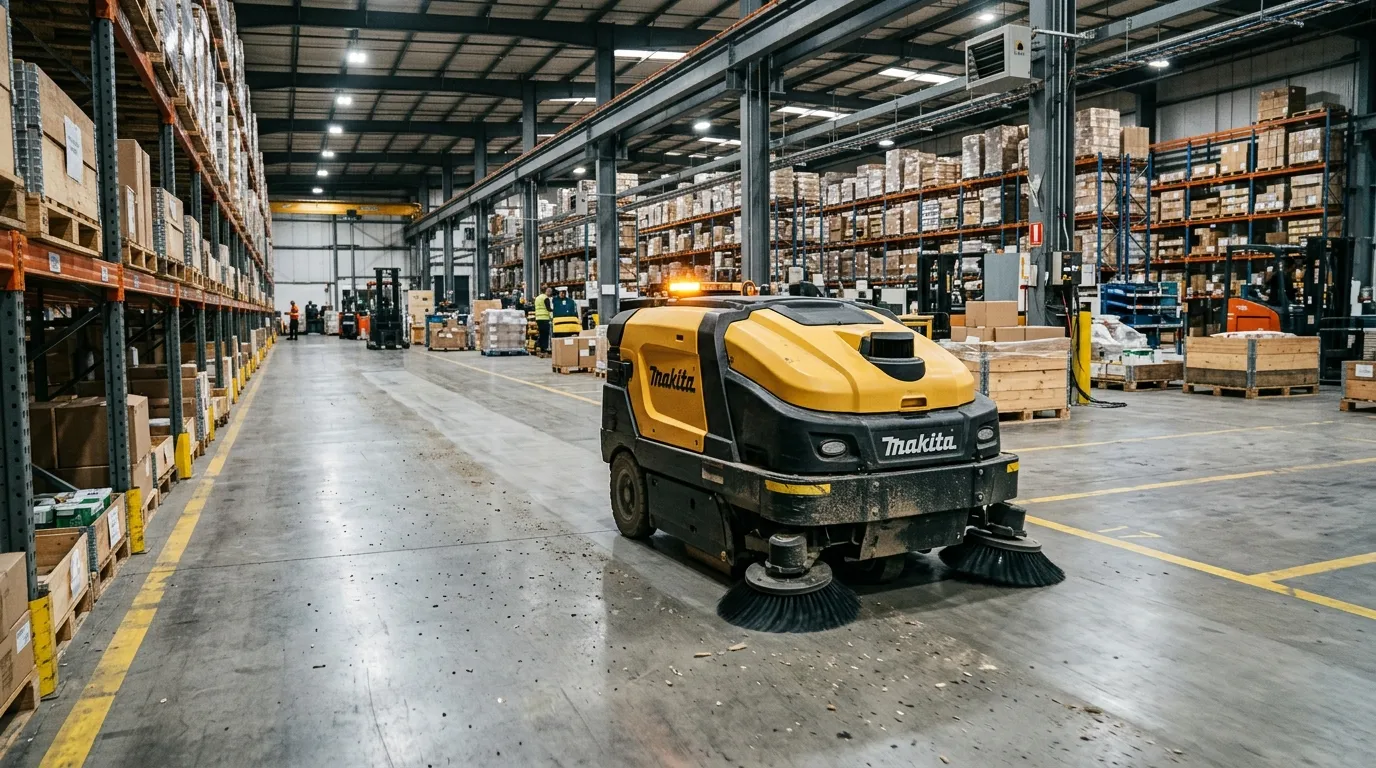
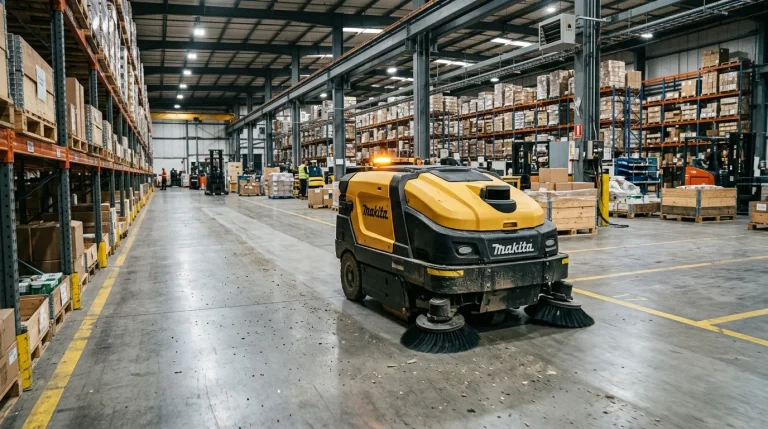
An industrial robot vacuum cleaner is a heavy-duty, autonomous cleaning machine designed for large-scale facilities, utilizing advanced navigation sensors to scrub, sweep, and vacuum warehouse floors without human intervention.
An industrial robot vacuum cleaner is a heavy-duty, autonomous cleaning machine designed for large-scale facilities, utilizing advanced navigation sensors to scrub, sweep, and vacuum warehouse floors without human intervention.
If you are managing a high-traffic logistics center, keeping the floors free of debris isn’t just about aesthetics—it is a critical safety and operational compliance requirement.
Yet, relying entirely on manual labor to sweep hundreds of thousands of square feet has become financially unsustainable for most facility managers facing labor shortages.
The modern supply chain requires modern solutions, and that means turning to robust automation.
However, before you replace your traditional ride-on scrubbers with a fleet of autonomous machines, there is one crucial operational shift you need to understand that most manufacturers won’t tell you about up front.
What Sets Industrial Robot Vacuums Apart From Commercial Models?
When evaluating an industrial robot vacuum cleaner, do not confuse it with the lightweight commercial vacuums used in small corporate offices or retail stores.
True industrial units are built around heavy-duty construction explicitly designed for continuous operation in harsh, unforgiving environments.
These machines integrate industrial-grade filtration, often featuring HEPA filtration systems to safely trap fine warehouse dust, silica, and manufacturing particulates that can pose respiratory hazards.
Unlike standard commercial variants, autonomous floor scrubbers designed for logistics hubs feature massive recovery tanks, reinforced chassis, and robust brush motors capable of pulling embedded grime and tire marks from concrete flooring shift after shift.
Core Technologies: 3D LiDAR and SLAM
The biggest hurdle in true warehouse automation is reliably navigating dynamic environments where pallets, heavy machinery, forklifts, and human workers constantly change position.
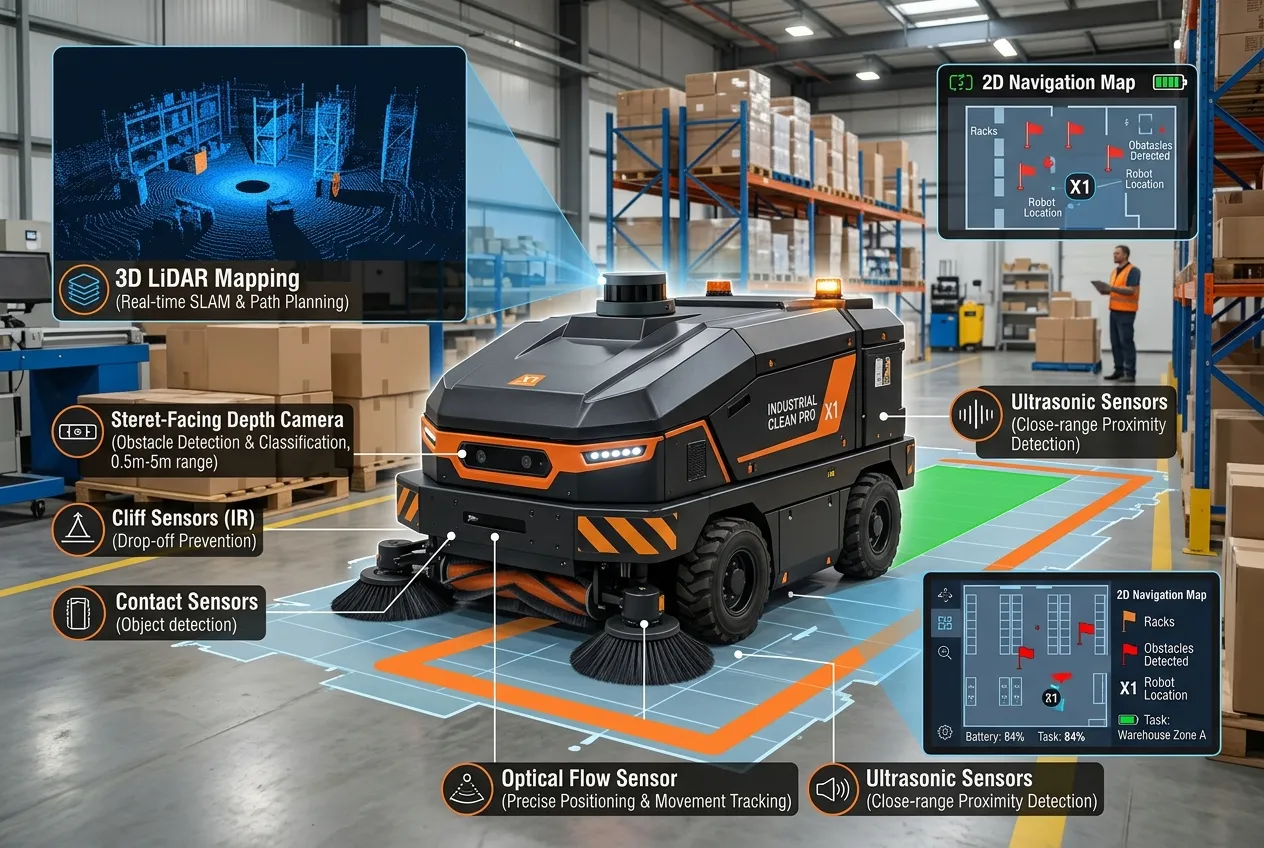
This is precisely where 3D LiDAR and SLAM (Simultaneous Localization and Mapping) come into play.
By combining dense sensor matrices with advanced AI-driven SLAM, these robots create real-time, highly accurate topographical maps of your facility.
This allows for seamless obstacle avoidance, ensuring the machine never halts a moving forklift or damages staged inventory.
If you are operating at warehouse club scale operations, this level of sophisticated spatial awareness is absolutely non-negotiable for maintaining stringent safety protocols and optimizing your daily workflows.
Fleet Management and RaaS (Robotics as a Service)
Deploying a single robot is relatively straightforward, but coordinating multiple units across a massive fulfillment center requires enterprise-grade fleet management software.
These sophisticated platforms integrate directly into your broader facility management ecosystems, allowing your team to schedule off-hours cleaning, monitor battery degradation, and track exact cleaning routes remotely from a central dashboard.
Furthermore, the rise of RaaS (Robotics as a Service) has completely transformed how logistics companies acquire and deploy these machines.
Instead of requiring massive upfront capital expenditures, RaaS allows you to lease the robots, maintenance, and software for a predictable monthly fee.
When evaluating price vs value for your facility’s long-term budget, RaaS effectively shifts the investment from CapEx to OpEx while guaranteeing you always have access to the latest firmware updates and hardware support.
Top Industrial Cleaning Robots of 2026
Several key players currently dominate the industrial cleaning space with proven track records.
- Gausium: Known for multi-functional robots that can sweep, scrub, and vacuum simultaneously. Their flagship units are highly regarded for true 24/7 autonomous operation, paired with automated docking and water-refilling stations that drastically reduce human intervention.
- Cenobots: A major contender focusing heavily on advanced AI navigation. Their units are specifically engineered for exceptionally busy distribution centers where layout changes occur hourly, ensuring the cleaning path adapts dynamically.
- Cleanfix: Precision Swiss-engineered autonomous machines that excel in reliability. They are particularly favored for rigorous daily cleaning routines in dense manufacturing plants and when handling heavy equipment around sensitive assembly lines.
Maximizing ROI in Facility Management
Ultimately, integrating an industrial robot vacuum cleaner is about driving long-term labor savings and improving site safety.
By delegating the repetitive, physically demanding task of floor care to autonomous machines, your human workforce can be reallocated to higher-value tasks like inventory management, fulfillment, and quality control.
With the proven ability to perform off-hours cleaning effortlessly, these heavy-duty robots ensure your facility starts every single shift spotless, compliant, and ready for peak productivity.
Frequently Asked Questions
How much does an industrial robot vacuum cleaner cost?
The cost of an industrial robot vacuum cleaner varies widely based on features, battery capacity, and navigation tech. Prices typically range from $2,000 to over $10,000 for advanced autonomous floor scrubbers designed for large warehouses.
Can industrial robot vacuums clean concrete floors?
Yes, industrial robot vacuums are specifically designed to handle hard surfaces like polished concrete, epoxy, and sealed warehouse floors. They often come with heavy-duty brushes and powerful suction to pick up fine industrial dust and debris.
How long do commercial robot vacuum batteries last?
Most heavy-duty commercial robot vacuums feature high-capacity batteries that provide 3 to 6 hours of continuous runtime. Many advanced models also feature auto-charging docks, allowing them to recharge and resume cleaning automatically.
Are robotic floor cleaners safe around warehouse workers?
Modern industrial robotic floor cleaners use advanced LiDAR, 3D cameras, and AI sensors to detect moving obstacles, including forklifts and warehouse workers. They automatically stop or reroute to ensure a safe working environment.
Do industrial robot vacuums require an internet connection?
While basic functions may work offline, an active Wi-Fi or cellular connection is usually required to utilize cloud-based fleet management, remote monitoring, and automated reporting features found on most industrial models.
About the Author
thefuturewarehouse.com Editorial Team
This article was prepared by our editorial team. We specialize in thorough research and processing of information from the logistics and warehousing industry.
Editorial Note: The content has undergone rigorous editorial review. We use modern AI tools to help with structure and data collection, but final factual correctness and quality are always verified by a human.
Get our latest guides, news, and insights highlighted in your Google Search & AI Overviews.