Foot Candles for Warehouse: 2026 Specs [Cheat Sheet]
Inadequate illumination levels directly correlate with elevated accident rates and reduced picking accuracy. Modern industrial facility design dictates that lighting goes far beyond basic visibility—it is a core driver of productivity, safety, and energy efficiency. Calculating the optimal foot candles for warehouse spaces is essential to move past outdated minimums toward precision planning.
To align with current IESNA standards, you must evaluate more than raw lumen output. Optimizing your lux requirements means factoring in mounting height, vertical illuminance, and the light distribution patterns of your high bay LED fixtures. By mastering these modern specifications, you ensure your facility operates at peak performance without wasting energy.
What Are Foot Candles and How Are They Measured?
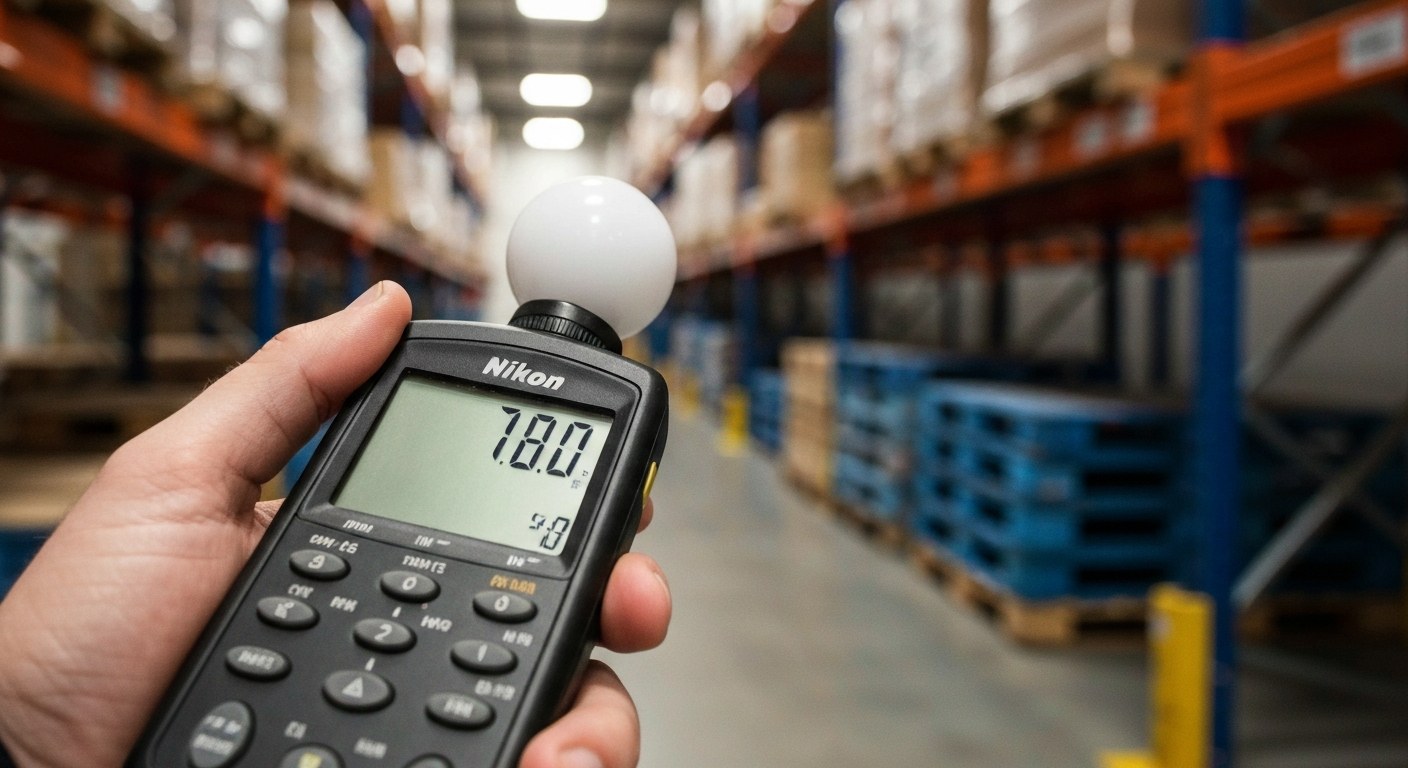
When evaluating a new layout, you must understand the core metrics driving operational efficiency. A foot candle (fc) defines the amount of light falling on a surface, equaling exactly 10.764 lux. You must separate total output from delivered illumination. While fixtures are typically rated by total lumens or their efficiency in lumens per watt, lumens only measure what leaves the source. Foot candles measure the actual light arriving precisely at the task plane where work occurs.
You must also distinguish between initial foot candles—the brightness of a brand-new installation—and maintained foot candles. Maintained metrics reflect long-term performance after applying a light loss factor (LLF) to account for diode degradation and environmental dirt. Staying compliant with established illumination standards requires measuring horizontal illuminance at the task plane for safe navigation. You must also measure vertical illuminance on rack faces for reading inventory labels. Mastering these measurements is foundational to advanced How to Apply for Amazon Flex [5-Minute 2026 Guide].
OSHA Minimums vs. Modern ANSI/IES Standards
Moving Beyond the 10-Foot-Candle Myth
An outdated claim suggests a blanket 10-foot-candle minimum is sufficient for modern facilities. In reality, relying on this baseline puts your operations at risk. While OSHA minimum safety requirements dictate baseline lighting levels designed strictly for accident reduction, they are not optimized for productivity. For true operational efficiency, you must consult the ANSI and Illuminating Engineering Society (IES) RP-7-21 industry standards. These modern guidelines provide the actual recommended illumination tailored specifically for industrial facilities. Upgrading to these rigorous benchmarks ensures your workforce can perform intricate tasks without visual fatigue, ultimately improving overall safety and daily workflow.
Energy Code Compliance in 2026
As you modernize your lighting, you must also navigate strict sustainability regulations. Achieving proper foot candles for warehouse environments requires balancing high-quality illumination with strict consumption limits. Compliance with 2025 and 2026 energy codes, including ASHRAE 90.1-2022 and California Title 24, mandates integrating high-efficiency LED fixtures into your design. Meeting these aggressive energy targets ensures you avoid regulatory penalties while significantly lowering your long-term operational costs. Leveraging intelligent lighting controls helps you automatically adjust lumen output, striking the perfect balance between meeting strict ANSI recommendations and maintaining peak energy efficiency across your entire distribution center.
Specific Foot Candle Requirements by Warehouse Zone
Determining the right foot candles for warehouse spaces means you must tailor illumination to specific operational tasks. A uniform approach inevitably leads to dangerous dark spots or wasted energy. For instance, inactive storage areas where employees rarely access bulk inventory require just a baseline of 5 to 10 fc. Conversely, as you transition into active storage regions, your lux requirements increase significantly, demanding 20 to 30 fc to ensure safe, rapid navigation.
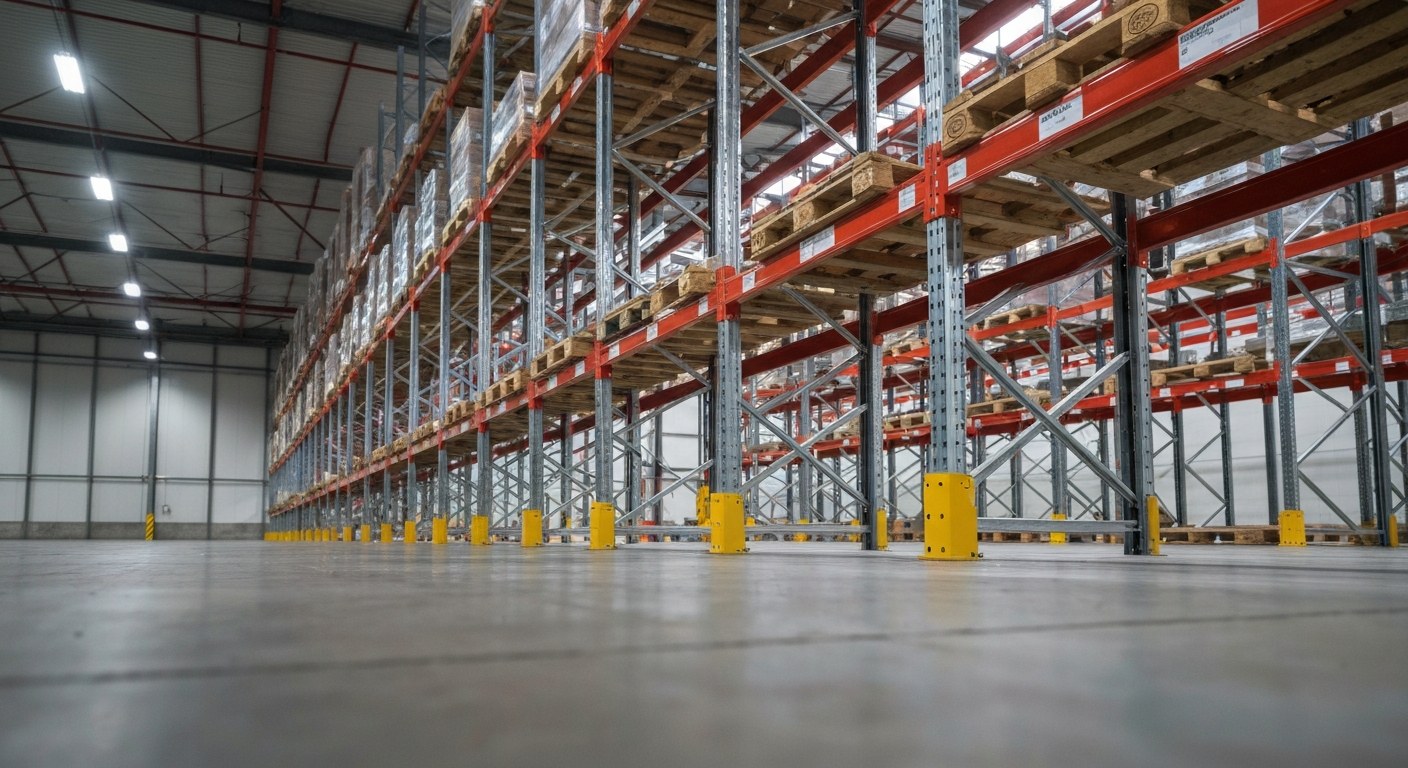
In narrow, racked aisles, overhead horizontal lighting alone is insufficient. You must actively engineer for high vertical illuminance so workers can accurately read SKU labels and barcodes on the lowest and highest shelves without eye strain. Similarly, outfitting loading docks and high-speed picking areas with optimal lighting directly maximizes worker efficiency and minimizes hazards. When handling tasks that demand extreme precision, such as Quality Control and detailed inspection zones, target an intensive 50 to 100 fc to catch minute product defects. This intense illumination aligns tightly with recommended industry visual standards.source To see how these distinct zones integrate into your broader operation, consult our framework on UPS Package Held in Warehouse? Do This Next [Quick Fix]. As illustrated below in our recommended layout breakdown:
| Warehouse Zone | Target Illumination (fc) | Primary Task Focus |
|---|---|---|
| Inactive Storage | 5 – 10 fc | Basic navigation and bulk pallet identification. |
| Active Storage | 20 – 30 fc | Frequent access and general inventory movement. |
| Racked Aisles | 30 – 40 fc | Accurate SKU and barcode reading across all elevations. |
| Loading Docks | 30 – 50 fc | High-speed staging, loading, and receiving efficiency. |
| Quality Control | 50 – 100 fc | High-precision defect inspection and detailed sorting. |
Quality Metrics: Uniformity, Glare, and CRI
Hitting your target foot candles for warehouse illumination is only the beginning; relying solely on raw brightness falls short if you neglect how that light is distributed. When designing a workspace, you must prioritize lighting uniformity to prevent hazardous dark spots that cause eye fatigue and slow down operations. Aiming for an optimal uniformity ratio between 1.2 and 1.5 spacing criteria (S/MH) ensures seamless transitions across your facility.
Modern lighting strategies depend on integrating these essential quality metrics into your initial planning phase. Addressing these factors directly influences worker safety and operational efficiency:
- Lighting Uniformity: Balancing light levels across aisles eliminates shadowed areas, reducing strain and improving Is Amazon Flex Worth It? 2026 Pay [Hidden Truth].
- Glare Reduction: Managing the Unified Glare Rating (UGR) is vital for effective glare reduction. Meeting stringent UGR standards prevents disability glare, protecting forklift operators from temporary blindness when navigating high-rack environments.
- Color Accuracy: Incorporating a high color rendering index (CRI) in your high bay LED fixtures guarantees that your teams can accurately identify color-coded labels and inventory instantly.
By mastering these dimensions of light quality, you elevate your facility beyond basic compliance, creating a safer, highly productive environment optimized for modern logistics.
How Ceiling Height and Environment Impact Lighting Design
Beyond these quality metrics, understanding how vertical space dictates your illumination strategy is critical. Your structural dimensions directly influence spacing-to-mounting height ratios, meaning high ceilings demand specialized high bay fixture placement. You must utilize precise light distribution patterns to push illumination down to the work plane without excessive waste. Miscalculating these geometry requirements often creates dangerous dark zones.
Beyond structural dimensions, the physical environment alters how illumination behaves. Wall and floor reflectance—driven by surface colors and material finishes—significantly bounces light and affects overall foot candles. A bright epoxy floor dramatically amplifies ambient light compared to darkened concrete. You must factor these reflections into your baseline metrics. As illustrated below:

Modern facilities must also manage dynamic variables. Integrating daylight harvesting and responsive occupancy sensors adds variables into these complex environmental calculations. Your system must react to sunlight entering through skylights, seamlessly adjusting artificial output to maintain stability. To optimize this setup, evaluating Warehouse Lighting Calculator [5-Minute Guide] and following advanced energy protocols ensures your infrastructure remains efficient and fully compliant.
Measuring and Maintaining Optimal Illumination
Once your advanced controls and fixtures are installed, achieving the correct foot candles for warehouse environments requires precise verification and ongoing upkeep rather than relying on outdated floor-level readings.
- Establish the accurate work plane. Rather than measuring at the floor level—an outdated practice—you must hold your light meter exactly 30 inches above the ground. This reflects the standard working surface for most industrial tasks.
- Capture comprehensive light readings. Navigate your aisles to record both horizontal and vertical illuminance. If you notice discrepancies between your physical meter readings and your initial photometric analysis, you may need to adjust fixture angles or refine your Best industrial robot vacuum? Read this first [2026].
- Maintain fixture cleanliness and efficiency. Implement a scheduled cleaning routine to prevent dirt accumulation from drastically lowering fixture lumen output over time. Furthermore, pairing clean lenses with occupancy sensors ensures your system maintains peak brightness while preserving the long-term integrity of your installation.
FAQ
How many foot candles do I need for a warehouse?
For general warehouse spaces, you typically need between 10 and 30 foot candles, depending on the specific tasks being performed. Bulk storage areas only require around 10 foot candles, while active picking zones demand up to 50 foot candles for safety and accuracy. Evaluating your exact layout using IES guidelines ensures your lighting strategy aligns with modern efficiency standards.
What is the OSHA minimum for warehouse lighting?
OSHA requires a minimum of 5 foot candles for general indoor storage rooms and warehouses to maintain a safe working environment. However, this is strictly a safety baseline, and modern facilities often design their lighting far above this threshold to boost productivity. You can review the exact stipulations in the OSHA 1926.56 standard for illumination to ensure full compliance.
How many foot candles are required for picking and packing?
Picking and packing stations require significantly brighter lighting, usually ranging from 30 to 50 foot candles, to allow workers to read labels accurately. If your team handles small parts or detailed inspections, you should aim closer to the 50 foot candle mark. Proper illumination in these active zones drastically reduces errors and eye strain over long shifts.
What is the difference between active and inactive storage lighting?
Active storage areas experience constant forklift and pedestrian traffic, requiring around 20 to 30 foot candles for operational safety and visibility. In contrast, inactive or bulk storage zones only need about 10 foot candles since they are accessed infrequently. Implementing energy-efficient motion sensors in your inactive zones is a smart strategy to minimize electricity costs while maintaining compliant lighting levels.
How do you measure foot candles accurately in an industrial space?
You must use a calibrated light meter, holding it horizontally at the typical working height, which is usually 30 inches above the floor. Take readings at various grid points across your warehouse, especially in shadowed aisles, to calculate the average overall illuminance. Regular auditing ensures you remain compliant with the latest NEMA lighting standards and local regulations.
Why is vertical illuminance important in racked aisles?
Vertical illuminance ensures that light reaches the vertical faces of your racking systems, not just the floor, so workers can easily identify inventory stacked at higher levels. If you only focus on horizontal foot candles, your aisles will suffer from deep shadows and compromised safety. Upgrading to specialized aisle-lighting optics distributes light evenly across all vertical rack faces.
What are the IES lighting standards for warehouses in 2026?
The latest IES RP-7 standards for industrial facilities recommend 10 to 30 foot candles for general storage and up to 50 foot candles for detailed tasks. These updated guidelines strongly emphasize energy efficiency and the integration of smart LED lighting controls to optimize energy use. Adhering to these recommendations ensures your warehouse remains competitive, visually comfortable, and cost-effective for the future.
Maximizing Efficiency Through Optimal Illumination
Balancing OSHA safety minimums, IES recommendations for task visibility, and strict modern energy codes is essential when finalizing your facility’s illumination strategy. Achieving this alignment protects your personnel, reduces errors, and drives down operational overhead. Your lighting infrastructure is a critical operational asset that directly impacts everyday throughput and facility safety.
To ensure your building operates at its absolute best, start by conducting a comprehensive photometric analysis of your floor plan. Use these data-driven insights to upgrade your current layout with modern high-bay LED systems and intelligent controls, locking in peak operational efficiency and long-term regulatory compliance.
Get our latest guides, news, and insights highlighted in your Google Search & AI Overviews.