Zappos Safety Shoes for Amazon Employees: Top Rated Models, Sizing & Break-In Guide
✨ This article was AI edited. Editorial responsibility: The Future Warehouse.
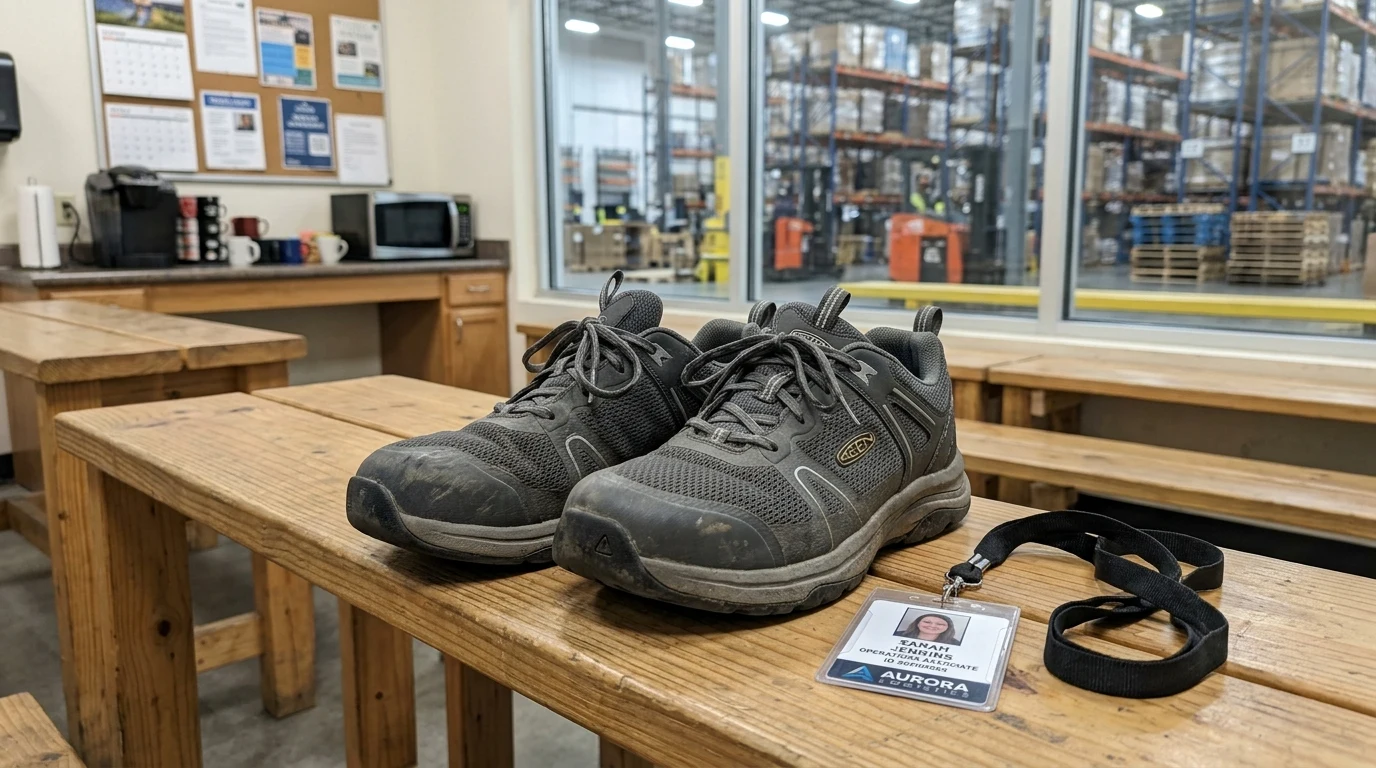
Walking 15,000 to 25,000 steps per 10-hour shift on polished industrial concrete requires safety footwear that delivers the optimal balance of ASTM-certified impact protection, dynamic arch support, anti-fatigue cushioning, and lightweight flexibility. For Amazon fulfillment center, sort center, and delivery station associates utilizing their annual $110 Zappos at Work footwear subsidy, selecting the right safety shoe model and properly sizing protective toe caps makes the difference between chronic plantar fasciitis and pain-free peak productivity.
Amazon Mandatory Safety Shoe Standards & Facility Regulations
Amazon’s Environmental Health & Safety (EHS) team strictly enforces protective footwear standards across all North American and European operational buildings. Before ordering through Zappos at Work, associates must verify their chosen footwear meets corporate compliance rules:
- ASTM F2413 I/75 C/75 Certification: The toe cap must withstand 75 ft-lbs of kinetic impact energy and 2,500 lbs of static compressive crushing force.
- Safety Toe Types (Composite vs. Alloy vs. Steel): All three types are approved. However, Composite Toes (carbon fiber/fiberglass) are strongly recommended to breeze through metal detector security portals without shoe removal.
- Slip Resistance (ASTM F3445): Mandatory oil- and water-resistant rubber outsoles engineered for smooth concrete floors and wet trailer ramps.
- Forbidden Footwear: Soft-toe running shoes, open-toe sandals, canvas sneakers, mesh fashion shoes without protective toe caps, and slip-on overshoes are strictly prohibited on active operating floors.
Top Rated Zappos Safety Shoes for Amazon Associates
Based on verified feedback from Tier 1 associates, waterspiders, pickers, and stowers, the following models rank as the top performers for high-mileage warehouse shifts:
| Brand & Model | Toe Material | Weight per Shoe | Key Ergonomic Feature | Amazon Out-of-Pocket Cost |
|---|---|---|---|---|
| Keen Utility Vista Energy Low | Carbon-Fiber Composite | 16.8 oz (Lightweight) | KEEN.ReGEN compression midsole (+50% energy return) | $0.00 – $15.00 |
| Reebok Work Sublite Cushion Work | Alloy Safety Toe | 12.5 oz (Ultra-Light) | Sublite foam midsole with deep flex grooves | $0.00 (Fully Covered) |
| Timberland PRO Radius Knit | Composite Safety Toe | 17.2 oz (Athletic Profile) | Anti-Fatigue technology polyurethane footbed | $0.00 – $10.00 |
| Puma Safety Velocity 2.0 | Fiberglass Composite | 18.1 oz | IMPULSE.FOAM dual-density cushioning | $10.00 – $20.00 |
| Skechers Work Bulklin – Lyndee | Composite Safety Toe | 15.4 oz | Memory foam cushioned comfort insole | $0.00 (Fully Covered) |
Critical Sizing & Fit Rules for Safety-Toe Shoes
The most common mistake warehouse workers make is ordering safety shoes in their standard running sneaker size. Safety toe caps (whether composite or steel) are rigid and will never stretch or mold to your toes. Follow these proven fitting rules:
1. Order a Half-Size Larger (or Wide ‘EE’ Width)
During a 10-to-12 hour shift, prolonged standing causes feet to naturally swell by up to 8–10% in volume. Ordering a half-size up (e.g., 10.5 instead of 10.0) or choosing a Wide (EE) width ensures your pinky toe and big toe never rub against the hard outer composite cap walls.
2. The “Thumb Width” Safety Clearance Test
When trying on your new shoes, stand up and slide your foot forward until your heel is locked into the rear heel counter. You should have roughly a half-inch (a thumb’s width) of clearance between your longest toe and the inside front of the protective toe box.
3. Pair with Moisture-Wicking Merino Wool or Compression Socks
Cotton socks trap moisture and cause severe friction blisters. High-density merino wool socks (e.g., Darn Tough or Fox River) or 15–20 mmHg graduated compression socks accelerate venous blood return, drastically reducing lower-leg swelling and fatigue.
Specialized Facility Requirements: Fresh, Air Hubs, and Sort Docks
Different Amazon operational nodes present unique environmental demands requiring targeted footwear features:
- Amazon Fresh & Grocery Cold Storage: Associates working in 34°F chill rooms or -10°F deep freezers require 200g–400g Thinsulate thermal insulation and non-metallic composite toes to prevent cold conduction.
- Amazon Air Hubs & Tarmac Sortation: Tarmac personnel require puncture-resistant midsole plates (ASTM PR) and waterproof GORE-TEX membranes to withstand aviation weather extremes.
- Outbound Ship Docks & Fluid Loading: Associates working inside 53-foot intermodal trailers benefit from high-traction oil-resistant chevron tread patterns and reinforced TPU abrasion toe guards.
Orthopedic Foot Care and Plantar Fasciitis Prevention
Logging 100+ miles per month on unforgiving sealed warehouse concrete places intense mechanical load on the plantar fascia ligament and Achilles tendon. Seasoned logistics veterans maintain a daily orthopedic recovery routine:
- Morning & Shift-End Plantar Stretches: Gently pull your toes upward toward your shin for 30-second intervals to stretch the plantar fascia before taking your first morning steps.
- Frozen Water Bottle Arch Rolling: Roll the arch of your foot over a frozen cylindrical water bottle for 10 minutes after every shift to reduce inflammation.
- Rotating Dual Footwear: Alternating between two pairs of approved safety shoes allows midsole EVA foam to decompress fully over a 48-hour recovery cycle.
Break-In Protocol: Preparing for Your First Day on the Floor
Never wear a brand new pair of safety shoes straight out of the box for a 10-hour peak shift. Implement a gradual break-in schedule:
- Day 1–2: Wear the shoes around the house for 2–3 hours with your thick work socks to soften the upper leather and collar padding.
- Day 3–4: Wear them during your morning shift hours (first 4 hours), then switch to your backup safety shoes for the remainder of the shift.
- Day 5+: The midsoles and footbeds will have adapted to your gait, providing optimal full-shift cushioning.
Maximizing Your Free Insole and Replacement Benefits
Through the Zappos at Work Amazon program, associates are entitled to add select orthopedic insoles directly to their cart for free or heavily subsidized rates. Premium anti-fatigue footbeds (such as Timberland PRO Inherent Anti-Fatigue or Protalus ergonomic alignment insoles) absorb up to 80% of ground impact shocks before they reach your knees and lumbar spine.
Related Warehouse Career & Ergonomics Guides
To explore facility operations, career advancement tracks, and workplace safety protocols across major logistics hubs, read our detailed guides on Amazon warehouse roles, shifts, and compensation, how to redeem your $110 annual Zappos shoe voucher, and navigating Amazon fulfillment center facilities.
Frequently Asked Questions (FAQ)
What happens if my safety shoes wear out before the year ends?
If your shoes suffer manufacturer defects or structural failure within the first year, contact Zappos at Work customer support. They frequently issue warranty replacement pairs or replacement credits under their 365-day customer satisfaction guarantee.
Can I wear shoe covers (turbotoes) instead of safety shoes?
Amazon provides temporary composite/steel overshoe slip-ons (often called “turbotoes” or “clowns”) for visitors or employees awaiting their shoe shipment. However, turbotoes are strictly temporary and cannot be used as a permanent daily footwear solution.
Get our latest guides, news, and insights highlighted in your Google Search & AI Overviews.