Complete Guide to Walmart WFS Warehouse Locations & Product Types
✨ This article was AI edited. Editorial responsibility: The Future Warehouse.
If you are a seller expanding into Walmart Fulfillment Services (WFS), you are likely asking a very common question: “Where is the complete list of walmart warehouses locations and by product type for wfs?” Unlike other major fulfillment networks that plaster their distribution maps across the web, Walmart takes a decidedly different approach. The retail giant operates one of the most sophisticated supply chain networks in the world, processing millions of items daily through specialized hubs and distribution centers (DCs).
However, locating a definitive directory of these WFS locations is not as straightforward as it seems. In this guide, we dive deep into how Walmart manages its fulfillment centers (FCs), how product types dictate where your inventory is shipped, and the inner workings of dynamic routing to help you streamline your e-commerce operations.
Why Walmart Doesn’t Publish a Full WFS Directory
When sellers look for a static walmart wfs locations map online, they often hit a wall. Why? Because the Walmart supply chain is constantly evolving and intensely proprietary. Rather than operating static, isolated nodes, Walmart manages an interconnected web of high-tech fulfillment centers designed for speed, efficiency, and proximity to the end customer.
Walmart keeps the exact physical addresses of all its WFS-specific warehouses mostly internal to protect its competitive advantage and prevent unwanted freight traffic. More importantly, publishing a fixed list of walmart warehouses locations and by product type for wfs would be misleading. The network is agile. Facilities are frequently retrofitted with robotics, updated to handle different categories of goods, or shifted in purpose to meet seasonal demands. As an e-commerce manager or logistics professional, you don’t need a static map; you need an understanding of how the algorithm assigns your inventory to the most optimal location at any given time.
How Dynamic Routing Works for WFS Sellers
The secret engine powering Walmart Fulfillment Services is dynamic routing. When you create a shipping plan in the Walmart Seller Center, you are not picking a warehouse off a list. Instead, the WFS routing algorithm evaluates several critical data points in real-time.
Dynamic routing looks at the origin of your shipment, the size and weight of your items, historical customer demand for those specific SKUs, and the current storage capacity at various fulfillment centers across the country. Based on this complex math, Walmart automatically assigns your inbound shipment to the optimal facility—or splits it across multiple facilities. This system minimizes the distance between your products and the end consumer, ensuring that your items are eligible for coveted two-day or next-day delivery tags.
While this means you have less manual control over the destination, it drastically simplifies your logistics. You trust the algorithm to position your inventory where it has the highest probability of selling quickly, taking the guesswork out of regional demand planning.
Finding Your Assigned WFS Locations in Seller Center
So, if there is no master public map, how do you know where to send your goods? If you are figuring out how to ship to walmart wfs, the answer lies entirely within the Walmart Seller Center.
To find your specific assigned WFS locations:
- Log into your Walmart Seller Center dashboard.
- Navigate to the WFS inventory management tab.
- Begin the process of creating a new Shipping Plan.
- Input your product details, quantities, and origin address.
- Review the routing results.
Only at the final stage of creating a shipping plan will Walmart generate the shipping labels and reveal the exact addresses of the fulfillment centers designated for your current shipment. It is crucial to remember that the warehouse assigned today for a specific SKU might be different next month. Always rely on the active shipping plan rather than historical addresses to avoid costly routing errors.
Specialized Hubs: Where Different Product Types Go
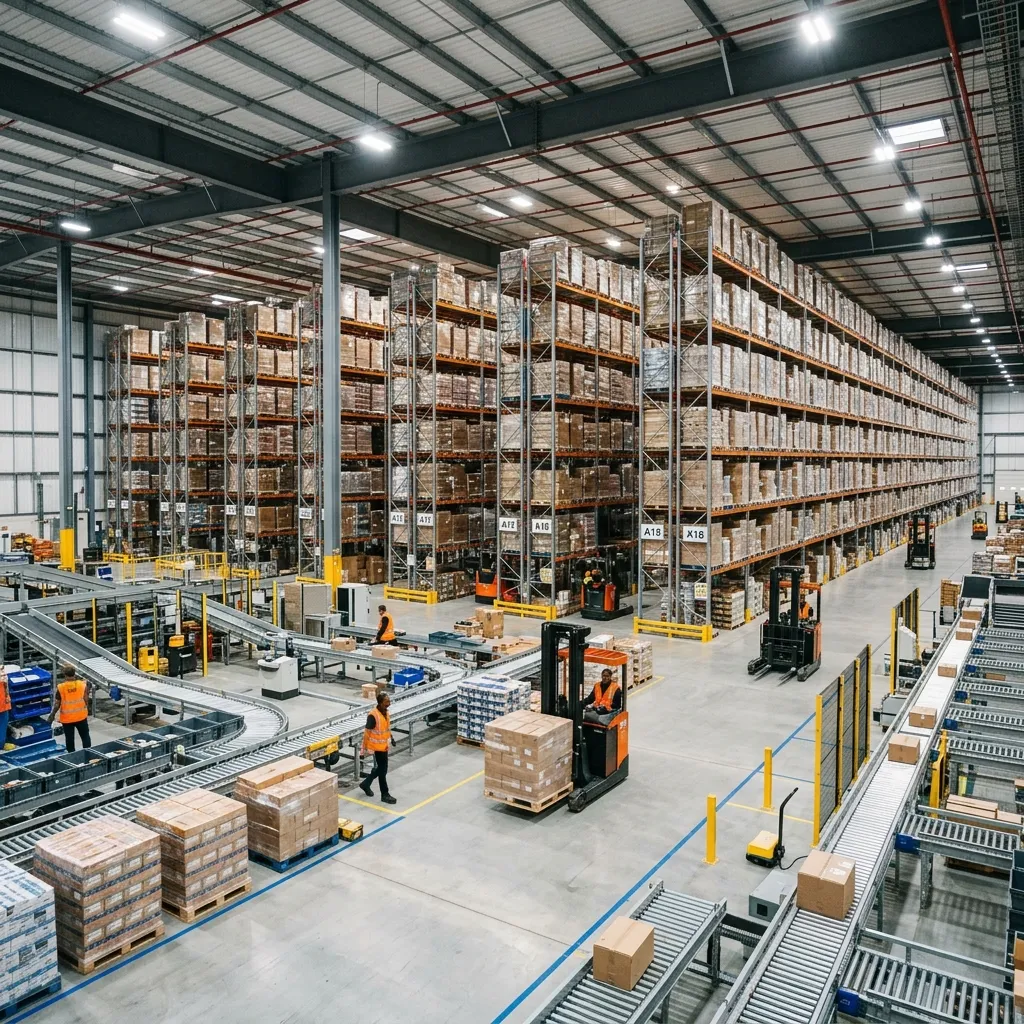
Not all fulfillment centers are created equal. Walmart’s infrastructure relies on specialized hubs designed to handle specific types of merchandise safely and efficiently. The way your inventory is routed heavily depends on the product type.
For instance, apparel and standard-sized electronics typically flow into heavily automated, high-velocity FCs. These facilities use robotics to pick and pack small-to-medium items rapidly.
On the other hand, if you are selling oversized items like patio furniture, large televisions, or heavy fitness equipment, your goods will be routed to specialized bulky fulfillment centers. These warehouses have wider aisles, specialized forklifts, and safety protocols designed specifically for large freight.
Similarly, hazardous materials (Hazmat), perishable goods, and fresh items have stringent storage requirements. Walmart utilizes distinct facilities equipped with climate control, cold storage, and specialized containment areas to manage these sensitive categories. Understanding that your products are sorted by these physical requirements explains why a diverse catalog of goods will often be split into multiple shipments heading to different specialized hubs across the country.
WFS Prohibited Products and Requirements
Before you start packing your boxes, you must ensure your items actually qualify for WFS. Walmart maintains strict product type requirements to keep their network running safely and legally. Attempting to send restricted items can result in your shipment being rejected, returned at your expense, or even account suspension.
Prohibited products generally include ammunition and firearms, heavily regulated chemicals, certain types of batteries that exceed size limits, and perishable grocery items that do not meet specific shelf-life criteria (unless explicitly approved for a specialized fresh program). Furthermore, all items must meet standard WFS dimension and weight limits.
It is highly recommended to frequently check the updated prohibited and restricted lists within the Seller Center before forecasting your WFS inventory, as compliance standards often shift with new federal regulations and internal safety audits.
How to Optimize Your WFS Shipping Plan
Mastering the walmart wfs routing guidelines can drastically reduce your inbound freight costs and improve your margins. While you cannot override the dynamic routing system, you can optimize how you feed data into it.
First, consolidate your shipments wherever possible. Grouping similar product types together before initiating a shipping plan can sometimes influence the algorithm to assign fewer destination facilities, minimizing your LTL (Less Than Truckload) or parcel costs.
Second, ensure your catalog data is pristine. The algorithm routes based on the weight and dimensions listed in your item setup. If your measurements are artificially high or inaccurate, your items may be needlessly sent to a bulky fulfillment center, incurring higher storage and fulfillment fees.
Lastly, lean into predictive planning. Since you cannot rely on a static walmart fulfillment center map 2024 to plan your freight lanes, build flexibility into your logistics budget. By maintaining accurate inventory levels in Seller Center and consistently shipping in optimal quantities, you allow Walmart’s dynamic routing to do what it does best: place your products exactly where the buyers are.
Get our latest guides, news, and insights highlighted in your Google Search & AI Overviews.