Warehouse Order Selector: What Is It? [Real 2026 Pay]
Over 70% of distribution center operating costs stem directly from order picking. Behind every flawlessly executed e-commerce delivery, a warehouse order selector plays the most critical role. Whether you manually fulfill pallets or maneuver a man-up forklift, you form the physical backbone of the global supply chain.
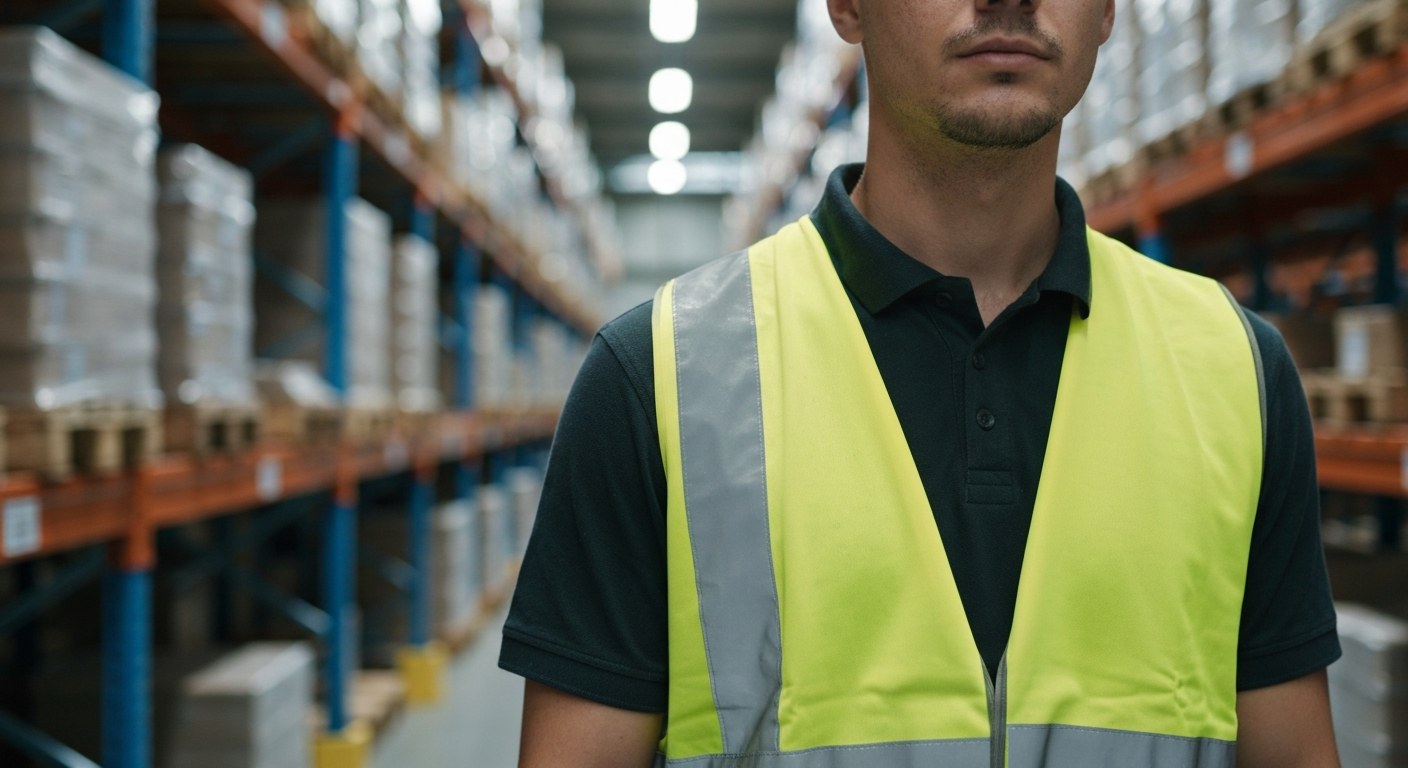
Evaluating career paths or seeking ways to maximize warehouse productivity requires understanding this essential position. You will discover precisely what these specialists accomplish daily. Next, you will learn how modern ergonomic design and material handling equipment shape the workflow. Finally, you will see what realistic compensation and career growth look like in 2026.
What Is a Warehouse Order Selector?
Before pursuing the career growth this role offers in 2026, you must first understand your fundamental duties. As an essential front-line worker, you retrieve exact items from vast inventory locations to fulfill customer requests. Without your precision, the entire flow of warehouse logistics would grind to a halt.
Understanding the distinct boundaries of this position remains crucial. While smaller operations might blend duties, high-volume fulfillment centers strictly separate item selection from manual packing operations. Your responsibilities focus purely on rapid, accurate retrieval rather than boxing and taping parcels.
Daily workflows follow a highly structured sequence. The cycle begins the moment you receive a pick ticket. This document guides you efficiently through the aisles. After securely gathering all requested merchandise, you stage the complete order at designated outbound docks. This prepares the shipment for outbound transport. Ensuring a seamless handoff often requires coordination with Why Old Packaging Fails in 2026 [The Tech Shift].
Translating these core responsibilities into action requires navigating a fast-paced physical workspace.
A Day in the Shift: Environments and Expectations
Stepping onto the floor means embracing a dynamic, physically rigorous schedule. Your daily expectations revolve around maintaining a relentless pace. This speed helps facilities meet today’s aggressive e-commerce delivery guarantees. The environment you work in dictates much of your routine. To visualize a typical zone setup, review the example layout shown here:
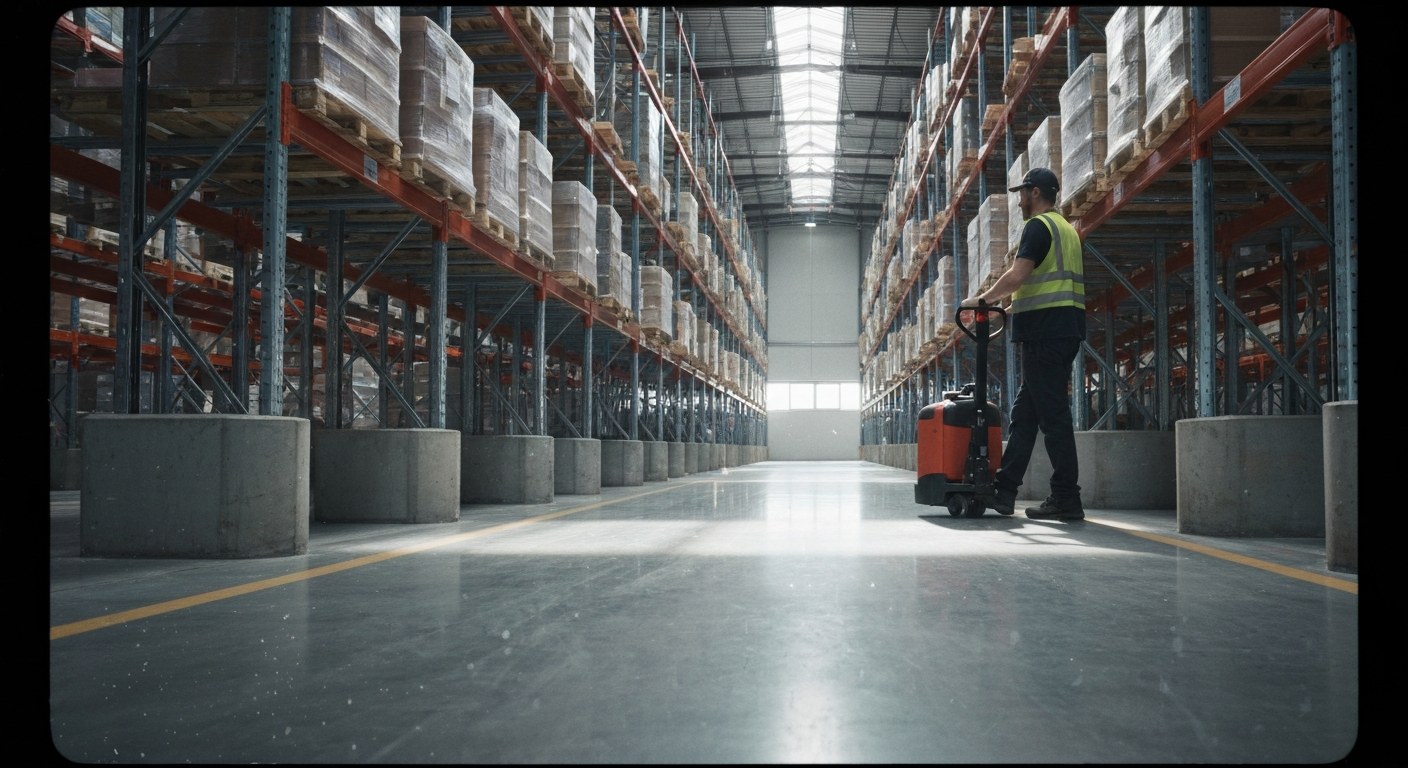
Working conditions vary drastically depending on the facility, which directly impacts overall supply chain efficiency. A typical shift requires you to navigate several core realities:
- Climate extremes: You might pull orders in standard ambient temperatures. Alternatively, you could require heavy thermal gear when operating within cold storage and freezer facilities.
- Physical navigation: Expect to cover miles of ground on foot or via riding pallet jacks. You will maneuver through massive aisles and safely manage rigorous vertical storage configurations.
- High-speed fulfillment: Sustaining a rapid work rate throughout your shift is mandatory. This pace keeps you aligned with tight same-day delivery SLAs and Why Old Packaging Fails in 2026 [The Tech Shift] without sacrificing accuracy.
Meeting these rigorous physical demands and high-speed quotas requires the right technological and mechanical support.
Essential Equipment: From RF Scanners to Forklifts
Navigation and WMS Integration
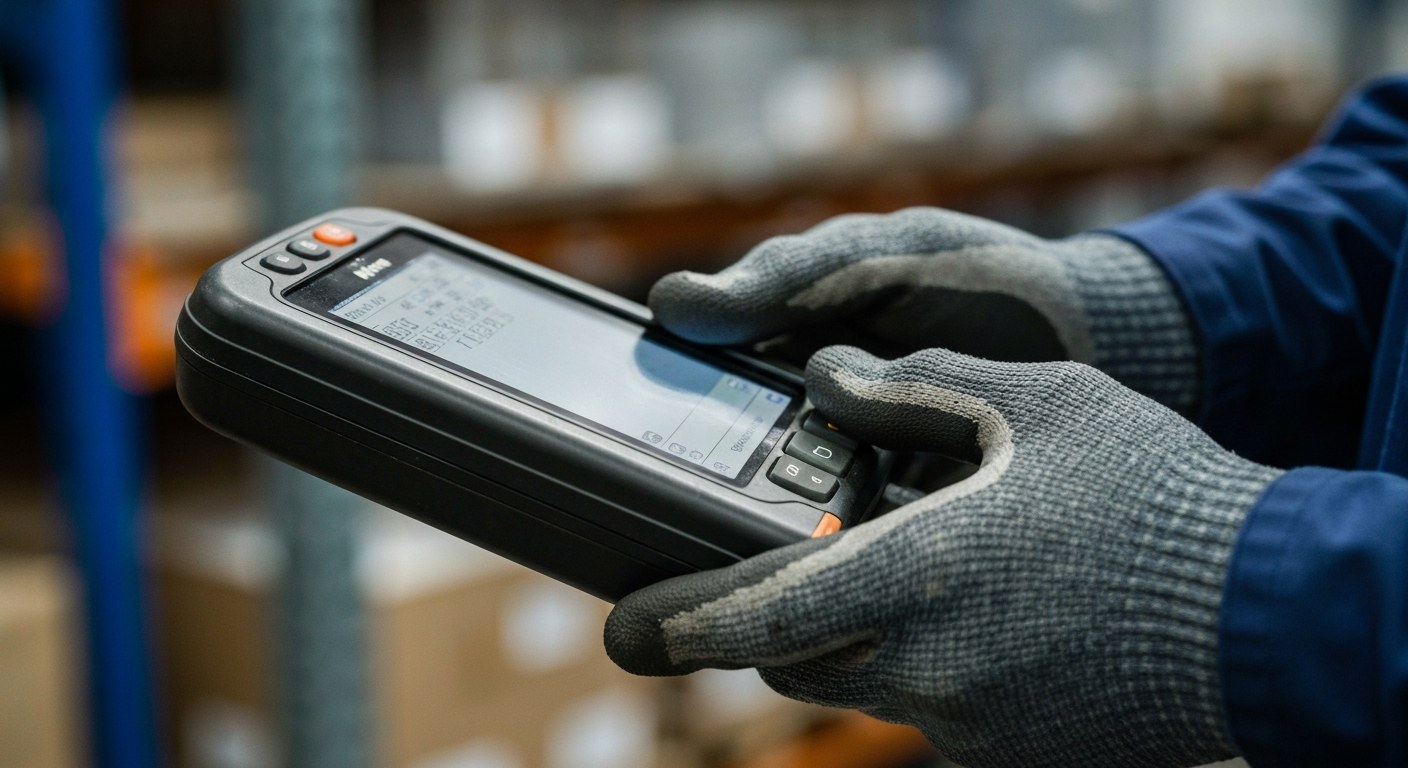
Your primary connection to the facility’s digital brain is the Warehouse Management System (WMS). You interact seamlessly with this centralized software using handheld or wearable RF (Radio Frequency) terminals. These devices instantly direct your routing and verify exact bin locations. They also update inventory counts in real time, drastically reducing human error. Mastering these digital interfaces proves just as vital as handling physical freight. This is especially true when coordinating complex multi-zone Third Party Warehousing Explained (5 Mins).
Powered Industrial Trucks (PIT)
Beyond digital tools, robust material handling equipment transports goods securely. Some entry-level environments utilize basic manual pallet jacks. However, modern high-volume facilities require proficiency with an electric pallet jack for floor-level operations. Electric riders speed up cross-facility transit. When you need to pull inventory at elevation, reach trucks and specialized man-up forklifts become absolutely essential. You will frequently operate industry-standard machines engineered by leading manufacturers like Crown Equipment and Raymond.
Navigating through extremely narrow aisles often means your operator cabin integrates with advanced guided wire systems. These automated floor-steering aids allow you to focus entirely on lifting and extracting pallets safely. This technology ensures peak efficiency without scraping racks or compromising facility infrastructure. Familiarizing yourself with these distinct vehicle categories guarantees you can adapt to any modern logistics environment.
Picking Methods and Performance Metrics (KPIs)
Excelling in modern logistics means adapting to diverse fulfillment strategies. Depending on the facility, you might utilize zone picking, batch picking, wave picking, or piece picking. Supervisors evaluate your success using core key performance indicators (KPIs). They will primarily monitor your pick rate and error rate. Pulling the correct items consistently maintains accurate inventory management. This precision directly elevates overall warehouse throughput.
Today’s smartest facilities integrate advanced automation and intelligent routing to optimize order picking speed. These systems guide you along optimized travel paths to minimize bottlenecks and physical fatigue. Check our guide on Why Old Packaging Fails in 2026 [The Tech Shift] to learn more about how routing logic operates. As industry performance reports demonstrate, matching the right strategy to the layout drastically improves metrics. For a clear breakdown of these strategies, review the table below:
| Strategy | Methodology | Impact |
|---|---|---|
| Zone Picking | You stay in one designated area. | Minimizes walking distance per shift. |
| Batch Picking | You fulfill multiple orders at once. | Increases small-item retrieval efficiency. |
| Wave Picking | You pull items for scheduled shipping windows. | Aligns operations with carrier departures. |
While maintaining high pick rates proves essential, speed must never compromise workplace well-being.
Safety Protocols, Ergonomics, and Certifications
Your daily performance remains inextricably linked to rigorous safety protocols. You navigate high-stakes environments where strict OSHA regulations govern every movement. Before stepping onto the floor, you will undergo comprehensive safety modules. This training effectively debunks the misconception that the role requires no formal education.
Maintaining a secure environment requires strict adherence to these operational mandates:
- Powered Industrial Truck (PIT) Certifications: Operating pallet jacks mandates specific qualifications. These credentials ensure compliance with federal safety standards.
- Mandatory PPE: Your uniform strictly enforces the use of steel-toed boots and high-visibility vests. These tools effectively mitigate daily workplace hazards.
- Injury Prevention: Integrating ergonomic design into your routine is critical. Utilizing proper lifting techniques prevents long-term musculoskeletal injuries.
Completing this training ensures you protect yourself while upholding operational integrity. Referencing workplace safety guidelines and actively participating in OSHA Warehousing Safety 2026 [Fast 5-Min Guide] helps you build a sustainable, injury-free career.
Securing this safe and productive foundation naturally paves the way for substantial financial and professional growth.
2026 Salary Expectations and Career Outlook
Planning your next career move requires understanding current compensation trends. In 2026, market rates for a warehouse order selector generally range from $20 to $26 per hour. Your specific region and active certifications heavily influence this baseline pay. As direct-to-consumer delivery expands, continuous demand for this role ensures robust job stability. According to recent labor forecasts, this sector remains incredibly resilient for dedicated workers.
Your earning potential never stays fixed. Instead, it scales directly with specialized skills. Obtaining specific equipment licenses, such as certifications for a man-up forklift or reach truck, significantly boosts your hourly rate. Employers recognize that certified operators directly enhance overall warehouse productivity. This expertise makes you a vital asset to Why Old Packaging Fails in 2026 [The Tech Shift].
Career progression from an order selector remains well-defined for those demonstrating leadership. Many experienced selectors seamlessly transition into warehouse supervisor or logistics coordinator roles. Mastering the fundamentals today positions you for lucrative management opportunities tomorrow across various UPS Package Handler Salary: 2026 Pay (Worth It?).
To further clarify what to expect in this dynamic environment, here are answers to the most common questions.
FAQ
What does a warehouse order selector do?
As a warehouse order selector, you locate, pick, and pack merchandise based on customer orders. You navigate the facility using pick sheets or wearable scanners to gather items efficiently for shipment. Your role also involves ensuring inventory accuracy and safely palletizing goods for outbound transport.
How to become a warehouse order selector?
Becoming a warehouse order selector typically requires a high school diploma and a strong willingness to learn. Most employers provide on-site training for operating pallet jacks and using voice-picking technology. Gaining preliminary logistics knowledge through resources like the Bureau of Labor Statistics guide on material movers offers a distinct competitive edge.
Is warehouse order selector a hard job?
This position is undeniably physically demanding. It requires you to stand, walk, and lift heavy items for extended periods. You must maintain a fast pace to meet daily production quotas while navigating busy aisles. Establishing a solid routine and focusing on proper body mechanics makes the workload highly manageable over time.
What is the difference between an order picker and an order selector?
Modern fulfillment centers often use the terms order picker and order selector interchangeably to describe the same core inventory duties. Some facilities might use “picker” for piece-picking small items and “selector” for building full pallets. However, your daily responsibilities generally align across both titles. Both roles focus entirely on rapid, accurate order fulfillment.
How much do warehouse order selectors make in 2026?
Competitive pay for warehouse order selectors in 2026 generally ranges from $20 to $26 per hour. This baseline heavily depends on your geographic location and shift differentials. Many companies also offer performance-based incentives for exceeding pick rates. These bonuses can significantly boost your overall earnings. For localized salary insights, consult current data from Glassdoor’s salary tracker.
Does an order selector job require a forklift license?
Entry-level order selector roles do not strictly require a forklift license prior to hiring. However, you will often need to operate motorized pallet jacks or reach trucks on the floor. Companies usually provide internal OSHA-compliant certification during your onboarding process. Earning formal external certification through resources like the OSHA Powered Industrial Trucks guidelines can accelerate your career progression.
How to improve speed as a warehouse order selector?
Improving your speed requires mastering the warehouse layout and strategically organizing your pallet builds. Focus on picking items smoothly on the move. You must also minimize backtracking through your assigned aisles. Developing a consistent rhythm with your wearable scanner or voice-picking system proves crucial for safely increasing your units per hour.
How to avoid back pain as an order selector?
To avoid back pain, consistently utilize proper lifting techniques. Keep heavy items close to your body and lift with your legs rather than your back. Wearing supportive, safety-rated footwear remains critical to reducing spinal impact while walking on concrete floors. For comprehensive ergonomic strategies, refer to the NIOSH Ergonomic Guidelines for Manual Material Handling.
Your Path Forward in Supply Chain Logistics
Armed with a comprehensive understanding of the role, you are ready to hit performance metrics and mitigate physical strain. Stepping into a position as a warehouse order selector places you at the heart of global logistics. You serve as the critical link ensuring products move efficiently from storage racks directly to consumers and businesses. Supply chains continue to modernize as consumer demand surges globally. Your ability to master picking technology and maintain peak physical stamina directly translates into significant financial rewards. This proves especially true given the competitive 2026 earning potential available in major distribution hubs.
Are you ready to secure long-term stability in a rapidly expanding industry? If so, take the next crucial step. Seek out accredited safety and equipment operation certifications to set your resume apart. Investing in the right training today allows you to confidently launch a rewarding, fast-paced career. You will quickly become a highly sought-after professional in the warehousing sector.
Get our latest guides, news, and insights highlighted in your Google Search & AI Overviews.