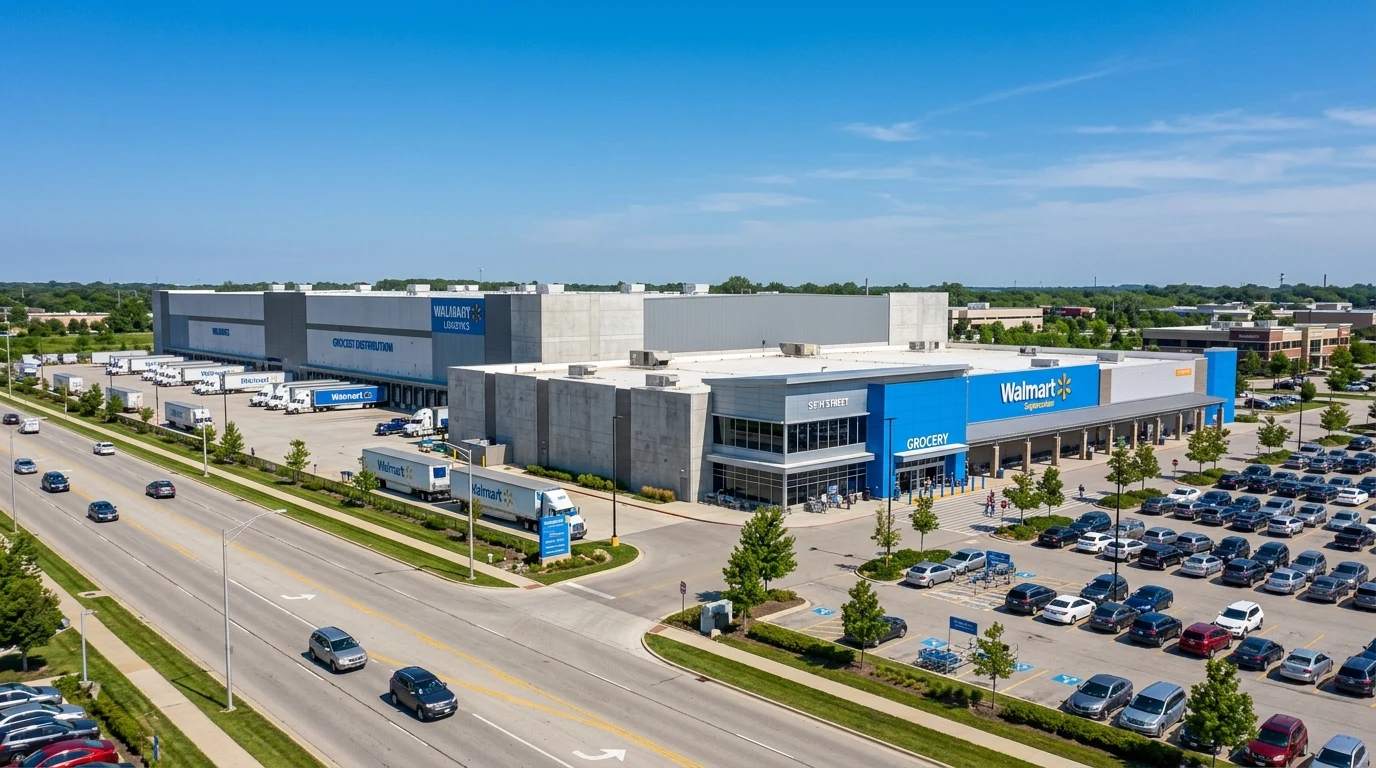
95th Street Walmart Logistics & Distribution
✨ This article was AI edited. Editorial responsibility: The Future Warehouse.
Within Walmart’s nationwide network of thousands of physical retail and supply chain properties, specific street locations frequently develop distinct logistical significance due to their positioning along major metropolitan transit rings, heavy commercial trucking corridors, and high-density consumer population centers. The 95th Street facilities across the United States—particularly prominent in the Chicago, Illinois metropolitan area and the Kansas City / Overland Park corridor—exemplify how Walmart merges traditional brick-and-mortar retail with modern localized supply chain and fulfillment operations.
Geographic Footprint: Major 95th Street Walmart Locations in the US
While municipal street grids across many American cities feature a 95th Street, two key commercial and logistics hubs dominate supplier routing and consumer search queries:
- Overland Park / Kansas City Metro (11701 W 95th St, Overland Park, KS 66214): Positioned directly along the bustling 95th Street commercial corridor adjacent to Interstate 35 and US-69. This location operates as a vital retail node connected to regional general merchandise and grocery distribution centers servicing Johnson County and the greater Kansas City metropolitan trade area.
- Chicago / Bridgeview / Oak Lawn Corridor (10260 S 88th Ave / 95th St Corridor & 2500 W 95th St, Evergreen Park, IL 60805): Serving the South Side of Chicago and surrounding suburbs along 95th Street (US Route 12/20). These facilities handle massive daily throughput, requiring tightly scheduled overnight dock deliveries to avoid interfering with dense daytime suburban commuter traffic.
- Naperville / Aurora Corridor (75th & 95th St Commercial Arteries, IL): Part of the high-velocity Western Chicago suburban distribution corridor connecting retail freight flows to I-88 and I-55 regional logistics hubs.
Store-Level Logistics: How a High-Volume Supercenter Ingests Freight
Operating a facility of this magnitude involves complex logistics that mirror regional distribution centers, adapted for dense commercial zones:
1. Overnight Cross-Dock Trailer Ingestion
Unlike standalone small stores, high-traffic Supercenters receive multiple full trailer loads (FTL) daily from regional Walmart Distribution Centers (DCs). Dedicated grocery trailers carrying fresh dairy, meat, and produce arrive via refrigerated reefers during designated time windows, while dry grocery and general merchandise trailers dock during evening staging hours.
2. The Fast Unloader and Automated Sortation System
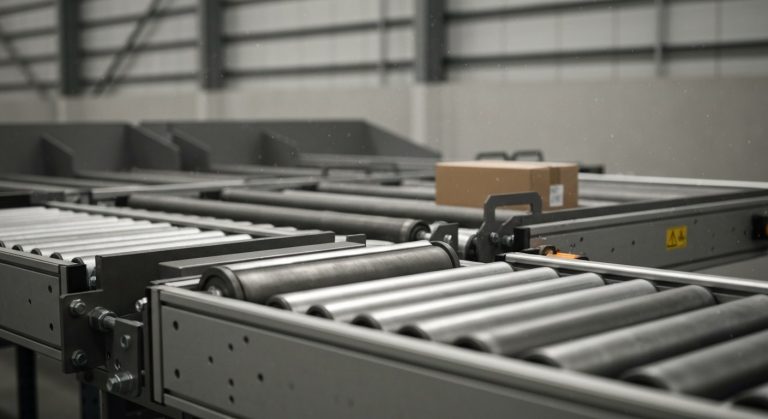
Modern high-volume stores feature automated receiving line technology known internally as the “FAST Unloader.” Inbound trailers are unloaded directly onto motorized roller conveyors equipped with omnidirectional vision scanners. The system reads case UPC barcodes, measures case weights, and automatically diverts cartons down specific zoned conveyor lanes corresponding to store departments (e.g., Grocery, Toys, Electronics, Apparel).
3. Micro-Fulfillment and Online Pickup & Delivery (OPD)
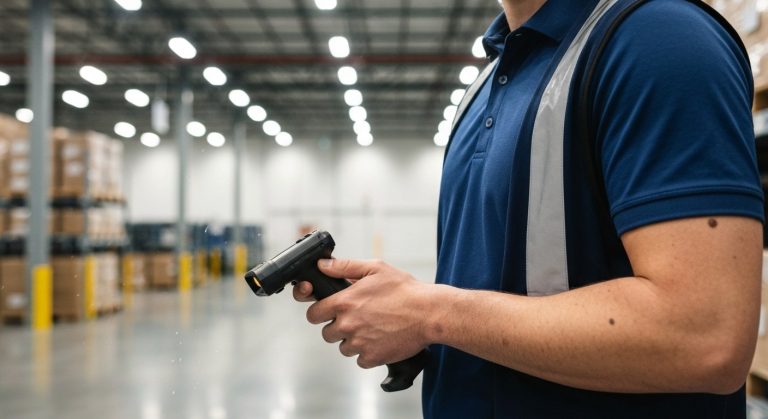
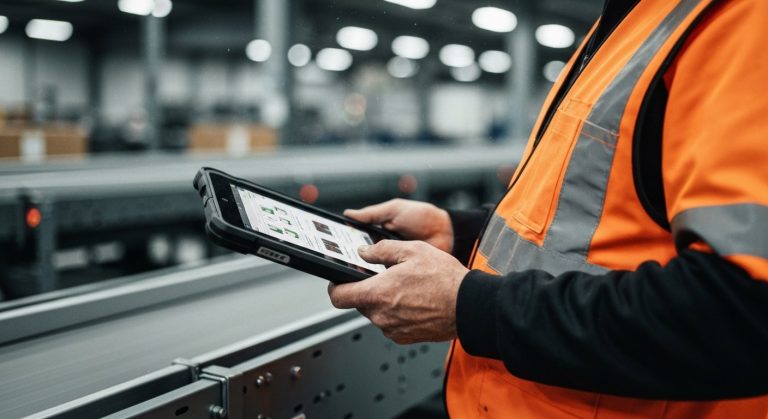
The 95th Street facilities have expanded beyond traditional retail into active micro-fulfillment centers. Dedicated backroom square footage is allocated to Online Pickup & Delivery (OPD) operations, where associates guided by handheld digital TC70/TC72 terminals pick customer orders from sales floors and dedicated backroom storage racks, staging orders into temperature-controlled chillers and ambient dispensing bays for curbside pickup and Spark Delivery drivers.
Comparative Logistics Specification Matrix
To understand the operational scope of high-velocity urban arterial facilities versus standard regional nodes, consider the comparative matrix below:
| Facility Dimension | 95th St Urban Supercenter Hub | Standard Suburban Walmart Store | Regional Walmart DC (GMDC) |
|---|---|---|---|
| Typical Daily Inbound Trailers | 4 to 8 Full Truckloads (FTL) | 2 to 4 Truckloads | 150 to 300+ Trailers |
| Receiving Dock Doors | 4 to 6 High-Bay Dock Doors | 2 to 4 Dock Doors | 80 to 140 Dock Bays |
| Delivery Window Constraints | Strict municipal noise/curfew windows | Standard scheduled daytime windows | 24/7 continuous yard operation |
| Fulfillment Role | Retail sales + Curbside/Last-Mile OPD hub | Retail sales + Curbside pickup | Bulk pallet sorting & store replenishment |
Supply Chain Coordination: Vendor Deliveries & DSD Guidelines
Direct Store Delivery (DSD) vendors—such as regional beverage bottlers, snack distributors, and commercial bakeries—replenish 95th Street locations outside the standard regional DC cross-dock pipeline. DSD operations must adhere to rigorous vendor compliance rules:
- DSD Receiving Window: DSD check-ins typically take place between 5:00 AM and 10:00 AM. Vendors must present standardized electronic invoices (EDI 810 or Dex/Nex electronic handheld synchronization).
- Security and Stamp Inspection: The store DSD receiver inspects physical case counts, checks expiration codes, verifies UPC barcodes against Walmart’s store catalog, and electronically stamps delivery manifests.
- Reclaim and Return Logistics: Damaged goods or expired items are processed through the Claims/Reclamation cage, where reverse logistics carriers consolidate salvage goods for return to manufacturer credit centers.
Integrating Urban Retail Nodes into Enterprise Logistics
As retail supply chains continue to compress delivery times, store-level distribution nodes along major thoroughfares like 95th Street will play an increasingly vital role as forward-deployed fulfillment centers. For additional technical analysis on modern warehousing architectures and corporate retail logistics networks, explore our detailed guides on Walmart warehouse alignment codes, Walmart warehouse management technology, and Amazon Prime distribution models.
Frequently Asked Questions on 95th Street Walmart Operations
Where are the primary 95th Street Walmart locations located in the US?
The most prominent locations include the Walmart Supercenter on West 95th Street in Overland Park, Kansas, and the 95th Street commercial corridor locations serving Evergreen Park and Bridgeview in the Chicago, Illinois metropolitan area.
How do high-traffic urban Walmart stores handle daily inventory restocking?
High-traffic urban locations rely on automated FAST Unloader conveyor sorters that scan and sort incoming trailer cases by department, alongside night-shift stocking associates who replenish shelves between 10:00 PM and 7:00 AM.
Can freight carriers park overnight at 95th Street Walmart stores?
Generally, no. Urban and suburban commercial corridor stores are subject to local municipal zoning restrictions and noise ordinances that prohibit overnight tractor-trailer parking unless specifically authorized by store management for active early-morning deliveries.
Get our latest guides, news, and insights highlighted in your Google Search & AI Overviews.