The Most Comfortable Working Shoes for Standing All Day
The Most Comfortable Working Shoes for Standing All Day
If you spend 8 to 12 hours a day on your feet, your footwear is your most important tool. Standing on unforgiving surfaces like concrete or hard tile without adequate support takes a massive toll on your body, leading to foot fatigue, lower back pain, and chronic conditions like plantar fasciitis. Finding the most comfortable working shoes means looking beyond aesthetics to prioritize shock absorption, ergonomic arch support, and workplace safety features.
For 2026, the lines between athletic running shoes and occupational footwear have blurred. The best brands are adopting high-tech midsole foams and advanced slip-resistant tread to keep workers pain-free and secure.
Why Your Work Shoes Matter
Wearing the wrong shoes for prolonged standing doesn’t just make your feet hurt. It disrupts your entire kinetic chain. Poor arch support causes overpronation, which rotates your knees inward and puts stress on your hips and lower back. Investing in premium work shoes provides:
- Reduced Joint Impact: Thick, energy-returning midsoles absorb the shock of hard floors.
- Plantar Fasciitis Prevention: Firm arch support and a structured heel counter reduce strain on the plantar fascia ligament.
- Better Workplace Safety: Non-slip and slip-resistant (SRC-rated) outsoles prevent hazardous workplace falls.
Top Picks by Profession and Need
1. Best Overall for Healthcare & Service: HOKA Bondi SR
Nurses, doctors, and culinary professionals swear by HOKA. The HOKA Bondi SR (Slip Resistant) takes the brand’s legendary maximum-cushioned EVA foam and wraps it in a water-resistant leather upper. It features an ultra-grippy outsole tested for medical and restaurant environments. The thick stack height drastically reduces the fatigue of 12-hour shifts, while the early-stage Meta-Rocker geometry smooths out your walking gait.
2. Best for Retail & General Standing: Brooks Ghost Max 3
If you are pacing a retail floor or working a register, the Brooks Ghost Max 3 is highly recommended by podiatrists. It offers a massive bed of DNA LOFT v2 cushioning. Unlike excessively squishy shoes that can cause instability, the Ghost Max provides a wide base and GlideRoll Rocker, keeping your foot perfectly aligned and reducing pressure under the heel and forefoot.
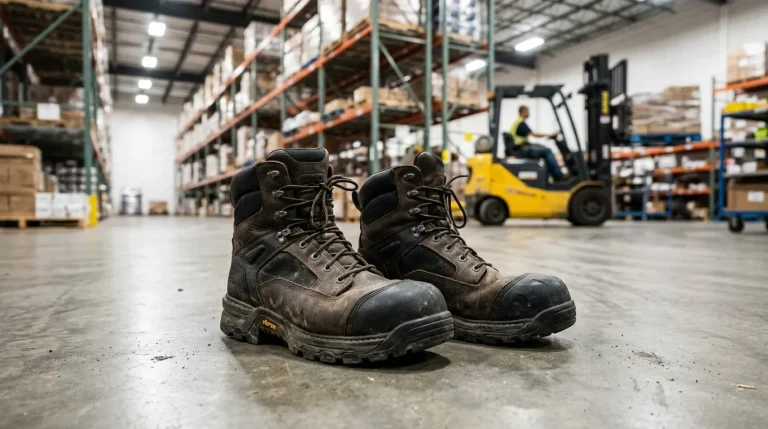
3. Best for Warehouse & Construction: Timberland PRO Series
Warehouse workers and tradespeople need protection combined with comfort. The Timberland PRO lineup features exclusive Anti-Fatigue Technology—a polyurethane footbed with geometric cone support that returns energy to the foot with every step. Models equipped with composite safety toes provide ASTM-rated crush protection without the heavy, cold burden of traditional steel toes.
4. Best for the Office & Business Casual: Cole Haan ZeroGrand
For professionals who need to look sharp but still commute or stand at a standing desk, hybrid dress sneakers are the standard. The Cole Haan ZeroGrand series pairs Oxford-style leather uppers with flexible, grooved athletic outsoles. They offer the cushioning of a premium sneaker while remaining strictly office-appropriate.
Key Features to Look For in Comfortable Work Shoes
When shopping for your next pair of work shoes, evaluate them against these critical criteria:
- EVA or PU Midsoles: Ethylene-Vinyl Acetate (EVA) and Polyurethane (PU) foams offer the best blend of lightweight shock absorption and durability.
- Slip-Resistant Outsoles: Look for shoes explicitly labeled “Slip Resistant” or holding an SRC safety rating, particularly if you work in kitchens or hospitals.
- Wide Toe Box: Feet naturally swell throughout a long shift. A wider toe box prevents blisters, bunions, and pinched nerves (Morton’s neuroma).
- Removable Insoles: Your shoes should accommodate custom orthotics if you have specific podiatric needs like flat feet or high arches.
Frequently Asked Questions
What are the best shoes for standing on concrete all day?
The best shoes for standing on concrete all day feature high-stack cushioning and shock absorption. Top recommendations include the HOKA Bondi SR, Brooks Ghost Max, and New Balance Fresh Foam X More. These models use thick EVA or similar advanced foam midsoles to drastically reduce impact on your joints.
How often should I replace my work shoes?
You should replace your work shoes every 6 to 12 months, or roughly every 300 to 500 miles of wear. Even if the outsole looks intact, the internal foam cushioning compresses over time and loses its ability to absorb shock, leading to foot and back pain.
Is memory foam good for standing all day?
Memory foam provides excellent initial step-in comfort, but it is not always enough for 8-12 hour shifts. For long-term standing, you need shoes that combine memory foam or EVA cushioning with rigid arch support and a structured heel cup to prevent foot fatigue and overpronation.
Get our latest guides, news, and insights highlighted in your Google Search & AI Overviews.