How Much Do Amazon Warehouse Workers Make in 2024?
✨ This article was AI edited. Editorial responsibility: The Future Warehouse.

How Much Do Amazon Warehouse Workers Make in 2024?
Introduction
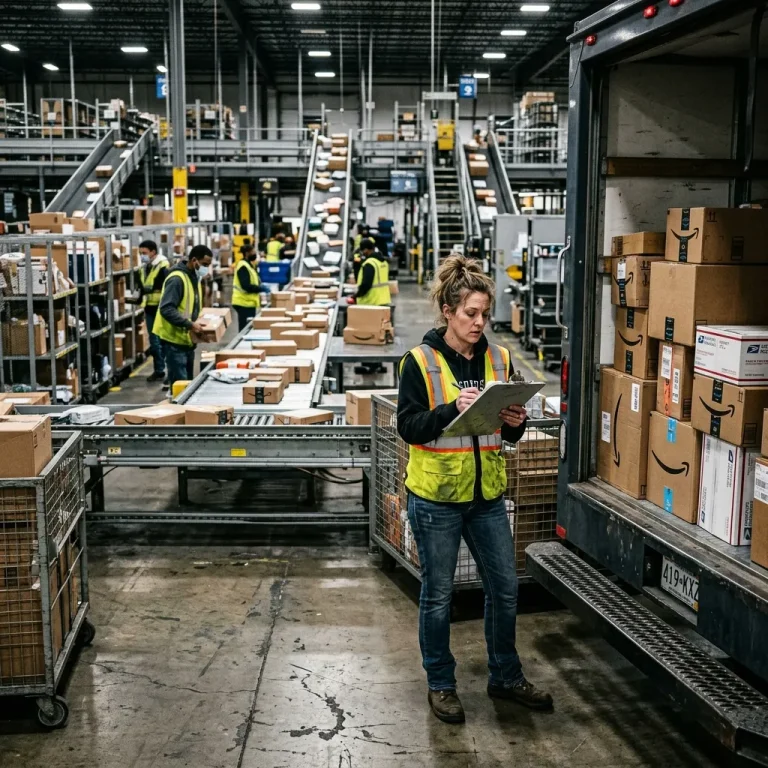
If you are looking for a reliable, fast-paced job in the logistics and distribution industry, you have likely asked yourself: how much does Amazon pay warehouse workers? As one of the world’s largest employers, Amazon has completely transformed the landscape of retail, e-commerce, and fulfillment. Stepping into an Amazon fulfillment center means joining a massive, synchronized network of dedicated Amazon Associates who work around the clock to keep the global supply chain moving and ensure packages arrive on customer doorsteps in record time.
When you are considering a job application for any role, compensation is undoubtedly the most important factor. The reality of modern warehouse work requires physical stamina, attention to detail, and a commitment to safety, and workers rightfully expect to be compensated fairly for their labor. Currently, the average starting pay for front-line Amazon warehouse workers sits at over $20 per hour in the United States, following a series of recent, highly publicized wage increases.
This comprehensive guide will walk you through exactly what you can expect when it comes to the hourly wage, the surprisingly generous benefits package, and the total compensation available to those working the floors of an Amazon facility. Whether you are looking for a temporary seasonal role to earn extra holiday cash or a long-term career in logistics management, understanding the pay structure is your first step.
Average Hourly Pay for Amazon Warehouse Workers
Amazon made major headlines a few years ago when it instituted a strict nationwide $15 minimum wage for all of its U.S. employees. This move placed significant pressure on the broader retail and logistics industries to follow suit. Since then, the company has continued to bump up its starting pay to stay competitive in a consistently tight labor market. While that $15 floor remains a hard company policy, the actual starting wages you see on job postings today are generally much higher.
Starting Wages vs. Experienced Worker Pay
For new hires walking through the doors of a fulfillment center for the first time, the base hourly wage typically ranges between $17 and $28 per hour. This wide range is heavily dependent on exactly where the facility is located and the specific role being filled.
- Entry-level Tier 1 roles: Such as pickers (who retrieve items from inventory bins), packers (who box up orders), and stowers (who organize incoming merchandise) often start near the lower or middle end of that pay spectrum.
- Specialized roles: Roles requiring specialized equipment operation, like driving a forklift, operating a pallet jack, or managing inventory control in the learning department, might command a slightly higher starting rate.
As you gain experience and build your tenure as an Amazon Associate, your pay will reliably increase. Amazon typically conducts annual compensation reviews and offers structured step plans. This means your hourly wage is guaranteed to go up at specific milestones—such as after six months, one year, two years, and three years of continuous employment. An experienced warehouse worker who has been with the company for several years will find themselves earning significantly more than the baseline minimum wage. Furthermore, there are abundant promotional opportunities to Tier 3 roles, such as Process Assistant or Transportation Associate, which come with substantial pay bumps, increased leadership responsibilities, and entirely new pay scales.
Factors That Influence Amazon Pay
While the company-wide minimums provide a comfortable baseline, what you actually take home in your paycheck depends on a few critical variables.
Location and Cost of Living
One of the most significant factors determining your starting pay is geography. Amazon operates hundreds of massive facilities across the country, from rural areas in the Midwest to booming metropolitan hubs like New York City, Seattle, and Los Angeles. To attract and retain top talent in areas where the cost of living is notoriously steep, Amazon offers a substantially higher base hourly wage. For instance, a warehouse worker in a high-cost coastal city in California might start at $21 or $22 per hour, whereas a worker in a region with a lower cost of living, such as certain parts of the South or Midwest, might start closer to $17 or $18 per hour.
Shift Differential (Overnight and Weekend Shifts)
Another massive boost to your earnings comes from the shift differential. Amazon warehouses are true 24/7 operations; they run day and night, weekends, and holidays. To incentivize workers to take on less desirable hours, the company offers extra pay on top of the standard base hourly wage.
If you are willing to work the overnight shift (often referred to as the “graveyard” or “night” shift) or commit to weekend schedules, you can expect a shift differential that typically adds anywhere from $0.50 to $3.00 or more per hour to your paycheck.
Explaining the impact of overnight shifts on pay is crucial because it can turn a standard $19 per hour job into a $22 per hour job. Over the course of a 40-hour workweek, that shift differential adds up to an extra $120 a week, or over $6,000 a year, making a massive difference in your total yearly earnings.
Amazon Warehouse Worker Benefits and Total Compensation
When evaluating a job offer, focusing purely on the hourly wage only gives you part of the picture. Amazon is widely recognized in the industry for offering a robust, industry-leading benefits package that significantly increases an employee’s total compensation. This package includes comprehensive health insurance coverage (spanning medical, dental, and vision) that begins on the very first day of employment—a rarity in the retail and warehouse sectors where many companies enforce a 90-day waiting period.
Additionally, employees receive a 401(k) retirement plan with a 50% company match, paid time off (PTO), paid vacation, and access to the highly praised Career Choice program. The Career Choice program is particularly transformative, as it pre-pays full college tuition, as well as high school diplomas, GEDs, and English as a Second Language (ESL) certificates, allowing workers to build a future beyond the warehouse.
Part-Time vs. Full-Time Benefits
It is crucial to understand the nuances by detailing the difference between part-time and full-time benefits.
- Full-time Amazon Associates (40 hours a week): Receive the maximum level of benefits. This includes the most comprehensive health coverage options, maximum PTO accrual rates, and full access to Amazon’s generous parental leave policy, which offers up to 20 weeks of fully paid leave for birthing parents and 6 weeks for non-birthing parents.
- Part-time employees (20 to 29 hours a week): Still receive highly competitive benefits, but they are prorated based on hours worked. For example, part-time workers earn paid time off and have access to dental and vision plans, but they might not be eligible for the exact same tier of medical insurance as full-time workers, or they may have to pay slightly higher premiums.
- Reduced-time employees (30 to 39 hours): Often working on three 12-hour shifts, these employees generally receive benefits much closer to the full-time package.
Regardless of your employment status, all direct employees have access to the 401(k) match, free mental health resources through the Employee Assistance Program, and the Career Choice educational benefits, making it an incredibly attractive proposition even for those not looking for a traditional 40-hour workweek.
How Amazon Pay Compares to Other Retailers
A major question for job seekers is how comparing Amazon warehouse pay to other major retailers like Walmart or Target shakes out in the real world.
- Walmart: Operates a massive, highly efficient network of its own distribution centers and offers competitive wages that often rival or occasionally exceed Amazon’s base rates depending on the local market. Walmart warehouse workers can expect to earn starting wages between $16 and $24 per hour. Like Amazon, Walmart also covers 100% of college tuition and books for its associates through its Live Better U program.
- Target: Another major competitor in the e-commerce fulfillment space, raised its starting wage range to $15 to $24 per hour for supply chain and fulfillment center workers, while also providing robust debt-free education assistance.
While the base pay across Amazon, Walmart, and Target is highly competitive and generally aligned within the same geographic market, Amazon frequently stands out because of its aggressive sign-on bonuses. During peak holiday seasons (like Prime Day and the weeks leading up to Christmas), Amazon has been known to offer hiring bonuses reaching up to $3,000 for new warehouse recruits. Furthermore, the combination of immediate, day-one access to full health benefits and the availability of high shift differentials for night and weekend work often pushes the actual take-home pay at Amazon slightly higher than the competition for flexible workers.
How to Apply for an Amazon Warehouse Job
The process of becoming an Amazon Associate is famous for its speed, accessibility, and simplicity. You do not need to submit a traditional, perfectly formatted resume, nor do you have to go through grueling, intimidating rounds of formal interviews for entry-level warehouse positions.
To apply, you simply visit the official Amazon jobs website, search for open roles in your specific zip code or city, and select a shift that perfectly fits your schedule and lifestyle. The application process typically involves filling out some basic personal information, completing a straightforward online virtual job tryout or assessment (which tests basic logic and safety awareness), and then attending a brief, in-person pre-hire appointment. At this appointment, human resources will verify your identity, process your I-9 paperwork, and complete a standard background check and oral drug test (note that Amazon generally no longer screens for marijuana for standard warehouse roles). Once cleared, you select your official start date and head into the fulfillment center for your paid day-one orientation.
Conclusion
So, how much does Amazon pay warehouse workers? With a starting pay that averages over $20 per hour in the United States, a firm $15 minimum wage policy, and excellent opportunities to earn significantly more through a shift differential, the financial proposition is undeniably strong. When you factor in the extensive day-one benefits package, ranging from comprehensive healthcare to pre-paid college tuition, the total compensation makes Amazon one of the most attractive, accessible employers in the logistics and retail space today.
Whether working in an Amazon fulfillment center is worth it ultimately depends on your physical stamina, your preferred schedule, and your long-term career goals. It is undoubtedly a physically demanding environment that requires being on your feet for long hours, but for those willing to put in the hard work, the financial stability, comprehensive benefits, and clear pathways for internal promotion or funded external education provide a solid, reliable foundation for the future.
Get our latest guides, news, and insights highlighted in your Google Search & AI Overviews.