Future Warehouse: Technologies and Strategies Shaping Warehousing 5.0
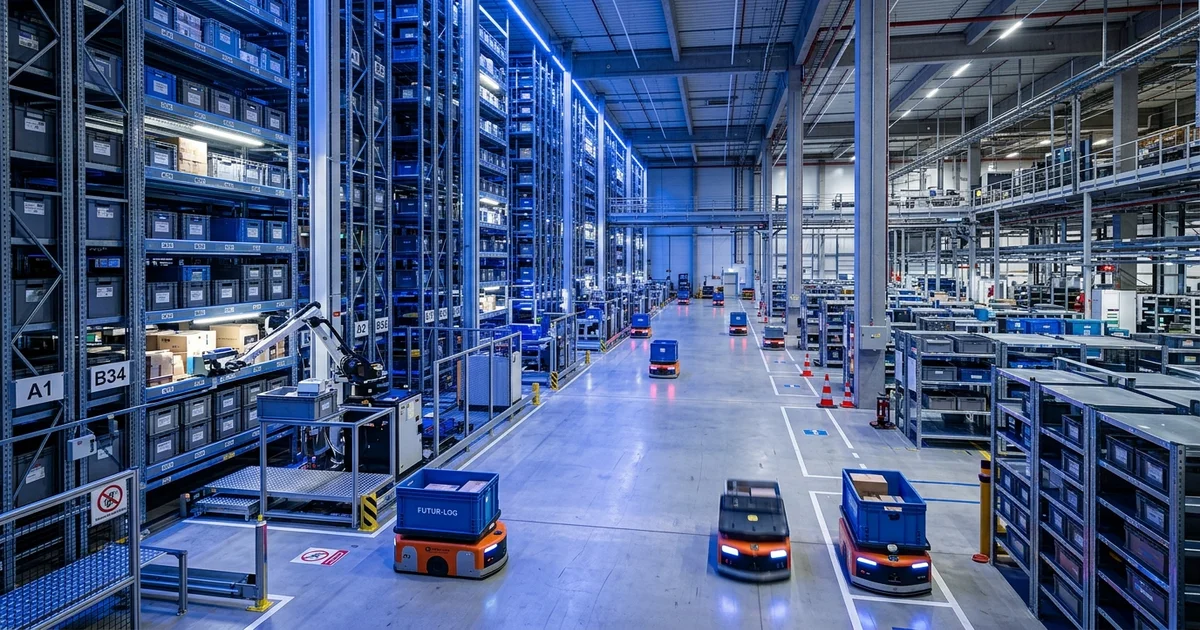
The transition toward the future warehouse replaces static, rigid storage facilities with dynamic, highly automated fulfillment hubs. Driven by supply chain volatility, labor shortages, and e-commerce demands, logistics infrastructure is shifting toward pragmatic automation, predictive analytics, and scalable robotics.
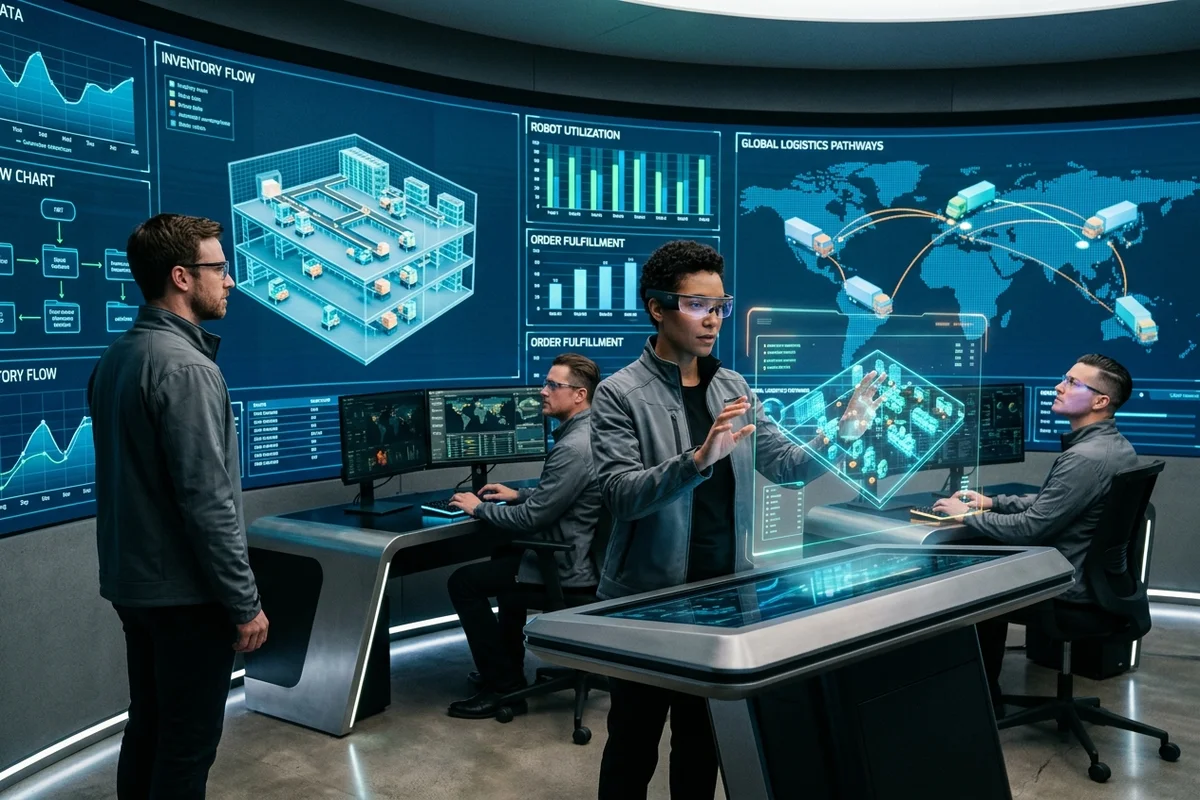
Core Technologies Defining the Future Warehouse
Modern distribution centers rely on an interconnected ecosystem of hardware and software to maximize throughput and operational resilience.
1. Autonomous Mobile Robots (AMRs) and AS/RS
Material handling is rapidly moving away from manual forklifts toward fully autonomous fleets and high-density storage frameworks.
- Autonomous Mobile Robots (AMRs): Unlike fixed AGVs (Automated Guided Vehicles), AMRs use LiDAR and computer vision to navigate dynamically around obstacles. They manage flexible material transport, goods-to-person picking, and replenishment.
- Automated Storage and Retrieval Systems (AS/RS): Cube-based storage solutions (such as AutoStore) and Vertical Lift Modules (VLMs) maximize vertical footprint, increasing inventory density while significantly reducing physical travel time.
- Robotic Piece Picking: AI-powered robotic arms equipped with computer vision are taking over individual item picking and complex sorting tasks.
2. Agentic AI and Predictive Analytics
Artificial intelligence in the warehouse has evolved from simple data dashboards to agentic systems that actively solve supply chain disruptions.
- Predictive Demand Forecasting: Machine learning algorithms pre-position high-demand inventory closer to shipping docks before orders are formally placed.
- Smart Slotting: AI analyzes velocity and seasonality to dynamically reorganize SKU placements, drastically reducing picker travel distance.
- Autonomous Execution: Agentic AI can independently identify inventory imbalances and trigger reorders or reroute workflows without waiting for human approval.
3. Digital Twins and Simulation
A digital twin is a real-time virtual replica of the physical warehouse environment. Supply chain managers use digital twins to stress-test layouts, run “what-if” bottleneck scenarios, and optimize picking routes before committing to expensive physical infrastructure changes.
4. Warehouse Execution Systems (WES)
While traditional Warehouse Management Systems (WMS) handle inventory tracking, modern Warehouse Execution Systems (WES) act as the real-time orchestrator. A WES synchronizes human labor, AMR fleets, and IoT sensors, dynamically balancing the workload across the facility to prevent congestion.
Strategic Design Shifts: Warehousing 5.0
The architectural and operational blueprint of the future warehouse prioritizes human-technology synergy and environmental sustainability.
Human-Centric Design (Cobotics)
Warehousing 5.0 emphasizes technology that augments rather than replaces human labor. Collaborative robots (cobots) handle heavy lifting and repetitive transport, while human workers transition to strategic, quality-assurance, and exception-handling roles. Wearable IoT devices and AR (Augmented Reality) smart glasses provide workers with heads-up guidance, reducing strain and cognitive load.
Modular Scalability
Fixed, monolithic automation requires massive CapEx (Capital Expenditure) and struggles to adapt. Future warehouses prioritize modular automation (Robotics-as-a-Service or RaaS). Managers can quickly deploy additional AMRs during peak seasons (like Black Friday) and scale down when demand normalizes.
Urban Logistics and Micro-Fulfillment
To satisfy same-day delivery expectations, large ex-urban mega-warehouses are being supplemented by urban logistics hotels and micro-fulfillment centers. These compact, highly automated hubs are embedded directly into dense population centers, utilizing vertical AS/RS infrastructure to fit within constrained real estate footprints.
Future Warehouse FAQ
What is the future warehouse?
The future warehouse is a highly dynamic, intelligent fulfillment hub characterized by predictive AI, autonomous mobile robots (AMRs), automated storage and retrieval systems (AS/RS), and Warehousing 5.0 human-centric design. It shifts from static storage to scalable, resilient logistics.
What technologies are used in modern warehousing?
Key technologies include Warehouse Execution Systems (WES), digital twins for simulation, collaborative robots (cobots), IoT sensor networks, and agentic AI for predictive inventory management.
How does AI impact the warehouse of the future?
AI impacts warehouses by enabling predictive analytics for demand forecasting, dynamic slotting optimization, and orchestrating autonomous robots through complex workflows without manual intervention.
Get our latest guides, news, and insights highlighted in your Google Search & AI Overviews.