ERP System Warehouse Management in 2027: Why Built-In Modules Are Failing
For years, the debate in supply chain logistics has centered on a simple question: Do you rely on the built-in module of your ERP system warehouse management, or do you invest in a standalone Warehouse Management System? But here is the harsh truth for 2027: that debate is already obsolete.
The shift from monolithic Enterprise Resource Planning frameworks to “composable” headless architectures has fundamentally changed the game. Today, the most efficient fulfillment centers aren’t asking if their ERP can handle basic inventory—they are using it as a coordination layer for multi-step AI agents and robotics. As operations scale, the old method of relying solely on out-of-the-box modules falls drastically short of handling the complex realities of modern distribution.
The Evolution of ERP Systems in Warehouse Management
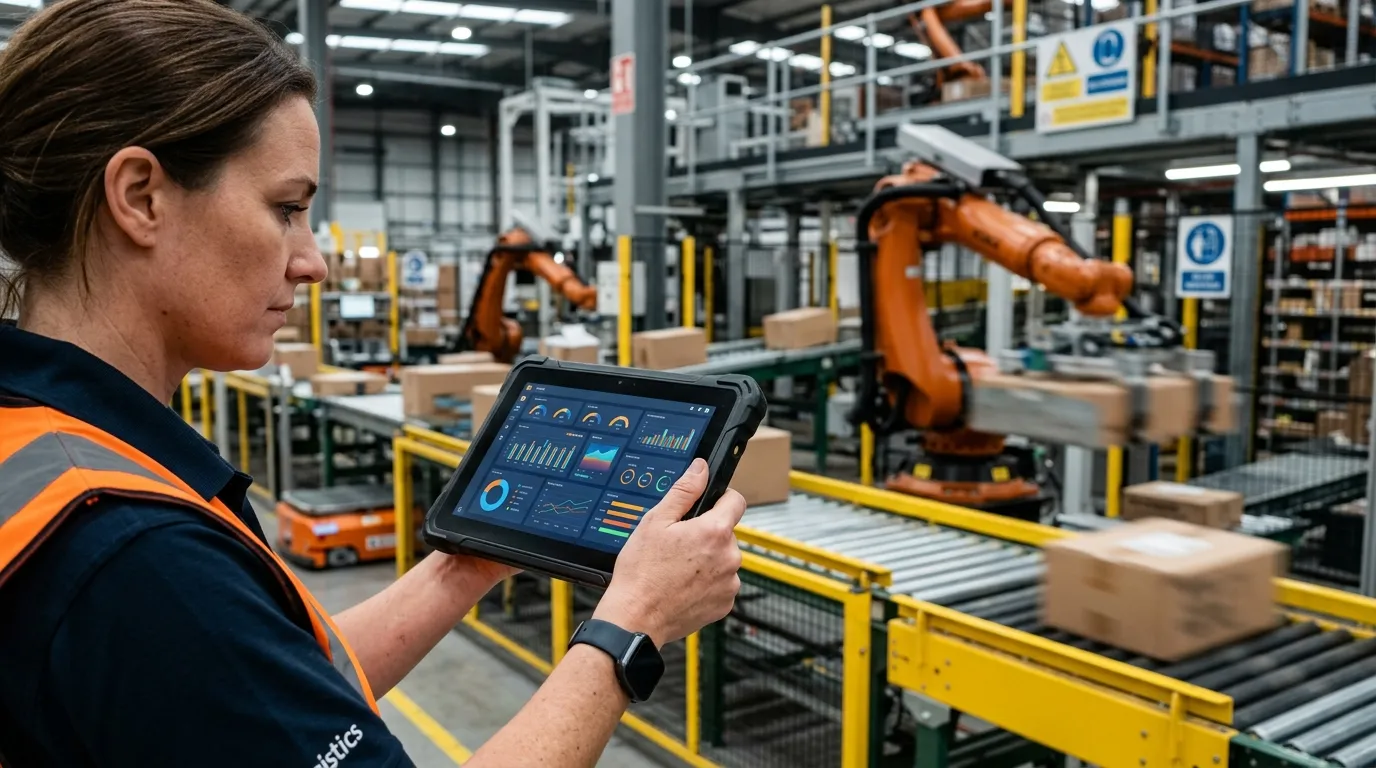
The logistics landscape has historically been dominated by rigid software suites designed to do a little bit of everything. However, as supply chains have become more dynamic, the cracks in these foundational systems have become impossible to ignore.
From Monolithic ERPs to Composable Architectures
Ten years ago, a monolithic Enterprise Resource Planning platform was the gold standard. You bought a massive software package, and your team adapted its workflows to fit the software’s limitations. If you examine how warehouse club operations scale, it becomes clear that rigidity is a death sentence for efficiency.
The modern approach abandons the monolith in favor of composable architectures. Instead of a single, slow-moving system, businesses now assemble custom tech stacks using best-of-breed microservices. This allows logistics managers to swap out components—like a routing engine or an inventory forecasting algorithm—without overhauling the entire ERP structure.
The Role of Packaged Business Capabilities (PBC)
The driving force behind this shift is the concept of Packaged Business Capabilities. A PBC is a bounded, independent software component that serves a specific business function, such as processing returns or managing dock scheduling. By utilizing a Gartner Composable ERP framework, organizations can deploy PBCs rapidly. This modular approach ensures that your ERP system warehouse management layer acts less like a restrictive cage and more like an agile operating system.
Why the ERP vs. WMS Debate is Outdated
The traditional conflict between upgrading your ERP or buying a specialized Warehouse Management System assumes human operators are making the day-to-day decisions. That assumption is no longer valid.
The Rise of Agentic AI in Logistics
We have moved past predictive analytics and into the era of Agentic AI. Unlike passive AI that simply flags a potential stockout, Agentic AI acts on the data. These autonomous agents negotiate with suppliers, reroute inbound freight, and adjust slotting logic on the fly. When dealing with complex warehouse store showdowns in inventory, Agentic AI ensures that decision-making happens in milliseconds, far surpassing human capabilities. Legacy ERP modules simply lack the backend infrastructure to host these proactive, self-directing agents.
Orchestrating Autonomous Mobile Robots (AMRs)
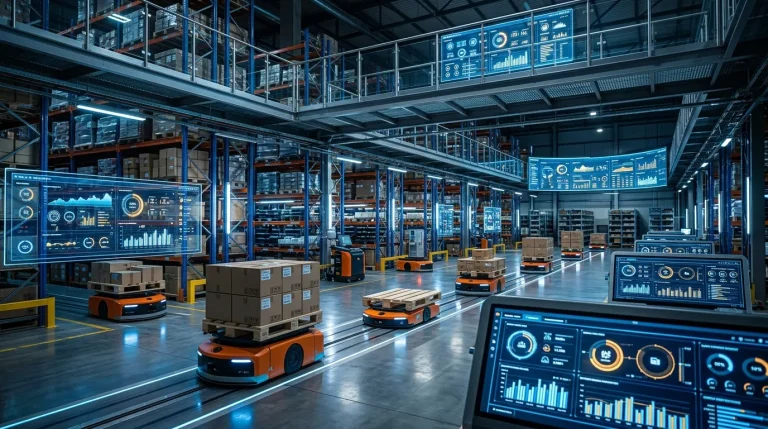
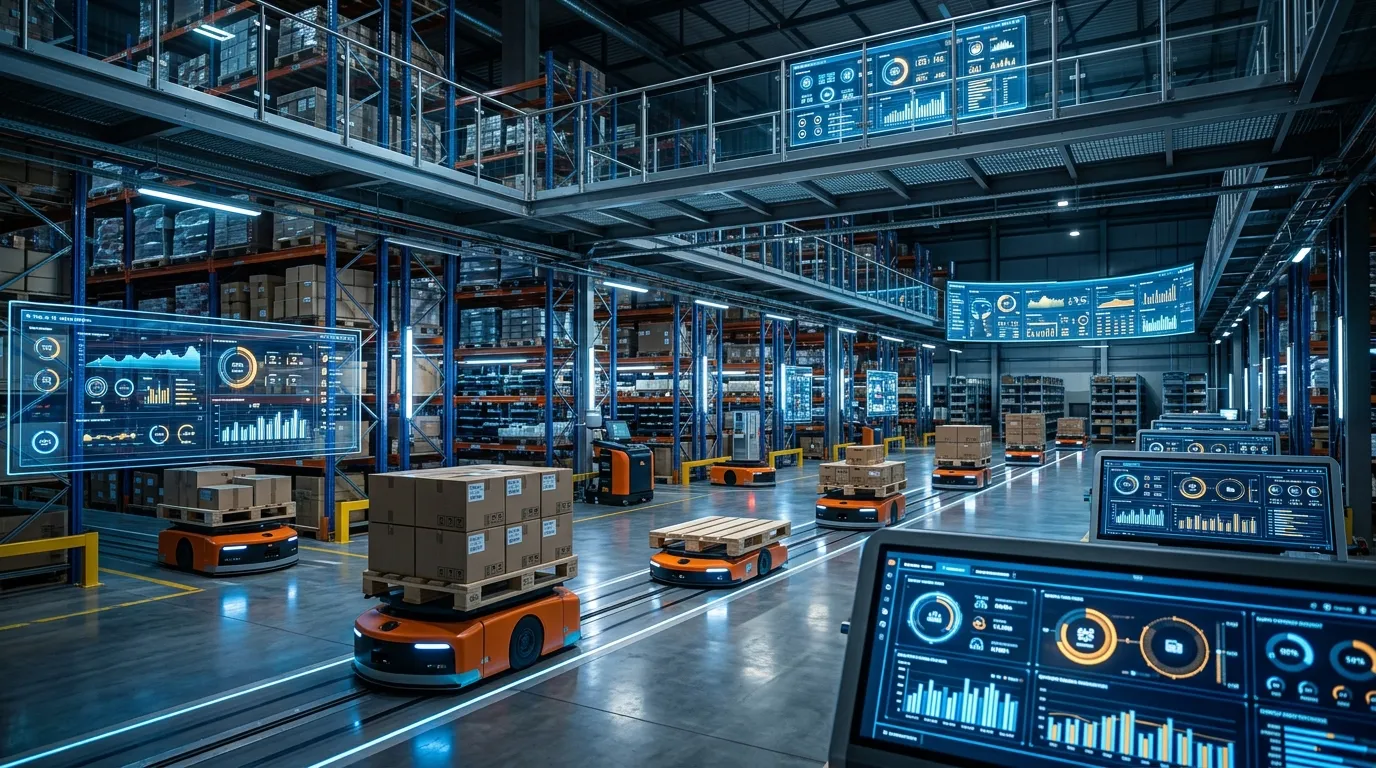
Physical automation has also outpaced older software. Autonomous Mobile Robots (AMRs) are now standard on the warehouse floor. Traditional ERP systems were designed to issue static pick lists to human workers, not to continuously orchestrate fleets of AMRs dynamically adjusting their paths based on real-time traffic. A modern coordination layer translates high-level business logic from the ERP into the granular, split-second execution commands required by robotics.
Core Capabilities Your ERP Must Deliver Today
If your current software isn’t actively driving efficiency and reducing operational overhead, it is holding your business back. The baseline requirements for an ERP in logistics have fundamentally shifted.
Real-Time Visibility and IoT Integration
You cannot manage what you cannot see. The Internet of Things (IoT) provides the granular data necessary for true real-time visibility. From smart pallets that track temperature to weight-sensitive shelving, IoT sensors feed continuous streams of data into the ERP. This connectivity is crucial for advanced demand forecasting, ensuring inventory is positioned precisely where it is needed before a surge in orders occurs. Leading platforms like Oracle Supply Chain Management are heavily emphasizing these IoT data pipelines to maintain a proactive stance.
Barcode Scanning, RFID, and Wave Picking
While AMRs represent the future, foundational technologies must still operate flawlessly. Modern ERP integrations must support high-speed barcode scanning and seamless RFID integration without latency. When executing complex wave picking strategies, the software must instantly reconcile physical scans with digital records, driving massive human error reduction. Furthermore, ensuring quality control and maximizing goods post-receiving relies heavily on this immediate, error-free data capture at the dock doors.
ROI and the Financial Reality of Modern Implementations
Upgrading an ERP system is a capital-intensive initiative. Supply Chain Management executives must justify the expense with hard numbers, moving beyond vague promises of efficiency.
Single Source of Truth vs. Operational Silos
One of the largest hidden costs in logistics is the manual reconciliation required when systems don’t communicate. Operational silos force workers to export data from a WMS and manually import it into the financial modules of an ERP. A composable, integrated system establishes a single source of truth. Every scan, move, and shipment immediately reflects in the general ledger. This real-time financial alignment eliminates the hours wasted on administrative reconciliation at the end of every shift.
Calculating ROI on Headless ERP Upgrades
An accurate ROI calculation for modernizing your ERP must factor in labor savings, reduced stockouts, and decreased return rates. Moving to a headless architecture, such as deploying SAP S/4HANA Cloud alongside specialized microservices, often yields a faster return on investment than attempting to heavily customize a legacy on-premise system. The financial reality is that the cost of doing nothing—retained inefficiencies and lost competitive advantage—quickly eclipses the cost of modernization.
Selecting the Right Strategy for Your Supply Chain
Transitioning away from a legacy ERP requires strategic patience and a clear roadmap. The goal is not to rip and replace overnight, but to systematically decouple monolithic functions.
Integrating Cloud ERP with Fulfillment Robotics
The first step is migrating core financial and inventory ledgers to a robust Cloud ERP. Once the cloud foundation is established, you can begin bolting on specialized PBCs for fulfillment. This allows your team to integrate fulfillment robotics seamlessly via APIs rather than custom-coded, fragile integrations.
Future-Proofing Your Warehouse Operations
Future-proofing means acknowledging that the tech you use today will likely be superseded in five years. By embracing a composable architecture and prioritizing Agentic AI orchestration, you ensure that your warehouse operations can adapt to new robotic hardware and shifting market demands without requiring another massive software overhaul.
Frequently Asked Questions
What is the difference between an ERP and a WMS?
An ERP (Enterprise Resource Planning) system manages broad business processes like finance, HR, and procurement across the entire company. A WMS (Warehouse Management System) is specialized software focused entirely on optimizing the physical movement and storage of inventory within a distribution center.
Can an ERP system replace a warehouse management system?
Historically, basic ERP warehouse modules could handle simple inventory tracking, replacing a WMS for small operations. However, for high-volume, automated, or complex logistics, a built-in ERP module cannot replace the deep functionality of a dedicated, modern WMS or a composable tech stack.
How does Agentic AI improve ERP warehouse management?
Agentic AI moves beyond providing analytics to actively executing tasks. It can autonomously adjust picking algorithms, route robotic fleets, and optimize inventory slotting in real-time without requiring human intervention, making ERP systems far more proactive.
What are Packaged Business Capabilities (PBC) in supply chain?
Packaged Business Capabilities (PBC) are distinct, modular software components that execute a specific business function, such as returns management or order routing. They allow companies to build a customized, flexible ERP environment rather than relying on a rigid, all-in-one suite.
Why are monolithic ERP systems becoming obsolete in logistics?
Monolithic ERP systems are too rigid and slow to adapt to the rapid advancements in robotics and AI. Their inflexible architectures cannot handle the high-speed data streams and real-time orchestration required by modern, automated fulfillment centers.
This article was prepared by our supply chain technology experts at thefuturewarehouse.com. We specialize in deep research and practical insights for modern warehouse operations.
Ready to Upgrade Your Operations?
Download our comprehensive guide to Composable ERP and Warehouse Automation
Download NowGet our latest guides, news, and insights highlighted in your Google Search & AI Overviews.