Is Sustainable Packaging Worth It? [Real ROI]
Are you still treating logistics materials as a simple commodity rather than a strategic technological asset? The transition to sustainable packaging is no longer just an aspirational material swap. It represents a critical procurement shift driving the future of the circular economy. If your infrastructure relies on outdated standards, your operations risk falling behind in a market demanding measurable carbon footprint reduction.

You need empirical evidence, not theoretical goals, to justify a widespread overhaul. Here, you will uncover the real ROI behind adopting advanced eco-friendly shipping strategies and compostable materials. Discover why mastering packaging waste management is a strict 2026 sustainable supply chain imperative that directly protects your bottom line.
What is Sustainable Packaging? A Procurement Tech Shift
Defining effective enclosures requires moving beyond basic eco-friendly labels. You must evaluate these materials firmly within the framework of a fully circular economy. In this model, resources perpetually cycle back into production rather than ending up in landfills. This fundamental shift demands that you view materials not as a disposable afterthought, but as a critical technology asset embedded within your sustainable supply chain. By integrating tracking capabilities, a simple box transforms from a static shell into an intelligent node communicating vital data across your logistics network.
The regulatory landscape is rapidly enforcing this technological evolution, most notably through the European Union PPWR. Under these impending rules, you must prepare for the rollout of EU Digital Product Passports (DPP) and mandatory QR integration arriving by late 2026. These digital passports will encode comprehensive details about the material composition, origin, and recyclability of every shipped unit. Such mandates mean your compliance strategies can no longer rely on aspirational corporate intent or vague pledges. Instead, you must anchor your reporting in empirical evidence and trackable data.
Transitioning to this data-driven model empowers you to optimize operations while mitigating future regulatory risks. Adopting these intelligent systems naturally supports broader initiatives, like integrating a Radiation packaging protection: A 5-min guide [2026] to monitor performance. By treating each container as a measurable data point, you comply with strict standards and unlock deeper visibility into your procurement operations. This ensures your business remains competitive as the global market pivots toward absolute transparency and verifiable accountability.
Moving beyond digital tracking and accountability, true sustainability requires rethinking the physical materials you source.
Advancements in Compostable Materials and Bio-Based Films
As you expand material utility beyond standard shipping boxes, the frontier of innovation lies in cutting-edge bio-based and compostable materials. Navigating this landscape requires your procurement team to understand the critical distinctions between various certifications clearly. Not all materials break down equally. Relying on home compostable certifications ensures the material degrades safely in standard backyard bins. Conversely, materials requiring industrial composting need the high-heat, specialized environment of commercial facilities to decompose fully. Understanding these end-of-life pathways is vital when upgrading your sustainable packaging portfolio. Mislabeling can severely disrupt local recycling infrastructures. To better visualize these material pathways and their real-world applications, consider the structural differences illustrated below:

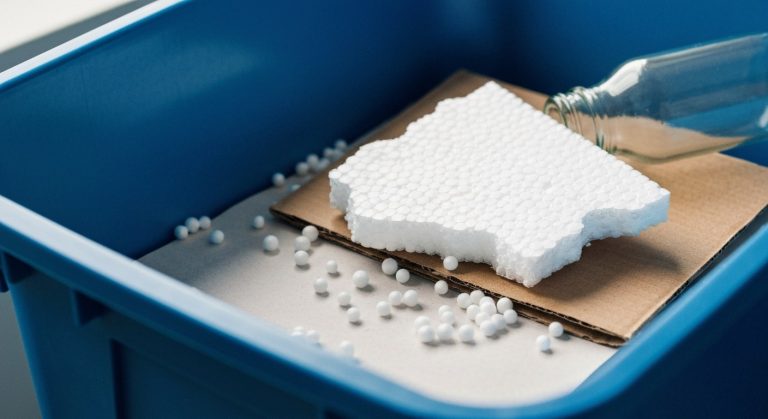
Mycelium vs. Traditional EPS
For electronics and fragile goods, the industry is moving rapidly from Expanded Polystyrene (EPS) to mycelium packaging. Mushroom-based foams offer a fully compostable, high-performance alternative that absorbs shock just as effectively as styrofoam but completely degrades within 45 days. If you are assessing these solutions for your supply chain, you must determine how they align with your broader Consolidation in Warehousing: Worth It? [Data]. The operational differences between these two options are stark:
| Metric | Traditional EPS (Styrofoam) | Mycelium Packaging |
|---|---|---|
| End-of-Life | Centuries in landfill, microplastic shedding | Fully compostable within 45 days |
| Performance Profile | High shock absorption, rigid structure | Equivalent shock absorption & thermal insulation |
| Production Impact | High carbon emissions, petroleum-based | Grown on agricultural waste, carbon-negative process |
Seaweed Films in F&B Applications
In the food and beverage sector, eliminating single-use plastic sachets has long been a major functional hurdle. However, the rapid rise of seaweed-based films, such as those pioneered by Notpla, offers a groundbreaking solution. These bio-based films safely contain liquids and sauces. Since they are naturally derived, consumers can eat them or let them dissolve in nature without leaving harmful traces behind. Incorporating these novel materials drastically cuts down on persistent waste. Recent environmental impact reports highlighting zero-waste transitions further validate this strategy. When you implement these solutions alongside a strict Top Back Braces for Warehouse Workers [5-Min Guide], you build a highly resilient supply chain that anticipates future regulatory shifts.
However, adopting novel materials is only half the equation. You must also redesign the end-of-life journey to recapture them.
Circular Reverse Logistics and Refill-at-Home Models
Auditing your current supply chain often reveals a significant gap in traditional reuse infrastructures. Legacy systems handle standard wooden pallets and commercial bulk containers efficiently. However, they consistently fail to recapture direct-to-consumer materials. According to recent 2026 logistics data, less than 15% of standard residential delivery materials successfully re-enter the primary production loop without specialized interventions. To bridge this critical shortfall, you must pivot toward proactive Walmart warehouse locations: Near You? [Find Out] that engineers the end-of-life journey before a product ever leaves the warehouse.
This is where circular reverse logistics becomes an absolute necessity. E-commerce returns generate massive amounts of “invisible waste”. This includes secondary plastics, damaged void fill, and torn corrugated cardboard that rarely reach commercial recycling facilities. By implementing targeted return-and-recover systems, you can systematically capture and repurpose these discarded materials. Mastering these logistics not only reduces your disposal fees but significantly enhances your overarching packaging waste management protocols.
Integrating these advanced recovery models with precise right-sizing practices is also paramount for achieving true eco-friendly shipping. When you eliminate empty space in outbound parcels, you simultaneously decrease the dimensional weight and the volume of materials flowing back through your reverse channels. To fully leverage these operational synergies and eliminate return waste, consider deploying the following strategies:
- Deploy localized collection nodes: Establish decentralized drop-off points that consolidate Amazon Warehouse Pros and Cons (Is It Worth It?), minimizing the carbon footprint and transit costs of your reverse operations.
- Standardize returnable shippers: Utilize durable, universally sized mailers that consumers can easily fold, seal, and drop into standard postal networks.
- Implement data-driven recovery tracking: Track the lifecycle of each reusable container to calculate accurate asset depreciation and optimize your inventory replacement cycles.
Beyond optimizing physical returns, you can bypass the return trip entirely by adopting refill-at-home models. Imagine shipping a premium, reusable glass dispenser just once, followed by recurring deliveries of concentrated tablets or lightweight powder pouches. When consumers simply add tap water at home, you completely eradicate the need to ship heavy liquids and bulky single-use bottles across the country. This profound paradigm shift can reduce your combined logistics volume by up to 80%. Adopting this concentrated approach dramatically reduces your operational overhead while seamlessly advancing your company’s sustainable packaging ambitions.
These structural shifts in your supply chain will be critical for avoiding impending financial penalties.
Navigating 2026 Plastic Tax Mandates and PFAS-Free Standards
Projecting operational overhead for upcoming fiscal cycles requires proactively confronting the financial impact of 2026 EU and UK regulatory changes. Specifically, the impending £210 per tonne levy on materials containing less than 30% recycled content will severely penalize brands clinging to virgin plastics. To avoid these punitive costs, your procurement teams must closely align with strict compliance requirements surrounding post-consumer recycled (PCR) minimums. This transition is no longer just an environmental goal. It represents a critical strategy to protect your profit margins. Shifting inventory early insulates you from volatile tax hikes while future-proofing your supply chain. You can review the specifics of these levies in the latest plastic packaging tax guidelines.
Beyond immediate tax liabilities, your market resilience depends on how effectively you navigate the complex web of extended producer responsibility (EPR) frameworks. Brands must strictly adhere to EPR compliance requirements for 2026 by accurately tracking and reporting the entire lifecycle of their materials. Integrating reliable Why Old Packaging Fails in 2026 [The Tech Shift] can significantly streamline your reporting process. As you audit your current vendors, prioritizing innovative plastic-free solutions will drastically simplify your legal obligations and reduce your overall regulatory fee burden.
When updating your inventory, particularly within the food and beverage sector, you must also prioritize chemical safety. Establishing PFAS-free molded fiber as a non-negotiable standard for food contact safety is imperative. New legislation will completely phase out hazardous “forever chemicals.” Adopting these clean food-grade fiber alternatives guarantees that your consumable products remain legally compliant while safeguarding public health. For a clearer understanding of how these approved, sustainable packaging materials are structured for regulatory adherence, see the example here:

To navigate these complex regulations and effectively transition your inventory, you must anchor your strategy in empirical measurement.
How to Implement a Circular Packaging Strategy Using LCA Metrics
Relying on assumptions about environmental impact is no longer sufficient for modern Walmart warehouse locations: Near You? [Find Out]. Determining how to effectively implement a circular packaging strategy requires moving beyond vague corporate promises and anchoring your operations in hard, empirical data. Relying on a comprehensive life cycle assessment (LCA) maps the precise environmental cost of every material entering and exiting your facility. This data transforms abstract ecological goals into actionable operational directives.
- Establish your baseline with standardized frameworks: Before overhauling your procurement, you must quantify your current output. Integrate EPA-backed metrics, such as the Waste Reduction Model (WARM), to accurately measure and report your initial baseline. This guarantees your eventual carbon footprint reduction claims remain transparent, standardized, and audit-proof for modern regulatory landscapes.
- Follow a tactical roadmap built on empirical data: Use your established baseline to conduct a rigorous analysis of proposed material alternatives. Instead of merely looking at end-of-life disposal, evaluate the total energy expenditure, water usage, and greenhouse gas emissions. You must also account for the impacts associated with manufacturing and transporting your chosen sustainable packaging.
- Operationalize the mass balance approach: Transitioning your entire fulfillment center overnight is rarely feasible. Instead, adopt a mass balance approach to seamlessly integrate recycled or bio-based materials into existing production lines. This accounting method lets you track the exact proportion of eco-friendly inputs mixed with conventional materials. You can meet environmental targets without disrupting established fulfillment speeds or retooling expensive machinery.
- Translate data into measurable warehouse KPIs: Abstract sustainability goals must become daily performance indicators. Tie your LCA findings directly to your Walmart warehouse locations: Near You? [Find Out]. Track metrics like material yield per shipping volume, waste diversion rates, and reverse logistics recovery speed. When floor managers see these metrics alongside standard fulfillment times, environmental compliance transforms into a core operational standard.
Even with a robust measurement framework in place, executing this transition in the real world will expose your operations to new sourcing vulnerabilities.
Securing Your Supply Chain: Overcoming Material Transition Challenges
Transitioning your procurement operations away from legacy materials introduces notable supply chain bottlenecks that require careful navigation. Sourcing high-quality rPET and reliable bio-plastics often presents volatility in both pricing and availability. Unlike traditional resins benefiting from decades of streamlined global production, next-generation materials frequently face constraints from localized feedstock limitations and nascent processing infrastructure. As you scale operations, actively secure redundant supplier networks to circumvent these material caveats. This redundancy ensures your production lines never stall due to a single point of failure in the material stream.
Once you secure the right inputs, the engineering focus must shift toward maintaining crucial performance metrics, particularly shelf-life extension and structural integrity. Substituting conventional polymers with bio-based alternatives without adjusting your structural architecture can compromise product viability. To avoid reverting to legacy plastics, collaborate closely with material scientists to deploy advanced multi-layer bio-films or incorporate natural barrier coatings. These innovations protect against moisture and oxygen ingress just as effectively as traditional materials, guaranteeing that your product reaches the end consumer in pristine condition. For deeper insights into managing these operational shifts, establishing a robust supplier vetting framework is essential.
To further safeguard your brand reputation and prevent accusations of greenwashing, rigorous verification of supplier claims is mandatory. You must demand verified chain-of-custody documentation, prioritizing materials that are BPI Certified for compostability or carry the Forest Stewardship Council (FSC) label for paper-based components. Referencing established standards, such as those detailed by the International Sustainability & Carbon Certification (ISCC PLUS), provides a reliable benchmark for compliance. Ultimately, by treating your packaging architecture as a critical strategic asset rather than a mere operational cost center, you effectively insulate your entire enterprise against future regulatory shocks. Proactive integration of verified, high-performance materials transforms potential compliance liabilities into a distinct competitive edge.
FAQ
Is eco-friendly packaging more expensive than plastic in 2026?
While historically more costly, eco-friendly packaging has reached price parity with traditional plastics in 2026 due to scaled production and new tax incentives. For many businesses, the total cost of ownership is actually lower when factoring in reduced waste management fees and increased customer loyalty, as noted in recent industry reports.
What are the best compostable materials for food delivery?
The most effective compostable materials for food delivery include bagasse (sugarcane fiber), bamboo, and newly developed PHA bioplastics. These materials maintain structural integrity when exposed to heat and moisture, ensuring customers receive their food in excellent condition while remaining fully home-compostable.
How do I know if my packaging is actually recyclable?
To determine true recyclability, look beyond the generic recycling symbol and check for specific resin identification codes or standard labels like the How2Recycle system. You should also verify with your local municipal waste management facilities, as recycling capabilities vary significantly by region even for widely accepted materials.
What is the difference between biodegradable and compostable?
Biodegradable simply means a material will break down over an unspecified time under various conditions, which can lead to microplastic pollution if the material is fossil-based. In contrast, compostable materials are certified to break down completely into non-toxic organic matter within a specific timeframe under specific conditions.
How long does it take for mushroom packaging to decompose?
Mycelium or mushroom packaging typically decomposes entirely within 45 days when placed in a standard home compost bin or directly in soil. This rapid breakdown leaves behind nutrient-rich organic matter, making it an excellent zero-waste alternative to traditional expanded polystyrene inserts.
What certifications should I look for on sustainable products?
For genuine sustainable packaging, look for certifications such as FSC (Forest Stewardship Council) for paper goods, and BPI (Biodegradable Products Institute) for compostable items. These third-party verifications ensure the materials meet rigorous environmental standards and prevent you from falling victim to corporate greenwashing.
Are bioplastics really better for the environment?
Bioplastics offer a reduced carbon footprint during production compared to petroleum-based plastics, but their end-of-life impact depends heavily on your local waste infrastructure. While materials like PLA are derived from renewable resources, they often require high-heat industrial composting facilities to break down properly, as detailed by the UN Environment Programme.
Key Takeaways
Transitioning to circular methodologies is no longer a peripheral environmental initiative. It represents a fundamental business imperative. As 2026 regulatory compliance deadlines rapidly approach, adopting sustainable packaging secures a tangible operational advantage. This proactive shift shields your supply chain from legislative volatility while aligning your logistics with increasingly stringent global standards. You must treat this evolution as an investment in long-term resilience rather than a mere compliance cost.
Your immediate next step dictates your future market position. Direct your procurement team to initiate an empirical Life Cycle Assessment (LCA) on your current packaging suite immediately. Quantifying your baseline impact today provides the precise data you need to execute profitable, future-proof material upgrades tomorrow.
Get our latest guides, news, and insights highlighted in your Google Search & AI Overviews.