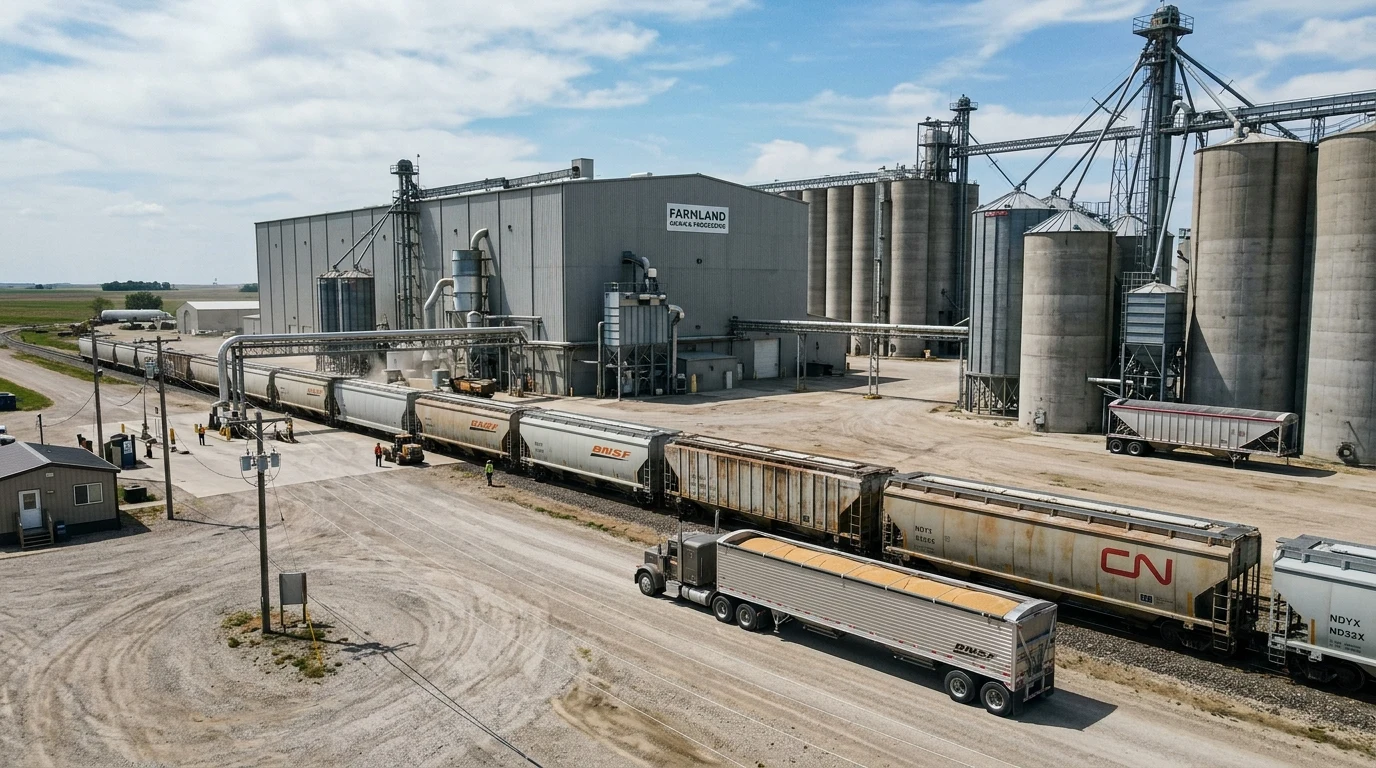
Advantages and Disadvantages of Bulk Reduction in Agricultural Logistics
✨ This article was AI edited. Editorial responsibility: The Future Warehouse.
Bulk reduction in agriculture refers to the post-harvest processing, mechanical consolidation, dehydration, densification, and intermediate transformation of raw agricultural commodities to reduce their physical volume and weight prior to long-distance freight transportation. In agricultural supply chain logistics, raw harvests—such as freshly harvested sugarcane, high-moisture silage, bulky raw cotton, oilseeds, and fresh timber—exhibit high volume-to-value ratios. Applying bulk reduction techniques near the point of harvest dramatically reduces freight expenditures, enhances storage density, and minimizes post-harvest spoil rates.
What is Bulk Reduction in Agricultural Logistics?
Agricultural commodities are inherently bulky, perishable, and moisture-laden at harvest. Bulk reduction represents a fundamental supply chain strategy where raw farm outputs undergo initial processing close to production farms rather than shipping raw biomass over long distances to distant urban or export terminals.
Classic examples of agricultural bulk reduction include:
- Grain and Seed Dehydration: Mechanically drying freshly combined corn, wheat, or soybeans from 22–26% moisture down to 13–14% moisture content to reduce gross freight tonnage and prevent mycotoxin mold development.
- Sugarcane to Raw Sugar / Molasses: Extracting cane juice and boiling it into concentrated crystalline raw sugar and molasses at regional mills, eliminating over 85% of the fibrous cane stalk weight before maritime shipping.
- Cotton Ginning and High-Density Baling: Removing heavy cottonseed and compressing fluffy lint into 500-pound universal density bales (28 lbs/cubic foot), multiplying transport container capacity fourfold.
- Biomass Densification (Pelletization & Briquetting): Compressing loose straw, alfalfa, and wood chips into dense pellets with bulk densities exceeding 40 lbs/cu ft.
- Juice Concentration & Freeze Drying: Evaporating water from citrus, berries, and milk to create concentrates and powders (e.g., non-fat dry milk, orange juice concentrate), slashing refrigerated reefer volume requirements by up to 80%.
Comprehensive Trade-Off Matrix: Advantages vs. Disadvantages
The decision to implement intermediate bulk reduction processing involves balancing upfront capital machinery expenditures against downstream logistics savings:
| Dimension | Primary Advantages | Critical Disadvantages & Trade-Offs |
|---|---|---|
| Freight & Transport Costs | Substantial reduction in ton-mile transportation costs; higher payload utilization per truckload and railcar. | Requires specialized bulk pneumatic trailers, tanker cars, or heavy hopper equipment. |
| Storage & Warehousing Density | Maximizes warehouse cubic space utilization; higher stackability and silo capacity. | Dense bulk materials can cake, bridge, or create combustible dust hazards in enclosed silos. |
| Shelf Life & Preservation | Lower moisture content suppresses microbial growth, enzymatic decay, and pest infestations. | Thermal drying or mechanical processing can degrade heat-sensitive nutrients and seed germination viability. |
| Capital & Energy Intensity | Decentralizes economic value creation to rural farming communities. | High initial capital expenditure (CapEx) for drying kilns, pelletizers, and extraction mills. |
| Packaging Efficiency | Reduces primary and secondary packaging materials per unit of active food/feed substance. | Intermediate bulk containers (IBCs) and FIBC bulk bags require mechanized forklift handling. |
The Core Advantages of Agricultural Bulk Reduction
1. Drastic Reduction in Freight Ton-Mile Expenditures
Transportation is frequently the single largest cost component in agricultural marketing. By removing non-valuable weight—primarily free moisture and fibrous hulls—shippers avoid paying freight charges to transport water. A grain elevator drying 100,000 bushels of corn eliminates thousands of gallons of excess water weight prior to rail carloading.
2. Optimization of Cargo Cube and Payload Limits
Uncompressed agricultural commodities like raw cotton or loose forage cube out a shipping container long before reaching highway gross vehicle weight limits (GVWR). Mechanical densification balances volume and weight, achieving optimal payload capacity on standard 53-foot dry vans and 40-foot ocean containers.
3. Mitigation of Biological Perishability and Spoilage
High moisture levels in stored crops trigger rapid fermentation, heating, and rot. Reducing moisture and volume halts biological respiration, allowing seasonal crops to be safely warehoused in grain elevators for months to capitalize on favorable market pricing.
4. Carbon Footprint and Fuel Consumption Reduction
Fewer truckloads required to move the equivalent volume of nutrient mass directly translates to reduced diesel consumption and lower Scope 3 greenhouse gas emissions across the agricultural value chain.
The Significant Disadvantages and Operational Challenges
1. High Initial Capital Investment and Energy Costs
Constructing on-farm or regional processing plants requires heavy investment in industrial dryers, extruders, hammer mills, and pneumatic conveyor lines. Furthermore, thermal drying processes consume significant quantities of natural gas, propane, or electricity.
2. Quality Degradation and Loss of Fresh Commodity Premiums
Some agricultural products lose distinct market premiums once processed. For instance, freeze-dried fruits or fruit purees command different end-market applications than pristine fresh table fruit sold in retail produce sections.
3. Combustible Dust and Explosion Hazards
Fine particulate dust generated during grain handling, feed milling, and biomass densification creates severe Class II combustible dust environments requiring explosion suppression venting, spark detection, and rigorous OSHA NFPA compliance.
Economic Feasibility & ROI Calculation in Bulk Reduction
Logistics managers evaluate the financial viability of on-site bulk reduction using a straightforward cost-benefit framework:
- Gross Freight Savings:
(Raw Shipments Required - Reduced Shipments Required) × Cost per Linehaul Run - Storage Footprint Savings:
Reduction in Square Footage × Monthly Warehouse Lease Cost per Sq Ft - Processing Costs:
Energy Costs (Gas/Electric) + Labor + Equipment Depreciation per Ton - Net Operational ROI: When
(Freight Savings + Storage Savings) > Processing Costs, localized bulk reduction generates positive operating margin.
Integration with Modern Warehouse Systems
Once agricultural commodities undergo bulk reduction, they transition into standard palletized unit loads, super sacks, or bulk silo storage managed by enterprise inventory control software. To learn how logistics hubs manage pallet tracking and automated sorting, explore our guides on advanced warehouse inventory tracking and industrial packaging innovations.
Future Trends: Autonomous Field Processing and Clean Energy Drying
Emerging agricultural technology is introducing mobile, solar-assisted dehydrators and combine-mounted processing modules that perform bulk reduction in real time during harvest. These innovations promise to lower energy costs while further streamlining the journey from farm to distribution center.
Get our latest guides, news, and insights highlighted in your Google Search & AI Overviews.