The Concept of Logistics Support: Why 90% of Supply Chains Fail Without It
✨ This article was AI edited. Editorial responsibility: The Future Warehouse.
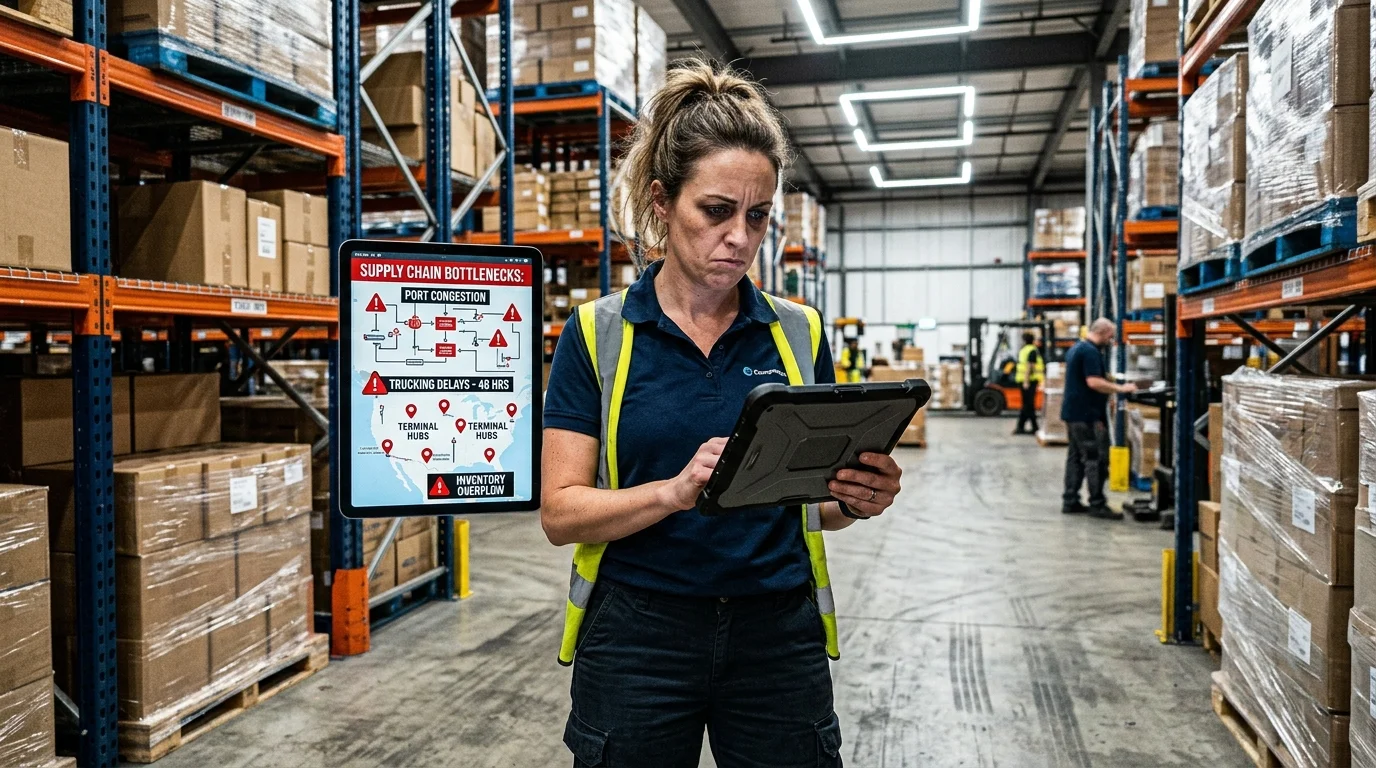
Yet a massive shift is silently destroying companies that refuse to adapt. We found that integrating automation into this framework exposes a hidden flaw in legacy operations—a flaw that causes catastrophic bottlenecks if left unchecked.
What Is the Concept of Logistics Support?
The concept of logistics support fundamentally revolves around the planning, acquisition, and sustained delivery of resources to keep a system operating at peak capacity. Originally developed as Integrated Logistics Support (ILS) for complex defense projects, this framework ensures that every component—from spare parts to training—functions as a cohesive unit.
In a commercial context, it means designing a support structure that prevents downtime before it occurs. Rather than treating maintenance and resupply as isolated events, this concept forces you to view your entire operation as a single, interdependent organism.
A robust strategy integrates procurement schedules, parts availability, and real-time data tracking to guarantee that production never stops. You are not just moving boxes; you are engineering a continuous flow of value.
Leaders who implement this methodology successfully eliminate unpredictable delays and secure a massive competitive advantage.

Key Elements of Integrated Logistics Support (ILS)
To execute this framework effectively, you must understand the core pillars of Integrated Logistics Support (ILS). The first element is maintainability, which dictates how quickly and cost-effectively you can repair or service equipment within your network.
If a warehouse sorting machine breaks down, maintainability measures the exact hours required to restore it. The second element focuses heavily on system reliability.
This metric tracks the probability that your infrastructure will perform without failure over a specific period. By prioritizing system reliability alongside proactive Maintenance protocols, you drastically reduce unexpected breakdowns.
Procurement also plays a critical role here. Sourcing reliable parts and ensuring their immediate availability forms the backbone of any ILS plan.
When you synchronize Procurement with scheduled Maintenance, you transform a reactive supply network into a highly predictable, profit-generating machine.
Efficiency: Modern logistics support cuts down response times dramatically. With optimized routing and warehousing, delays are virtually eliminated.
Cost Savings: By implementing predictive maintenance, companies save thousands on emergency repairs and minimize total lifecycle costs.
The Role of Lifecycle Cost and Operational Readiness
Many logistics directors mistakenly focus purely on the upfront purchase price of equipment, completely ignoring the long-term financial impact. True optimization requires you to analyze the total lifecycle cost.
This metric encompasses every expense from initial acquisition and daily operation to maintenance and eventual disposal. When you minimize the lifecycle cost, you free up substantial capital that can be reinvested into advanced automation.
Closely tied to this financial metric is Operational Readiness. This defines the percentage of time your assets are fully capable of performing their required tasks.
High Operational Readiness ensures you meet customer demands without relying on expensive emergency interventions. Effectively balancing these two factors falls directly under broader Lifecycle Management strategies.
For a deeper understanding of extending the value of your assets over time, explore our insights on product lifecycle management.
How to Optimize Your Supply Chain with Modern Logistics
Transitioning from theory to practice requires aggressive supply chain optimization. You achieve this by upgrading two primary operational pillars: transportation and warehousing.
Legacy transportation models rely on static routing, which leaves fleets vulnerable to traffic delays and fuel price spikes. Modern optimization uses AI-driven predictive analytics to reroute shipments in real-time, cutting transit times and slashing costs.
Similarly, traditional warehousing often wastes square footage and slows down retrieval times. By deploying automated storage and retrieval systems (AS/RS), you maximize vertical space and eliminate human error.
When you integrate intelligent transportation software with high-density warehousing solutions, your operation gains unprecedented speed and flexibility. This synergy is the absolute core of commercial supply chain optimization.
The resulting efficiency allows you to process higher volumes without proportionally increasing your labor costs or expanding your physical footprint.
5 Steps to Implement a Commercial Logistics Support Strategy
Implementing this strategy requires a deliberate, step-by-step approach focused on actionable improvements. First, audit your current inventory management practices.
You must shift from reactive ordering to a predictive model that anticipates demand fluctuations using historical data and AI forecasts. Second, streamline your order fulfillment processes.
Every touchpoint between receiving an order and shipping it out introduces potential errors. Automating these steps ensures perfect accuracy and dramatically faster dispatch times.
Third, overhaul your material handling equipment. Replace outdated forklifts with autonomous mobile robots (AMRs) that safely navigate your warehouse floor alongside human workers.
Fourth, establish clear Key Performance Indicators (KPIs) for your Inventory turnover rates. You cannot improve what you do not measure, and maintaining optimal Inventory levels prevents costly stockouts.
Fifth, integrate a centralized dashboard that provides real-time visibility across all these functions. Combining smart inventory management, seamless order fulfillment, and advanced material handling creates a resilient architecture capable of scaling instantly when market conditions change.
Traditional Military Logistics vs. Modern Commercial Supply Chains
The original Integrated Logistics Support model was forged in military environments where extreme readiness is a matter of survival, regardless of budget. Military planners prioritize redundancy and immediate availability over financial efficiency.
Modern commercial supply chains operate under entirely different constraints. In the private sector, profit margins dictate every decision.
While commercial leaders still prioritize readiness, they must do so while aggressively driving down costs. The commercial sector adapts military ILS by leaning heavily into lean principles and digital distribution networks.
Today, predictive algorithms replace massive stockpiles of spare parts, delivering components “just in time” rather than “just in case.” This digital approach fundamentally changes how companies approach distribution and handling logistics, favoring agility and data integration over sheer volume and physical redundancy.
Common Myths About Modern Logistics Support
Several persistent myths prevent companies from fully realizing the benefits of a robust support strategy. The most common misconception suggests that logistics support is just an academic theory with no practical application on the warehouse floor.
In reality, it drives concrete, daily decisions regarding staffing and maintenance schedules. Another myth claims that only massive multinational corporations can afford to implement these frameworks.
Today, scalable cloud-based software allows mid-sized businesses to leverage the exact same predictive models used by industry giants. Finally, many believe that implementing these systems requires a complete, disruptive overhaul of your current operations.
Phased integration allows you to upgrade specific bottlenecks without halting production. Understanding these realities is crucial, much like understanding how specialized support initiatives in modern businesses build stronger, more adaptable organizations across all departments.
The Future of Logistics Support and Your Next Steps
The future belongs to supply chains that fully embrace AI and automation. Predictive maintenance algorithms now forecast equipment failures weeks before they occur, allowing you to schedule repairs during off-peak hours.
Machine learning models continuously refine inventory parameters, ensuring you hold exactly what you need without tying up excess capital. Your next step is to evaluate your current framework against the principles of Integrated Logistics Support.
Identify where unexpected downtime costs you the most money, and begin deploying targeted technological solutions to close those gaps. Moving forward requires abandoning legacy mindsets and treating your support infrastructure as a primary driver of profitability.
Frequently Asked Questions
What is the main goal of the concept of logistics support?
The primary goal is to ensure operational readiness while minimizing the lifecycle cost of systems. It involves strategic planning of maintenance, warehousing, and transportation to keep supply chains running efficiently without unnecessary downtime.
How does AI impact modern logistics support?
AI automates inventory management and order fulfillment, shifting traditional logistics support into a proactive, predictive model. This helps mitigate disruptions and dramatically improves supply chain optimization across all commercial sectors.
What is the difference between military and commercial logistics support?
Military logistics support focuses heavily on extreme operational readiness in hostile environments. Commercial logistics adapts this framework to prioritize cost-efficiency, rapid distribution, and material handling in competitive global markets.
What are the core elements of Integrated Logistics Support (ILS)?
Core elements include maintenance planning, supply support, transportation, system reliability, and personnel training. Together, they ensure that a product or system remains fully functional throughout its entire lifecycle.
Why is lifecycle cost important in logistics?
Lifecycle cost accounts for all expenses from procurement to disposal. Proper logistics support minimizes these long-term expenses through better maintainability and efficient warehousing, preventing unexpected financial drains on the business.
Get our latest guides, news, and insights highlighted in your Google Search & AI Overviews.