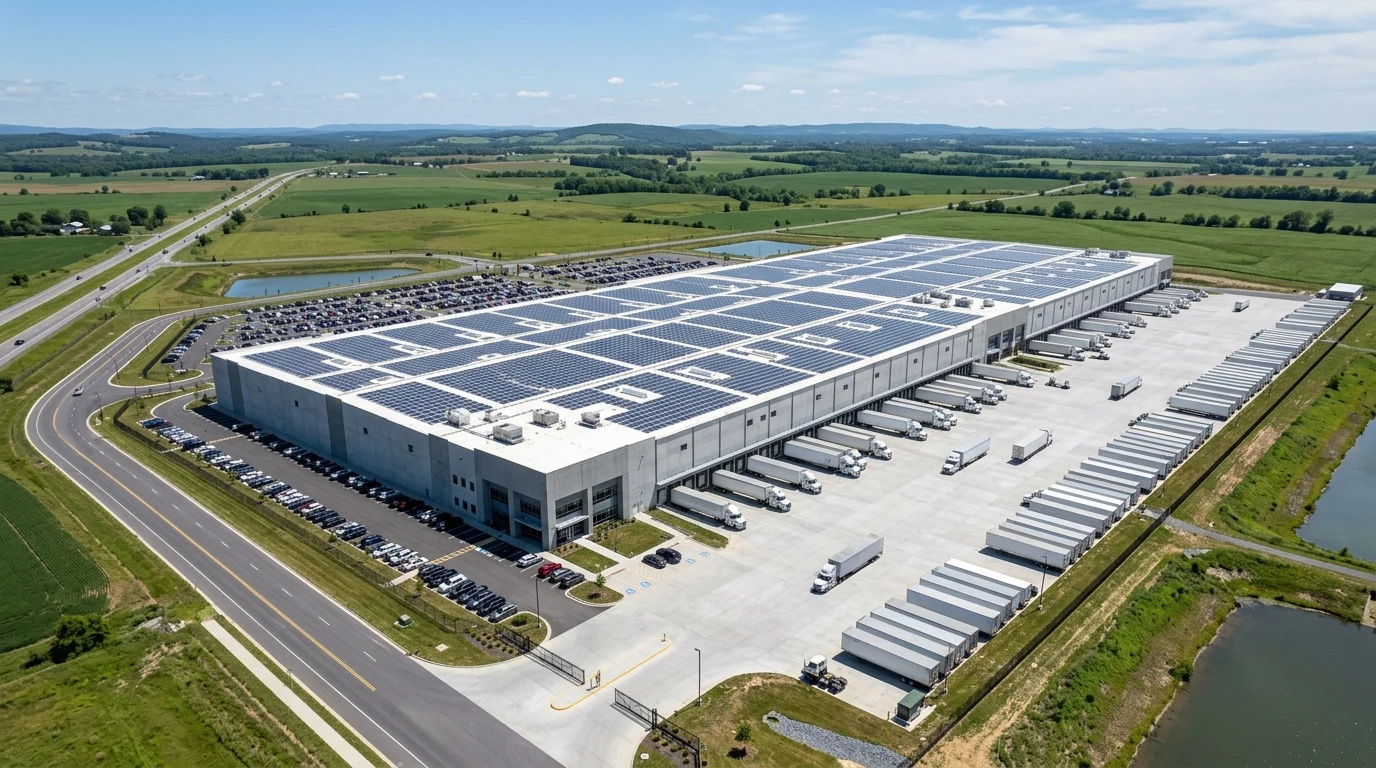
Amazon Greenfield Fulfillment Centers: Architecture, Robotics, and Facility Design
✨ This article was AI edited. Editorial responsibility: The Future Warehouse.
An Amazon Greenfield Fulfillment Center represents a ground-up, newly constructed logistics mega-facility engineered from pristine raw land to incorporate the latest innovations in warehouse automation, robotics, multi-tier mezzanine picking floors, and high-velocity cross-dock systems. Unlike “brownfield” projects—which involve retrofitting pre-existing industrial warehouses—greenfield developments allow Amazon’s Global Engineering and Real Estate teams to construct purpose-built fulfillment ecosystems optimized for maximum cubic storage efficiency, multi-level AMR robot fields, and direct highway freight access.
Greenfield vs. Brownfield in Amazon Logistics Infrastructure
When Amazon expands its global fulfillment and delivery station footprint, site selection directors choose between two primary civil development strategies:
- Greenfield Development: Constructing a facility on previously undeveloped land (often former agricultural parcels, master-planned industrial parks, or undeveloped suburban tracts). This approach offers total architectural freedom, custom slab load capacities for multi-level robotics, optimal trailer yard dimensions, and purpose-built utility grids capable of supporting multi-megawatt electrical loads.
- Brownfield Development / Adaptive Reuse: Acquiring, leasing, or retrofitting existing manufacturing plants, defunct shopping malls, or older speculative industrial warehouses. While brownfield projects can achieve faster initial municipal permitting in dense urban infill zones, they often involve structural compromises in ceiling clear heights, column spacing, and power availability.
Structural & Engineering Specifications of Greenfield AR Facilities
Modern Amazon greenfield projects (frequently constructed as Gen 11 or Gen 12 Amazon Robotics sortable fulfillment centers) share signature engineering specifications:
| Engineering Metric | Standard Greenfield AR FC Spec | Operational Purpose |
|---|---|---|
| Total Building Footprint | 650,000 to 850,000 sq ft (Ground slab) | Accommodates inbound/outbound cross-docks and main sorting lines |
| Total Usable Multi-Tier Area | 2.8M to 3.8M sq ft (Across 4–5 levels) | Houses millions of high-density yellow AR mobile inventory pods (Drive units) |
| Clear Ceiling Height | 45 to 55+ feet | Enables multi-tier structural steel mezzanine installation |
| Floor Slab Load Capacity | 3,000 to 4,000+ PSF (Pounds per sq ft) | Supports thousands of Hercules and Pegasus robots carrying 1,500-lb pods |
| Trailer Parking Stalls | 400 to 800+ dedicated trailer spots | Provides ample drop-lot staging for 53-foot linehaul dry vans |
| Electrical Substation Capacity | 8 to 15+ MVA (Megavolt-amperes) | Powers thousands of robotic drive units, high-speed conveyors, and battery docks |
Core Robotics & Automation Ecosystem inside Greenfield Facilities
Because greenfield facilities are designed with perfectly leveled reinforced concrete superflat slabs, they serve as the flagship deployment grounds for Amazon’s most advanced robotic systems:
1. Amazon Robotics (AR) Drive Units (Hercules & Titan)
Low-profile autonomous robots navigate using optical 2D barcode fiducial grids embedded directly on the floor. Robots slide beneath multi-tiered yellow storage pods, lifting and transporting them to ergonomic goods-to-person picking stations where associates fulfill customer orders without walking miles of aisles.
2. Pegasus & Sortation Drive Systems
Robotic sortation systems where fleets of small robotic drive units equipped with active conveyor belts receive parcels from induction lines and route them across open mezzanine sort decks, dropping packages down spiral chutes dedicated to specific regional delivery stations.
3. Robin, Cardinal, and Sparrow Robotic Arms
High-speed vision-guided robotic manipulator arms that lift, rotate, and sort millions of distinct product shapes and sizes from bulk totes onto conveyor trays using advanced deep learning computer vision and soft pneumatic suction grippers.
4. Automated Storage and Retrieval Systems (ASRS) & Containerized Storage
High-density vertical storage buffers that stage reserve inventory pallets and totes automatically, dispatching stock to picking floors exactly when inventory levels reach dynamic replenishment triggers.
Site Selection Criteria: How Amazon Selects Greenfield Locations
Amazon’s Real Estate Investment Committee applies rigorous multi-variable criteria when selecting locations for new greenfield fulfillment campuses:
- Transportation Network & Highway Proximity: Direct access to major interstate corridors (I-80, I-95, I-10, etc.) with dedicated turn lanes and traffic light synchronization to accommodate 500+ daily truck trips without municipal congestion.
- Proximity to Cargo Airport Hubs: Positioning within a 30-to-60 minute radius of major Amazon Air hubs (e.g., CVG, KAFW, KSBD) to meet Prime Next-Day and Same-Day delivery SLA commitments.
- Labor Demographics & Population Density: A substantial regional workforce within a 30-to-45 minute commute radius capable of staffing 1,500 to 3,000+ full-time associates across rotating shift patterns.
- Utility & Fiber Infrastructure: High-reliability dual-feed electrical utility connections, redundant commercial fiber-optic data feeds, and robust municipal water/sewer capacity.
Sustainability & Energy Efficiency Standards
All modern Amazon greenfield builds adhere to strict environmental performance standards under Amazon’s Climate Pledge commitment to reach net-zero carbon by 2040:
- Rooftop Solar Arrays: Massive multi-megawatt rooftop photovoltaic solar panel installations supplying up to 80% of daytime building electrical load.
- Smart LED Lighting & Building Automation: High-efficiency zoned LED lighting controlled by motion sensors and daylight harvesting controllers.
- EV Fleet Charging Infrastructure: Pre-wired infrastructure for heavy-duty electric semi-trucks (Class 8 EV tractors) and hundreds of Level 2 charging stations for employee vehicles and delivery vans.
Related Amazon Infrastructure & Warehouse Guides
To understand the full ecosystem of Amazon logistics facilities, explore our related architectural and operational guides on Amazon delivery station facilities, large regional fulfillment center layouts, and Amazon employee safety programs and PPE standards.
Conclusion: The Blueprint for 21st-Century Supply Chains
Amazon Greenfield Fulfillment Centers demonstrate the pinnacle of modern industrial architecture. By integrating multi-tier mezzanine engineering, autonomous robotic fleets, and sustainable energy systems from the initial groundbreaking phase, Amazon establishes high-velocity logistics engines capable of processing millions of packages daily with unparalleled accuracy.
Get our latest guides, news, and insights highlighted in your Google Search & AI Overviews.