What’s an Order Selector? (And Is It Worth It?)
Recent surges in global e-commerce have completely overhauled traditional supply chain logistics. At the center of this rapid evolution is the order selector. As this critical warehouse professional, you accurately pick and route inventory. This role goes far beyond manual labor. Modern facilities demand a seamless blend of physical agility and technical fluency. Today, you must rely on advanced management software, using your handheld device as a central hub. Rather than reading paper manifests, you process digital commands through a fast input mechanism. You also master precise fulfillment workflows dictated by automated routing systems. Read on to discover if navigating this high-stakes, technology-driven environment aligns with your career goals.

What is an Order Selector in the Modern Warehouse?
If navigating this technology-driven environment aligns with your career goals, you must first understand the order selector’s role. You serve as the linchpin connecting inventory to the consumer in the synchronized supply chains of 2026. Unlike a general warehouse picker who solely pulls stock from simplistic lists, you execute a highly strategic function. You operate at the intersection of digital logistics and physical fulfillment. By utilizing advanced spatial awareness and refined selection behavior, you build perfectly balanced, route-optimized pallets. This precision ensures your outbound freight matches tight distribution deadlines without risking product damage.
While automation handles repetitive bulk movements, the nuanced decision-making required for mixed-SKU orders remains a fundamentally human endeavor. You must collaborate seamlessly with forklift operators and shipping coordinators to hit rigorous performance targets. Your ability to anticipate bottlenecks and adapt on the fly is essential for maintaining throughput. If you want to see how this fits into the broader ecosystem, mastering Why Old Packaging Fails in 2026 [The Tech Shift] is vital. For insights into human efficiency, review recent industry throughput benchmarks.
Equipped with a clear understanding of the role’s strategic importance, your next step involves mastering the essential digital tools.
Essential Technology: WMS, Voice Picking, and User Interfaces
Mastering those digital tools begins with navigating comprehensive Warehouse Management Systems (WMS). These platforms go far beyond basic handheld scanners. Modern operations rely on a sophisticated warehouse tech stack to optimize fulfillment.
Mastering the Handheld Interface
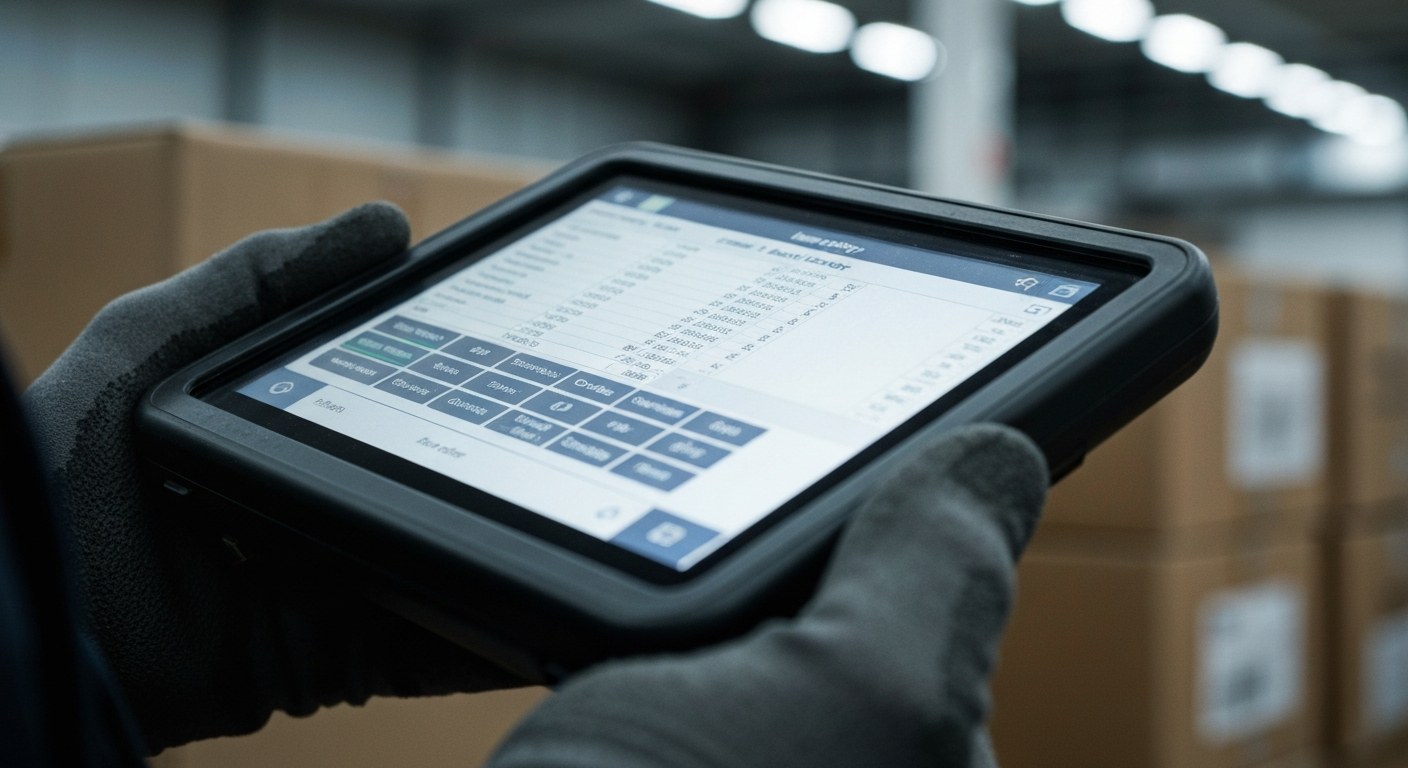
When interacting with software interfaces on wearable devices, intuitive user experience design is critical. You will routinely engage with specific interface components, like interactive lists, to seamlessly confirm batch orders. Core functionalities you will use include:
- Real-time inventory synchronization with the central WMS database.
- Touch-optimized screens designed to eliminate manual input errors.
- Seamless integration with OSHA Warehousing Safety 2026 [Fast 5-Min Guide] for instant stock verification.
To see how these wearable displays function on the floor, review the interface example below:
The Rise of Voice-Directed Picking
Voice-directed systems, such as Vocollect, have revolutionized the daily workflow. Instead of repeatedly looking down at a screen, you receive audible instructions directly through a headset. This technology keeps your hands and eyes completely free to handle products efficiently.
Beyond operating this advanced hardware and software, your success hinges on executing proven fulfillment strategies.
Picking Methods and Hitting Your KPI Targets
To excel in modern warehouse operations, you must master the core strategies driving efficiency and throughput.
- Implement Advanced Picking Methodologies: Move beyond basic single-order fulfillment. Adopt zone picking to keep staff in designated aisles. Use wave picking to align with shipping schedules. Batch picking processes help you gather multiple orders simultaneously. These strategies drastically reduce travel time.
- Track Essential Productivity Metrics: Establishing clear baselines is critical. You need to actively monitor ‘picks per hour’ for piece-picking workflows. You must also hit specific ‘cases per hour’ targets for bulk operations. Meeting these KPIs ensures profitability, as highlighted in recent fulfillment benchmark reports.
- Apply Actionable Efficiency Techniques: Sustained success requires optimizing order selector performance without sacrificing accuracy. You can achieve this by slotting fast-moving goods at ergonomic heights. Maintaining clear aisles and leveraging Why Old Packaging Fails in 2026 [The Tech Shift] to sequence routes also helps. Consistent execution of these principles protects your bottom line.
As you refine these manual picking techniques, you will also need to adapt to the growing presence of automated systems.
How Automation and Robotics are Reshaping the Role
As facilities modernize, your daily workflow increasingly involves collaborating with Autonomous Mobile Robots (AMRs) on the floor. Instead of pushing carts for miles, you work alongside machines handling bulk material transport. This transformation shifts your burden from physical exhaustion to the strategic state management of inventory flow. Consequently, you ensure goods move efficiently toward outbound staging.
Despite these advances, your human adaptability remains irreplaceable. While robots follow programmed routes defined by industry automation standards, they struggle with unexpected anomalies like damaged packaging. Your complex problem-solving capacity keeps Why Old Packaging Fails in 2026 [The Tech Shift] running seamlessly when automated systems encounter edge cases.
While technological advancements define the daily workflow, the physical setting and compensation structure vary widely across different facilities.
Work Environments, Salary, and Career Progression
Your daily experience shifts dramatically depending on your facility type. In a high-volume e-commerce fulfillment center, expect a relentlessly fast-paced shift prioritizing individual parcel velocity. Conversely, traditional retail distribution centers focus on building large, stable pallets for store replenishment. Climate also dictates your physical stamina. Ambient warehouses offer standard conditions. Meanwhile, cold storage or freezer environments demand specialized insulated gear to withstand sub-zero temperatures. Understanding these conditions helps safeguard your OSHA Warehousing Safety 2026 [Fast 5-Min Guide].
In 2026, average base salaries remain highly competitive. Premium union benefits like robust healthcare and pension plans often bolster these wages. Structured career progression paths make it entirely possible to advance from the warehouse floor directly into senior logistics management. For a detailed breakdown of how these environments compare, see the example here:

| Environment | Pace & Focus | 2026 Compensation |
|---|---|---|
| E-commerce Ambient | Fast parcel picking | $18-$22/hr, standard benefits |
| Retail Cold Storage | Palletizing in sub-zero | $21-$25/hr, premium union packages |
Regardless of your specific environment or pay scale, prioritizing your physical well-being is paramount to sustaining a long-term career.
Safety First: Ergonomics, OSHA Standards, and Physical Demands
Prioritizing your physical well-being requires confronting the demanding physical reality of the warehouse floor. You will spend hours on your feet, navigating hard concrete surfaces that accelerate joint stress over time. Beyond continuous walking and standing, you must often adapt to extreme environmental fluctuations. You might shift rapidly between freezing refrigerated zones and sweltering, un-air-conditioned aisles during the summer months. Preparing your body for these daily environmental stressors is just as critical as mastering your designated picking routes.
To protect yourself from chronic wear and tear, strictly adhering to established ergonomics and OSHA standards for warehousing is non-negotiable. Proper lifting mechanics are your primary defenses against acute injury. Always engage your legs rather than straining your lower back, and maintain a neutral spinal posture. Because the work involves heavy, repetitive motion, you should actively integrate micro-breaks and dynamic stretching into your shift. If your facility provides access to The Ultimate Guide to Supporting Your Back While Working in a Warehouse, deploy these tools consistently. Never rush a heavy manual lift just to save a few seconds.
Maintaining a secure operational space requires your constant vigilance. Your daily mental safety checklist must prioritize keeping your immediate aisles clear of debris. You must also immediately report damaged racking and ensure full accessibility compliance across all pedestrian walkways and forklift lanes. By proactively managing these hazard points, you minimize your own injury risks. You also protect the broader logistics team working alongside you. Prioritizing physical longevity ensures you can sustain a demanding pace without sacrificing your long-term health.
FAQ
What does an order selector do in a warehouse?
As an order selector, you locate, retrieve, and pack merchandise based on customer orders. You navigate the warehouse using material handling equipment like pallet jacks or forklifts to gather items safely and efficiently. Ultimately, your role ensures the staging of correct products for outbound shipping to meet delivery schedules. According to the Bureau of Labor Statistics, this function is critical to modern supply chain operations.
Is order selector a hard job physically?
Yes, working as an order selector proves physically demanding and requires significant stamina. You will spend most of your shift on your feet. You frequently lift heavy boxes, bend, and walk long distances across the warehouse floor. To minimize injury risks, always follow OSHA ergonomic guidelines and use proper lifting techniques during your shift.
How much does an order selector make in 2026?
In 2026, you can expect an average hourly wage ranging from $18 to $25, depending on your location and employer. Recent labor statistics indicate warehouses frequently offer performance-based incentives and overtime opportunities. These bonuses can significantly boost your overall earnings. Furthermore, unionized facilities often provide better baseline compensation and comprehensive benefits packages.
What is the difference between a picker and an order selector?
While industry professionals often use the terms interchangeably, a picker typically gathers individual items for direct-to-consumer fulfillment in e-commerce centers. In contrast, you operate in larger distribution environments as an order selector. You pull bulk cases or pallets to fulfill retail and commercial orders. You frequently rely on heavy machinery, whereas pickers might use automated carts or conveyor systems.
How to become an order selector with no experience?
Securing an order selector role without prior experience is highly achievable. Most companies provide comprehensive on-the-job training. You should highlight your physical fitness, attention to detail, and reliability in your application. Furthermore, exploring O*NET career resources can help you identify basic warehouse safety certifications. These credentials will make your resume stand out to potential employers.
What are the pros and cons of working as an order selector?
Primary advantages include competitive entry-level pay, minimal educational requirements, and an active work environment that keeps you moving. On the downside, the work proves physically exhausting. You may face challenging environmental conditions like unconditioned or refrigerated warehouse zones. However, if you perform well, this role often serves as a stepping stone to management or specialized equipment operation.
How to improve picking speed and accuracy as an order selector?
To enhance your performance, familiarize yourself completely with the warehouse layout and specific inventory management software. You should implement a double-check system for SKU numbers and quantities before placing items on your pallet. Additionally, supply chain experts recommend organizing your route efficiently to minimize backtracking. This strategy drastically improves your pick rate without compromising accuracy.
The Future of Your Supply Chain Career
Whether optimizing your pick rate or navigating automated systems, modern warehouses rely heavily on professionals who combine physical resilience with sharp technological adaptability. Stepping into the role of an order selector places you at the critical intersection between massive inventory systems and the final customer. While the physical demands of lifting and moving products remain constant, the underlying technology has evolved. The integration of voice-picking software, robotics, and real-time analytics transforms this position into a highly skilled foundation for global logistics.
If you thrive in a fast-paced environment and want a career that rewards both stamina and quick problem-solving, exploring entry-level warehouse opportunities is your best first step. Check local job boards for fulfillment center openings today and begin building your expertise from the ground floor up.
Get our latest guides, news, and insights highlighted in your Google Search & AI Overviews.