What is it like to work at amazon warehouse
Quick Answer: Working at an Amazon warehouse is a fast-paced, physically demanding job that requires hitting strict performance metrics while spending up to 10 or 12 hours on your feet. While the job offers competitive starting pay, comprehensive Day 1 health benefits, and flexible scheduling, the repetitive nature of the tasks and strict monitoring can be exhausting. It is an ideal role for individuals who want immediate employment without an interview, provided they can handle the intense physical requirements.
What Is It Really Like Working at an Amazon Warehouse? Daily Reality
Curious about the physical demands, hourly expectations, and facility culture? Knowing what to expect when working at an amazon warehouse helps new hires prepare for fast-paced fulfillment shifts inside modern robotics facilities.
10-Hour Shifts, Rate Tracking Metrics, Time Off Task (TOT) & Safety PPE
An honest breakdown of daily fulfillment center operations:
- Shift Structure & Physical Stamina: Associates typically work 4 consecutive 10-hour days (“Donut” or “Front-Half/Back-Half” schedules) walking 10–15 miles per shift in composite-toe safety shoes.
- Productivity Metrics (UPH & TAKT Time): Every station monitors performance units per hour (UPH); automated barcode scanners calculate your average time between item scans.
- Time Off Task (TOT) Monitoring: Excessive station downtime (typically exceeding 15 minutes outside designated 30-minute breaks) triggers management check-ins and operational tracking.
What Is It Really Like to Work at an Amazon Warehouse?
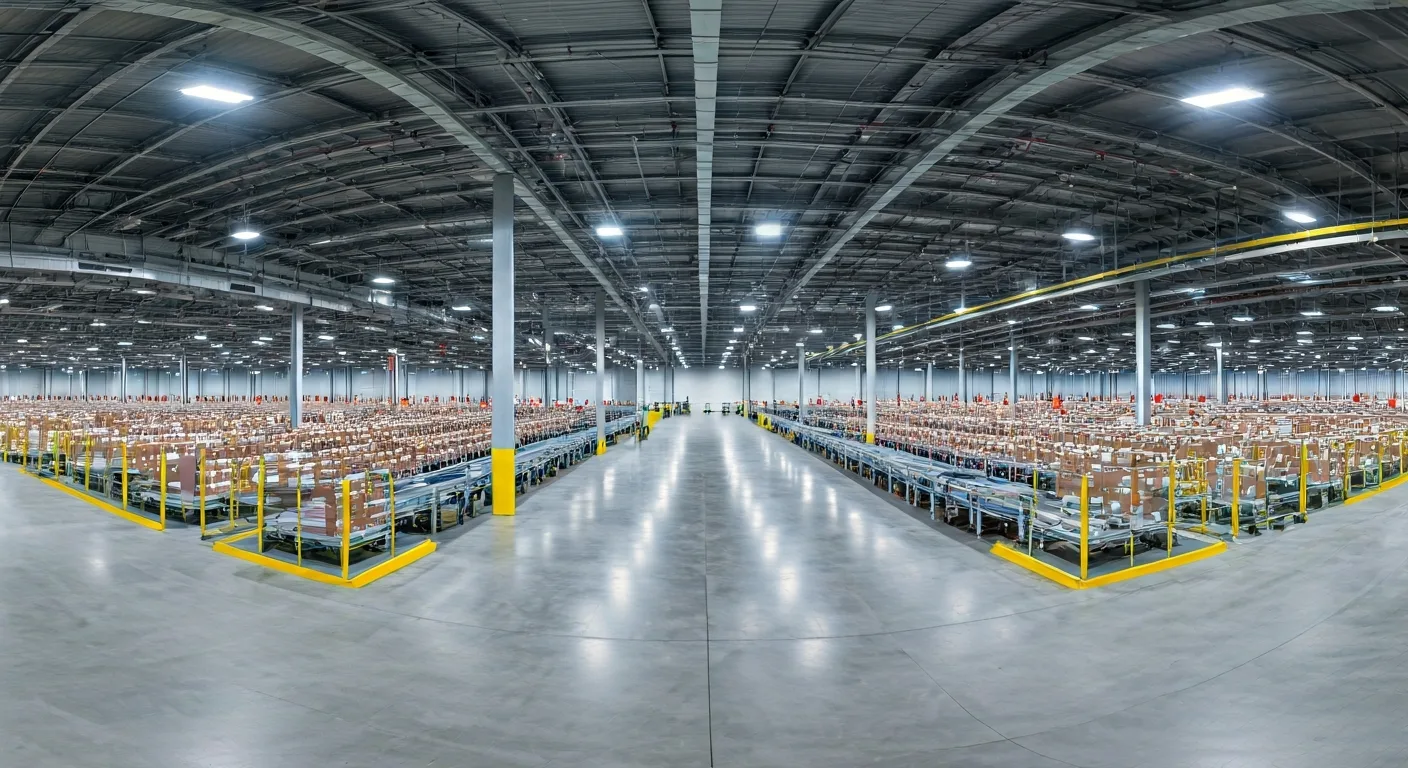
If you are wondering what is it like to work at amazon warehouse, it is a highly structured, fast-paced environment where efficiency and speed dictate your daily routine. From the moment you clock in, your primary goal is to help process customer orders safely and rapidly. An amazon warehouse worker review will often emphasize the sheer scale of the operation. You are not just working in a small stockroom; you are navigating a massive Fulfillment Center that frequently spans millions of square feet, equivalent to dozens of football fields.
Many prospective applicants ask, “is it hard to work at amazon?” The answer largely depends on your physical stamina and tolerance for repetitive tasks. The physical demands are undeniably significant. Depending on your role, you might walk upwards of 10 to 15 miles in a single shift, lift heavy boxes constantly, and repeatedly bend and stretch to reach bins. The work is physically taxing, but it is also straightforward. Despite the hard work, an amazon fulfillment center job provides incredible job security and clear-cut tasks that do not require any previous warehousing experience.
The culture inside the warehouse is intensely metric-driven. Every action is tracked, logged, and analyzed by the facility’s internal software. This means that while you do not have a manager breathing down your neck constantly, a computer is keeping a precise tally of your performance. For people who like to keep their heads down, do the work, and go home, this can be an ideal setup. However, for those who struggle with monotony and strict quotas, the environment can feel relentless.

Types of Amazon Warehouse Roles: Picker, Packer, and Stower
When people ask, “what do you do at an amazon warehouse?”, they are usually referring to one of the three primary roles within a standard facility. Whether you are stationed at a massive, multi-level Fulfillment Center or a specialized regional Sortation Center, your job will likely revolve around one of the following core functions:
- Picker: As a Picker, your job is to locate the items that customers have ordered. In a traditional facility, you will walk the warehouse aisles with a cart, scanning items with a handheld device and placing them into yellow totes. In a modern facility utilizing Amazon Robotics, you will stand at an ergonomic station while robotic drives bring tall shelving units (called pods) directly to you. Picking requires intense focus and rapid hand-eye coordination to ensure the correct items are found quickly.
- Packer: The Packer is responsible for taking the items picked by the pickers and preparing them for shipment. This involves scanning the items, building the correct Amazon-branded boxes or poly-mailers, adding air pillows (dunnage), and sealing the package with water-activated tape. A packer must maintain a steady, continuous rhythm to keep up with the conveyor belts that whisk the boxes away to the shipping docks.
- Stower: As a Stower, you perform the opposite function of a Picker. When brand-new inventory arrives at the facility from vendors, your job is to scan the individual items and strategically place them into available bins or shelves. If you work in a robotics facility, the pods will arrive at your station, and you must find space quickly without overstuffing the bins or allowing items to overhang, which could crash the robots.
Every amazon fulfillment center associate is expected to adapt to the specific physical requirements of their assigned role (referred to as a “path”). While you may be cross-trained eventually, you will usually spend most of your first few months mastering a single function.
The Truth About Amazon Warehouse Pay, Benefits, and Perks
One of the biggest draws for new hires is the compensation package. When evaluating working at amazon warehouse pay, it is generally highly competitive for entry-level, non-salaried positions. Starting pay often ranges from $17 to $21 per hour, depending on the cost of living in the facility’s region. Furthermore, Amazon frequently offers signing bonuses during busy hiring periods and provides premium surge pay for associates willing to pick up extra shifts.
However, the real value of the compensation package lies in the robust amazon warehouse employee benefits. Amazon is famous for its “Day 1” benefits policy. Unlike many other retail or logistics employers that force you to wait 90 days or more for health coverage, Amazon provides comprehensive medical, dental, and vision insurance starting on your very first day of employment.
Other notable perks that associates enjoy include:
- Career Choice Program: Amazon will pre-pay up to 100% of college tuition for eligible employees after just 90 days of continuous employment. This allows workers to earn degrees in high-demand fields like IT, healthcare, and transportation while working.
- Paid Time Off (PTO): Associates accrue PTO regularly throughout the year, which can be used to take paid days off for vacations or personal emergencies.
- 401(k) Matching: Amazon matches 50% of your contributions up to 4% of your eligible pay, helping associates build long-term retirement savings.
- Employee Discount: Associates receive an annual 10% discount on goods shipped and sold by Amazon, up to a certain maximum dollar amount.
The Work Environment, Safety, and Physical Demands
The overall amazon warehouse environment is highly industrialized and meticulously controlled. Inside, the warehouses are incredibly loud due to miles of moving conveyor belts, automated sorting machinery, and the constant beeping of forklifts and automated guided vehicles. Because the facilities are so massive, they are climate-controlled; however, the sheer size means that temperatures can still fluctuate wildly depending on your proximity to the open loading docks or the building’s roof.
Safety is the most heavily emphasized metric in the building. From the mandatory use of composite-toe safety shoes (which Amazon pays for annually via a Zappos credit) to strict rules about maintaining three points of contact on stairs, the company takes physical safety protocols seriously. Despite these protocols, the physical toll cannot be understated. Associates frequently experience severe foot, back, and joint pain during their first month as their bodies undergo a brutal adjustment period to standing on hard concrete floors for 10 hours a day.
A common complaint regarding the environment is the size of the building itself. A round trip to the breakroom and back to your workstation can take 10 minutes out of a 30-minute break, leaving you very little time to actually sit down, eat, and rest your feet.
Strict Performance Monitoring: Rates and Time Off Task (TOT)
Perhaps the most stressful and widely criticized aspect of the job is the intense performance monitoring. Amazon utilizes sophisticated algorithms to track the productivity of every single associate in real-time. To remain in good standing, you must consistently hit your Rate Quotas. For example, a Picker might be expected to scan and pick 300 to 350 items per hour, translating to one item every 10 seconds. If you consistently fall into the bottom 5% of performers in your facility, you will likely face disciplinary action or eventual termination.
Even more critical to your job security is the concept of Time Off Task (TOT). From the moment you log into your scanner or workstation, the system tracks the idle time between your scans. If you stop scanning for more than a few minutes—whether to use the restroom, get a drink of water, or simply stretch your aching muscles—you begin to accumulate TOT. Accumulating too much Time Off Task in a single shift (typically over 30 minutes unaccounted for) can result in an automatic write-up. This algorithmic management system is the primary reason why many workers describe the warehouse environment as high-pressure and mentally exhausting.
Understanding Schedules, Shifts, and Peak Season
Your overall quality of life at Amazon will heavily depend on your assigned amazon warehouse shifts. Most full-time associates work four 10-hour shifts per week, giving them three consecutive days off. The schedules are generally broken down into front-half shifts (Sunday to Wednesday), back-half shifts (Wednesday to Saturday), and the highly coveted “donut” shifts (Monday, Tuesday, Thursday, Friday). Night shifts are very common and often come with a shift differential, paying a few extra dollars per hour for the inconvenience.
The standard pace of work changes drastically during Peak Season (the chaotic period between Thanksgiving and Christmas) and the weeks leading up to Prime Day in the summer. During these high-volume retail periods, Mandatory Extra Time (MET) is frequently called. When MET is activated, you may be forced to work 11- or 12-hour shifts, five or even six days a week. While the overtime pay checks are fantastic during this time, the physical and mental exhaustion is severe.
Conversely, during slow periods, Amazon offers VTO (Voluntary Time Off). Associates can choose to leave their shift early or take a day off unpaid without any penalty. To help manage day-to-day attendance, Amazon uses a system called Unpaid Time (UPT). You earn UPT for every hour you work, and you can use it to leave early, arrive late, or miss a whole shift without needing manager approval. However, there is a catch: if your UPT balance drops below zero, you are subject to immediate termination. Managing your UPT effectively is crucial for surviving at Amazon.
Pros and Cons of Working as an Amazon Associate
If you are weighing the amazon warehouse pros and cons, it helps to look at the reality of the job objectively before applying.
Pros:
- Easy Hiring Process: There is no interview required; hiring is based strictly on passing a standard background check and drug test.
- Exceptional Benefits: Incredible Day 1 health, dental, and vision insurance, plus robust tuition reimbursement.
- Flexible Time-Off: Total control over your schedule using the automated UPT, PTO, and Vacation systems via the A to Z app.
- Financial Opportunities: Consistent, full-time hours and plenty of overtime opportunities during busy seasons.
Cons:
- Physical Exhaustion: Intense physical labor on hard concrete floors that can lead to chronic fatigue or injury if proper body mechanics are not used.
- Mental Monotony: High mental burnout due to extremely repetitive tasks and isolation (headphones and music are strictly banned in most facilities for safety reasons).
- Micromanagement by Algorithm: Stressful performance tracking based on strict Rate Quotas and the anxiety of accumulating Time Off Task.
- Work-Life Balance Disruption: Mandatory Extra Time during Peak Season can completely dominate your schedule and ruin holiday plans.
How to Apply and Prepare for Your First Day
Applying to become an Amazon fulfillment center associate is arguably the easiest part of the entire process. You simply browse the Amazon hiring website, select an available shift that fits your schedule, and complete the online application. Following that, you will attend a brief pre-hire appointment to complete your I-9 paperwork, take a badge photo, and submit to an oral drug swab. There is no formal interview or resume review process.
To prepare for your first day on the warehouse floor, preparation is vital. Invest in comfortable, highly supportive insoles for your mandatory safety shoes, as your feet will be the first thing to hurt. Hydration is key in the dry warehouse environment, so bring a large, clear water bottle (only transparent bottles are allowed past security). Finally, mentally prepare yourself for the physical adjustment period. The first two to three weeks are notoriously the hardest. Once your body adapts to the endless walking and lifting, the job becomes significantly more manageable, allowing you to settle into a rhythm and take full advantage of the pay and benefits.
Get our latest guides, news, and insights highlighted in your Google Search & AI Overviews.