Why did my package go back to the distribution center
If you are wondering why did my package go back to the distribution center, it is primarily due to a sorting error on the automated conveyor belts, an illegible shipping label, or being loaded onto the wrong delivery truck by mistake. When a carrier’s automated system detects that a parcel was routed to the wrong location, it is immediately sent back to the nearest regional hub to be rescanned and placed on the correct transit path.
Quick Answer
If your package returned to distribution center tracking updates are showing up, it is usually because it was missent (placed on the wrong transport) or flagged as “undeliverable as addressed.” The logistics network automatically corrects these routing errors by returning the item to the hub for a proper scan. In most cases, this transit loop resolves itself within 24 to 48 hours without any action required on your part.
Why Tracking Shows Back to GOFO Distribution Facility or Return to Hub
If your tracking history shows an update stating back to gofo distribution facility or returned to regional logistics sort terminal, it indicates that a package previously loaded onto a local delivery vehicle was physically returned to the central depot at the end of the driver’s shift without being successfully delivered to the recipient.
Misroutes, Address Validation Failures & Automated Re-Induction
Primary operational causes for packages returning to a GOFO or regional distribution facility include:
- Carrier Shift Timeout / Driver Hour Expiration: DOT driver hour limitations (typically 10 to 14 maximum duty hours) force drivers to return remaining undelivered cargo to the station.
- Access Blockades (Gated Communities & Secure Buildings): Inability to obtain gate buzzers, access codes, or key fobs causes packages to be marked as “Delivery Attempted” and returned for morning re-dispatch.
- Damaged Optical Shipping Labels: Scratched or smeared barcodes require re-induction at the facility print station to generate a fresh SLAM tracking tag before final re-delivery.
Understanding the Hub-and-Spoke Logistics Network
To understand why a package moving backwards in transit is a common occurrence, you must first understand the hub-and-spoke logistics network. Major carriers like USPS, UPS, and FedEx rely on a complex web of centralized hubs (distribution centers) and local spokes (post offices or local delivery facilities).
When you drop off a package, it doesn’t travel straight to the recipient’s house. Instead, it goes to a local facility, moves to a regional sorting hub, flies or drives to the destination’s regional destination facility, and then is dispatched to the final local facility for delivery. At every single point, millions of packages are sorted at breakneck speeds.
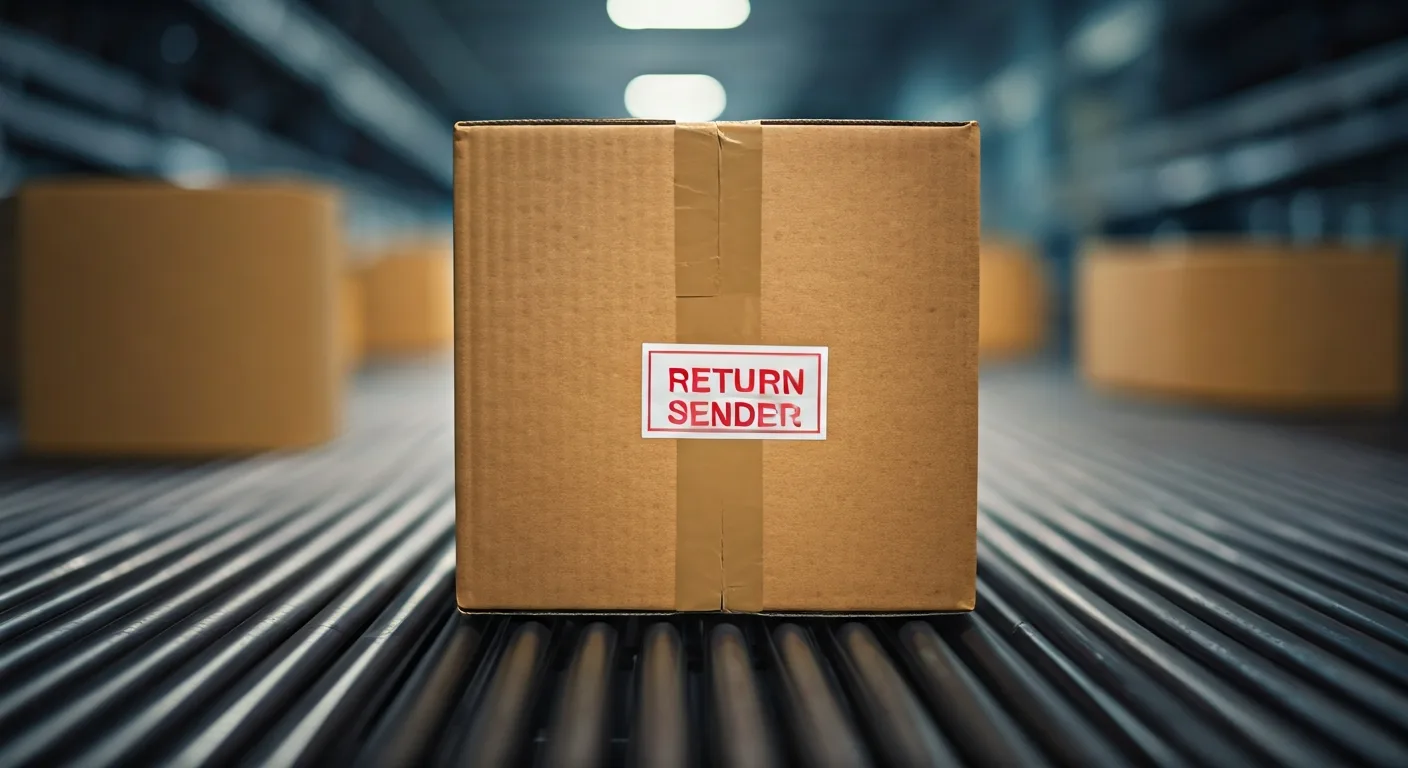
Because of this massive scale, the system relies heavily on automated sorting machines. These machines read the barcodes on shipping labels and push packages into specific bins or conveyor belts. When a barcode is smudged, a ZIP code is misread, or two packages stick together on the belt, the package can easily end up in the wrong bin. When that happens, the system is designed to catch the error at the next checkpoint, forcing the package to double back to the distribution center to be correctly routed.
Top 7 Reasons Your Package Went Back to the Distribution Center
Seeing your package take a detour can be incredibly frustrating. Here are the top seven reasons why your tracking status says returned to facility:
- Sorting Error by Automated Machines: The most common reason is a simple sorting error. Automated scanners read millions of barcodes per hour. A minor misread can easily send a package to the wrong sort facility.
- Loaded onto the Wrong Truck: Sometimes, human error plays a part. A worker might accidentally toss a parcel into truck A instead of truck B. Once truck A arrives at its destination, the driver scans the package, realizes the error, and sends it back to the hub.
- Undeliverable as Addressed: If your shipping label is missing an apartment number, has an incorrect street name, or the barcode is severely damaged, the carrier cannot deliver it. The package will be marked undeliverable as addressed and returned to the hub for manual inspection.
- Weather or Local Emergencies: Severe weather can prevent local drivers from completing their routes. For safety reasons, undelivered packages are returned to the nearest secure facility until the route is safe to navigate.
- Driver Ran Out of Time: Delivery drivers are strictly regulated on their driving hours. If they hit their maximum allotted hours for the day, any remaining packages on the truck must return to the facility and will be marked for delivery the next business day.
- Scanning Mishap: Sometimes a scanning mishap occurs where the package never actually went anywhere, but a scanner glitch makes it appear as though it arrived at a local post office and then bounced back to the regional hub.
- Customs or Inspection Holds: For international shipments, a package might be sent back to a major hub if it requires further inspection by customs or lacks proper documentation.
What Does a ‘Missent’ or ‘Looping’ Tracking Status Mean?
If you’ve ever found yourself asking, “why is my package going back and forth?”, you are likely caught in a routing loop. This is known within the industry as a missent package.
Missent Package Meaning Explained
The missent package meaning simply dictates that the carrier misrouted the item. It arrived at the wrong local post office or sorting center. Because the local facility does not serve your specific address or ZIP code, the postal workers cannot deliver it. Their only protocol is to put it back on a truck heading to the regional destination facility so it can be re-sorted into the correct bin.
The Feared Routing Loop
Occasionally, you will see a package looping between facilities. A routing loop (or transit loop) happens when two facilities keep bouncing the same package back and forth. This is almost always caused by an error in the physical label—usually a zip code that conflicts with the written address, or an old barcode that wasn’t fully crossed out. The automated machines read one thing, while the human eye reads another, causing the package to endlessly cycle between hubs until a worker manually flags and corrects the label.
How Carrier Specifics Matter: USPS vs. UPS vs. FedEx
While the underlying logistics mechanics are similar across the board, how each carrier communicates a sorting error tracking update differs.
USPS (United States Postal Service)
When a usps package went back to distribution center, it is frequently because of a “Missent” scan. USPS relies heavily on regional hubs (Network Distribution Centers or NDCs). If your package hits your local post office and then pings back at the NDC, the local postmaster likely realized the mail carrier didn’t have the correct route for your address. USPS usually fixes these loops within one to two business days.
UPS (United Parcel Service)
UPS operates with extreme precision. If you see your package bounce back, UPS will typically flag it as an “Exception.” They are highly proactive; if a package is looping, UPS customer service can often intercept the package at the facility to fix the label. UPS drivers also frequently return packages to the hub simply because commercial businesses were closed at the time of delivery.
FedEx
When a fedex package went back to hub, you might see updates like “Delivery exception” or “Returned to facility.” FedEx Ground relies on independent contractors, so if a contractor’s truck breaks down or a route is overloaded, the packages head back to the distribution center for the night. FedEx will automatically attempt delivery the next day.
What Should You Do When Your Package Moves Backwards?
Watching your package move away from your city is stress-inducing, but panicking won’t speed up the delivery truck. If you notice a backwards transit update, here are the steps you should take:
- Wait 24 to 48 Hours: Do absolutely nothing for the first two days. The automated logistics network is designed to self-correct. When a package bounces back to the hub, it is immediately rescanned and put on the correct truck. Most missent packages are resolved without human intervention.
- Check Your Shipping Address: Pull up your original receipt or order confirmation. Did you forget to include your apartment number? Did auto-fill enter an old zip code? If the address is wrong, the package might eventually be returned to the sender.
- Monitor the Tracking Number: Keep a close eye on your tracking number. If the status updates to “Out for Delivery” again, you are in the clear. If it continues to loop for more than three days, you have a problem.
- Contact Customer Service: If the package looping between facilities continues for three consecutive days, call the carrier. You will need to bypass the automated bot and speak to a representative to have them manually flag the tracking number. This tells the workers at the facility to pull the package off the conveyor belt and manually inspect the label.
How to Prevent Delivery and Routing Issues in the Future
While you cannot control a mechanical sorting error, you can control the variables before the package enters the shipping network. To avoid future headaches, follow these best practices:
- Double Check Address Details: Always verify your street address, suite or apartment number, and zip code. A single typo in the zip code guarantees the package will initially head to the wrong city.
- Remove Old Barcodes: If you are reusing a box to send a package, you must completely cover, black out, or rip off old barcodes. Automated machines will scan the first barcode they see. If they scan the old one, your package is heading back to its origin.
- Use Clear, Printed Labels: Avoid handwriting shipping labels whenever possible. A smudge from rain or illegible handwriting can easily confuse postal workers and scanners alike, leading to an “undeliverable as addressed” scan.
- Sign Up for Delivery Alerts: Create free accounts with USPS Informed Delivery, UPS My Choice, and FedEx Delivery Manager. These platforms allow you to leave specific delivery instructions for your driver which can prevent failed delivery attempts and unnecessary trips back to the distribution center.
In the vast majority of cases, a package returning to the distribution center is just a temporary hiccup in a massive, high-speed logistical dance. Be patient, let the carrier’s automated systems correct the error, and your package should be at your doorstep within a day or two.
Get our latest guides, news, and insights highlighted in your Google Search & AI Overviews.