How to arrange Amazon Flex packages [Cut 1 Hour]
Did you know spending two extra minutes searching for a parcel at each stop adds an entire hour to your Amazon Flex delivery block? In the gig economy, time equals money. An unorganized vehicle directly eats into your profits. To maximize delivery efficiency, mastering how to arrange Amazon Flex packages is non-negotiable. This guide dismantles inefficient habits to drastically reduce your stop times. You will uncover advanced fulfillment center workflows, spatial strategies for loading your Amazon Flex car, and techniques for decoding Amazon Flex driver aid labels. Align your Amazon Flex itinerary with a reliable package numbering system. This approach helps you master the exact Amazon Flex package organization and sorting methods required to execute a seamless, high-profit route.
Understanding How to Arrange Amazon Flex Packages at the Station
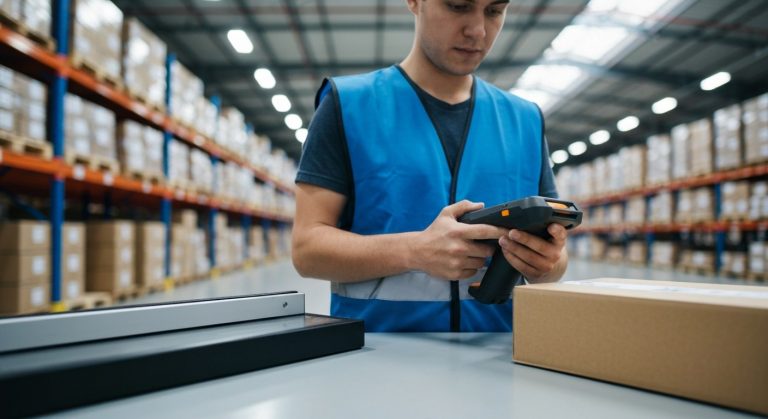
As you pull into the delivery station, your priority must immediately shift to high-speed organization. Success in your Amazon Flex delivery block depends on the critical minutes spent at the launchpad. Before exiting your vehicle, ensure you are wearing a high-visibility vest. This complies with safety standards and keeps you visible to warehouse machinery. Establishing a professional presence here ensures a smoother interaction with site marshals and a faster load-out process.
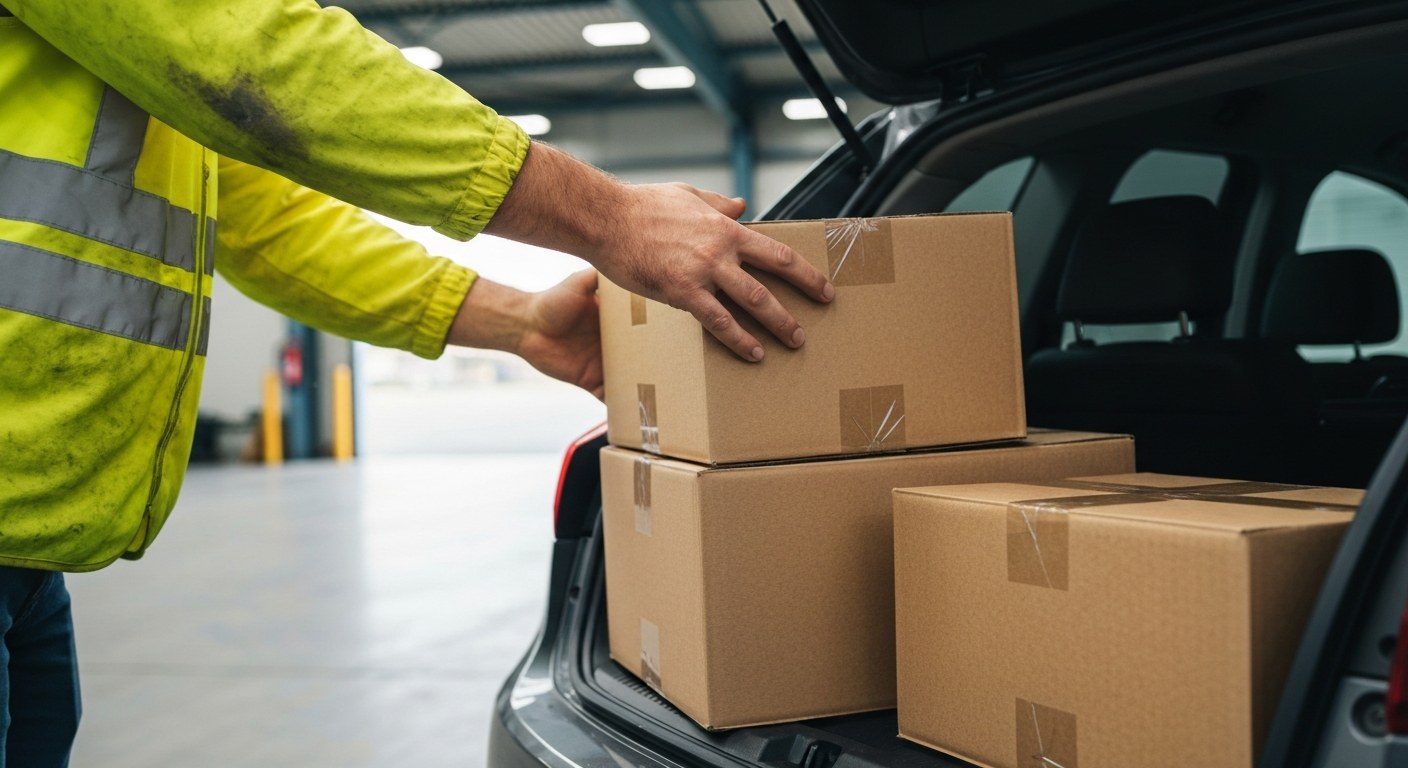
- Execute a smooth scan-as-you-load workflow rather than tossing items into your car haphazardly. According to Amazon Flex safety protocols, scanning packages individually prevents the headache of missing inventory later in your route Third Party Warehousing Explained (5 Mins).
- Immediately address any ‘Missing’ or ‘Extra’ packages with station staff before leaving the lot. Resolving these errors on-site protects your standing and prevents unnecessary backtracking.source
- Establish an initial sorting rhythm. Use the designated staging time to categorize your stops How to Buy From Amazon Warehouse (Stop Overpaying), placing the first few packages within arm’s reach to build early momentum.
As illustrated below:

Treating the station phase as a surgical process ensures you avoid losing time during the final mile. Mastering how to arrange Amazon Flex packages now saves significant effort once you are on the road. It also helps maintain a professional delivery pace.
Once you establish a basic loading rhythm at the station, quickly identifying each parcel becomes your next challenge.
Decoding Driver Aid Stickers and Logistics Systems
To master your workflow, you must understand the language of the small yellow stickers found on every parcel. Formally known as Driver Aid (DAID) stickers, these labels are the secret to identifying packages in seconds. They eliminate the need to constantly glance at your smartphone. While the address on the shipping label is official, the DAID tells you exactly where a package fits within your itinerary. You can find more details on these identifiers in the official Amazon Flex FAQ.
Distinguishing between logistics vs SSD stations is crucial for your sorting logic. At standard logistics hubs, these driver aid stickers often display sequential numbers that correspond directly to your stop order. In contrast, Sub Same-Day (SSD) stations utilize alphanumeric codes that group packages by route segments. Recognizing these variations allows you to customize Swarovski Packaging Change: What’s New? [2026 Update] based on the station type. Prioritizing these labels reduces the cognitive load required to find items at the curb. This effectively cuts down your total delivery time.
With those driver aid labels fully deciphered, you can choose a definitive system for ordering your route.
The Best Sorting Strategies: Stop Numbers vs. Alphabetizing
Efficiently organizing your deliveries requires choosing a system that minimizes friction upon arrival. Many veterans swear by the Sharpie method. This involves using a retractable Sharpie to write stop numbers clearly on each package during load-out. The visual cue allows you to identify the correct parcel instantly. You avoid squinting at the small text on driver aid stickers. While it adds 10 to 15 minutes to your initial setup, the speed gained during the route often outweighs the prep time.
| Strategy | Primary Benefit | Best For… |
|---|---|---|
| Numbering | Fastest identification at the stop | Large routes with 40+ stops |
| Alphabetizing | No writing required during scan-in | Drivers with high mnemonic recall |
When you focus on alphabetizing by street name or customer last name, you eliminate the need to mark packages manually. However, you must remember these strategies are designed to reduce your search time. They do not change the delivery sequence. Because the Amazon Flex algorithm pre-sets your route, you cannot simply skip around to make fewer stops. Instead, you are optimizing for maximum search efficiency. Mastering these techniques is a core component of learning how to arrange Amazon Flex packages for peak performance. If you struggle with spatial constraints, consider reviewing our guide on vehicle-zoning-tips for better layout management. You can also explore delivery-speed-hacks for on-road success.
However, even the best sorting strategy falls flat if your car’s interior isn’t properly optimized for quick retrieval.
Vehicle Zoning: Mapping Out Your Car for Quick Access
Efficiently executing your route requires a strategic mapping of your vehicle’s interior. Assign specific zones—such as the back left, back right, and your trunk organization—to certain stop ranges. This creates a predictable environment that eliminates time-wasting searches. Allocating stops 16-30 to the rear left and 31-45 to the rear right helps maintain a high delivery cadence throughout your shift. This spatial awareness is crucial when managing a complex package numbering system. You can further optimize this workflow by reviewing How to Buy From Amazon Warehouse (Stop Overpaying) to see how zoning integrates with digital tools.
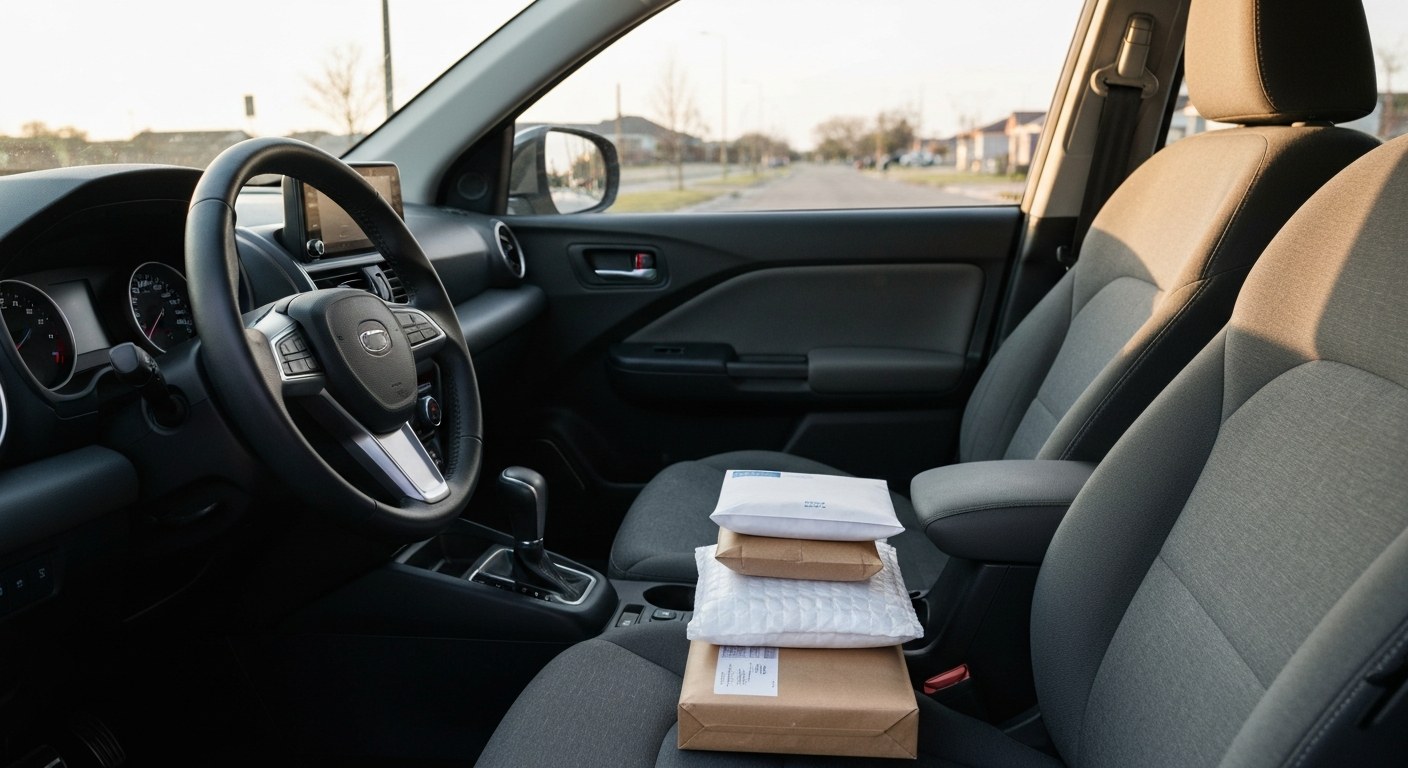
To maximize your speed, dedicate the front passenger seat exclusively for your first 10-15 deliveries. Keeping these initial packages readily accessible lets you transition between stops seamlessly. You avoid frequently exiting the vehicle or reaching into the cargo area. This “grab and go” approach significantly reduces your time per stop and keeps you moving efficiently. As illustrated here:
Finally, avoid the outdated habit of placing large, heavy items at the bottom of your piles. While traditional logistics prioritize weight, your primary goal is stop-sequence accessibility. Prioritizing the sequence ensures you never waste minutes digging under heavy boxes for a small envelope. Balancing accessibility with ETL and Data Warehousing: Fast Guide (No Jargon) ensures both speed and driver protection. This aligns with Amazon’s operational standards.
Beyond assigning specific zones for your stops, managing the varying shapes and sizes of your parcels is just as critical.
Managing Envelopes vs. Boxes with Organizational Tools
Distinguishing between bulky boxes and lightweight mailers is critical when loading your Amazon Flex car for a high-volume route. Small polybags and envelopes often slide under seats or get wedged between larger items. This hinders your retrieval speed. To prevent this, implement a containment system for these smaller parcels.
- Use collapsible bins or laundry baskets to create dedicated zones for envelopes. This keeps them searchable and upright.
- Repurpose sturdy bags to segregate polybags by stop range. This prevents them from shifting during transit.
- Keep these containers in the front seat or atop boxes for immediate access during your shift.
Investing in basic tools improves interior neatness and your overall workflow. By learning delivery gear essentials, you can optimize how to arrange Amazon Flex packages to minimize physical strain. This ensures no parcel is overlooked. It also maintains an efficient operational flow, matching Amazon Flex safety standards for load stability.
After your physical cargo is perfectly arranged, your attention must shift to the digital and environmental aspects of your route.
Leveraging the Amazon Flex App and Field Safety Tips
Mastering the digital tools provided in the app is as critical as your Amazon Flex package organization. While navigating, frequently toggle between the Map View and the itinerary list. This helps you anticipate upcoming stop clusters. Early foresight identifies tricky delivery zones before you arrive. Before exiting your vehicle, always check the Access Code and Customer Note fields. Reviewing these instructions early ensures a seamless transition. It also minimizes time spent outside your vehicle, particularly when Amazon Flex: Worth It in 2026? [Real Pay].
Safety is paramount for professional delivery drivers. You must lock your car at every stop to prevent theft. Take short mental breaks to avoid burnout during long blocks. As highlighted in official safety protocols, staying alert is vital for your success. Maintaining your focus helps you manage how to arrange Amazon Flex packages efficiently throughout the day. Consider How to buy a vehicle warehouse in gta for added protection during high-volume shifts.
FAQ
How do I organize my Amazon Flex packages for faster delivery?
Organizing your Amazon Flex packages efficiently hinges on grouping them by zones or stop numbers before leaving the station. You save a tremendous amount of time by placing the first 10-15 stops in your front seat and the rest in the back. For more detailed strategies, Amazon’s official guide offers robust advice on vehicle loading.
What do the yellow Driver Aid stickers mean on Amazon Flex packages?
The yellow Driver Aid stickers contain essential codes like stop numbers, zone indicators, or UPX labels that dictate the delivery sequence. Leverage these stickers to quickly identify packages without scanning every barcode on your itinerary. Familiarizing yourself with these codes drastically reduces your time spent searching at each stop.
Should I sort Amazon Flex packages by stop number or street name?
Sorting your packages by stop number is almost always the superior method. It aligns perfectly with the route optimized by the Flex app. While sorting by street name was popular in the past, it forces you to mentally map the route instead of following the automated itinerary. Utilizing stop numbers ensures you merely grab the next package in sequence and go.
Where do I put envelopes vs boxes in my car for Amazon Flex?
Place all envelopes and polybags in a small bin or basket directly on your front passenger seat for immediate access. Systematically arrange large and medium boxes in your back seat or trunk in numerical order according to the itinerary. Structuring your space this way minimizes the physical movement required at each stop. This method is highly recommended by experienced couriers on the Flex driver community forums.
How to organize Amazon Flex packages if the delivery station is crowded?
When facing a crowded delivery station, focus on loading your vehicle by broader zones rather than meticulously sorting each individual stop. Quickly scan and place packages into designated quadrants of your car. These include the front, back-left, back-right, and trunk. Once you pull away from the congestion, take a moment to refine the exact sequence in a nearby parking lot.
How can I fit oversized Amazon Flex boxes in a small car trunk?
To maximize space in a small trunk, load the largest, heaviest boxes first. Push them flat against the back seats. You can then wedge smaller boxes around them or stack them on top to prevent shifting during transit. If you consistently struggle with oversized items, consult the vehicle requirements on the Amazon Flex FAQ. This ensures your car meets the appropriate capacity standards.
Is it faster to number packages at the station or while delivering?
Numbering your packages at the station requires an upfront investment of 10 to 15 minutes. However, it pays off by saving you much more time during the actual delivery route. If you attempt to search and number while delivering, you inevitably experience delays and frustration at every address. According to seasoned couriers featured on The Rideshare Guy, preparing everything before you hit the road is the undisputed key to finishing your block early.
Key Takeaways for Faster Deliveries
Mastering a consistent scan-and-load workflow eliminates wasted time at every stop. Implementing strategic vehicle zoning and utilizing essential tools like sorting baskets drastically reduces the minutes spent searching through your car. Understanding exactly how to arrange Amazon Flex packages transforms a chaotic route into a streamlined, predictable process. This ultimately maximizes your true hourly earnings.
During your next scheduled block, test out the Sharpie numbering method or the Driver Aid sticker system. This helps you discover what best fits your routine. Dial in your organizational strategy, maintain a steady delivery pace, and always prioritize your safety on the road.
Get our latest guides, news, and insights highlighted in your Google Search & AI Overviews.